

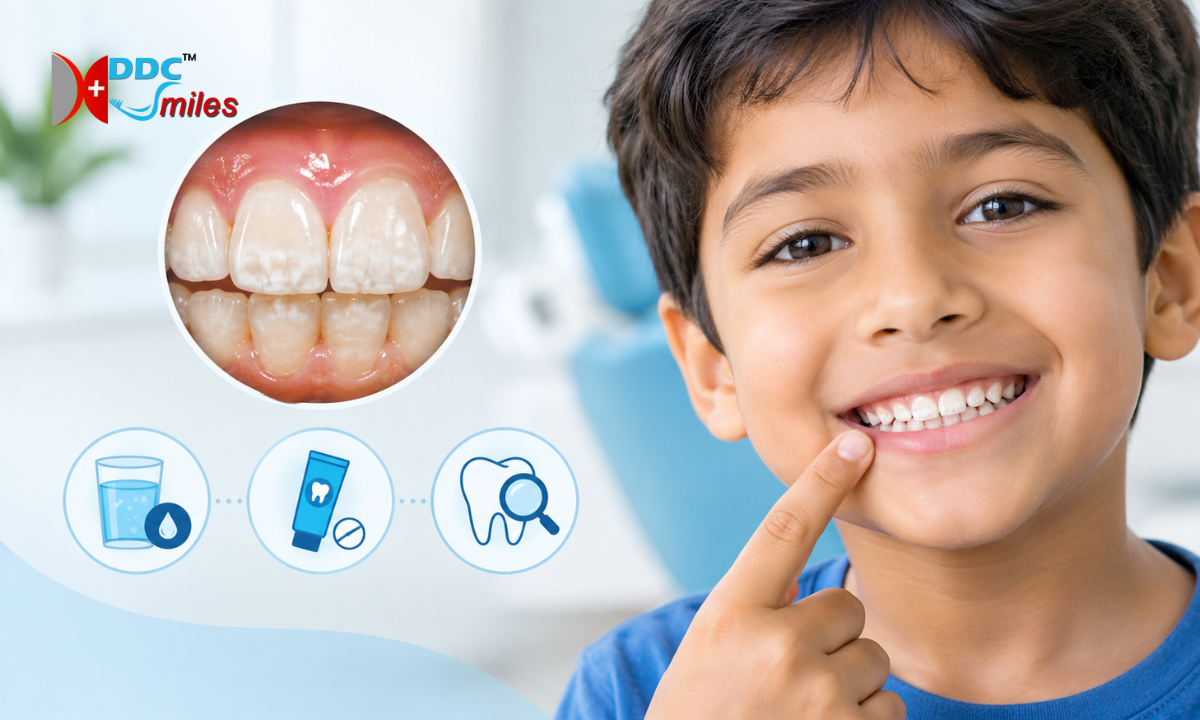
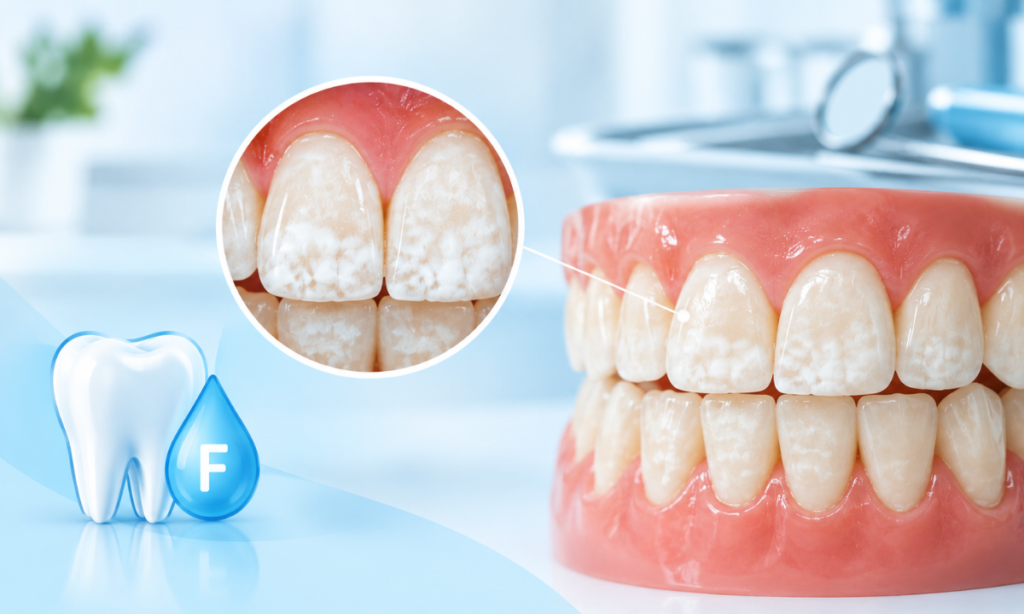
Dental fluorosis is a change in the appearance of tooth enamel caused by taking in too much fluoride while the teeth are still forming. It usually shows up as faint white lines or flecks, and in more noticeable cases as chalky patches, brown staining or small pits on the tooth surface.
Unlike coffee or tea stains, which build up on the outside of teeth after they come through, fluorosis is built into the enamel as it forms. That is why brushing, polishing or whitening toothpaste does not remove it.
The good news is that most cases are mild and purely cosmetic. This guide explains why fluorosis happens, how to recognise it, how a dentist confirms it, and what parents can do to protect their children’s developing teeth.
What Is Dental Fluorosis?
How fluoride affects developing enamel
Enamel is formed by specialised cells that lay down mineral crystals in a tightly packed pattern. In the right amounts, fluoride makes enamel more resistant to decay. When a child takes in more fluoride than they need over a sustained period, it disturbs this process and the enamel ends up less fully mineralised and more porous below the surface.
Porous enamel scatters light differently from dense, healthy enamel. Instead of looking translucent, the affected areas look opaque white. In more severe cases, the surface can become pitted and pick up brown staining from food and drink.
When dental fluorosis develops
Fluorosis can only develop while teeth are forming inside the jaw. For most permanent teeth, this happens from birth until around eight years of age, with the front teeth most vulnerable in the first few years of life.
Is dental fluorosis permanent?
Yes. Once a tooth has formed and come through, the fluorosis markings are part of the enamel and do not fade on their own. However, the condition does not get worse after the tooth erupts, and adults cannot develop new dental fluorosis on teeth that are already fully formed.
What Causes Dental Fluorosis?
Excess fluoride intake during childhood tooth development
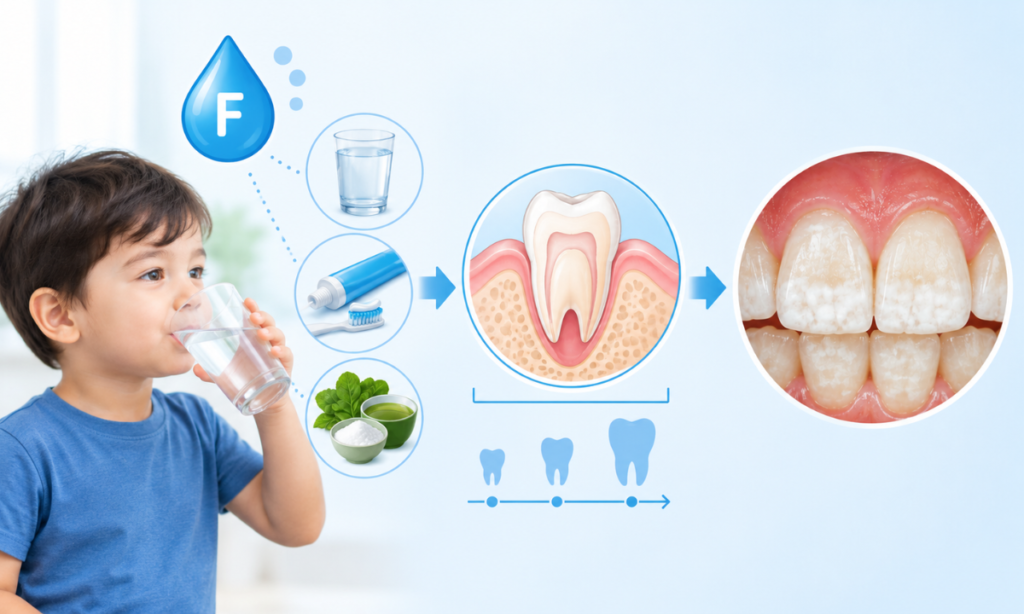
Dental fluorosis develops when children consume excessive amounts of fluoride from sources such as drinking water, toothpaste, and supplements while their permanent teeth are forming. Over time, high fluoride intake can affect enamel development, causing white spots, streaks, or discoloration. Parents should supervise brushing, use an age-appropriate amount of fluoride toothpaste, and consult a dentist before giving supplements. If you notice unusual marks on your child’s teeth, DDC Smiles can help assess the changes and guide you on appropriate dental care.
Swallowing too much fluoride toothpaste
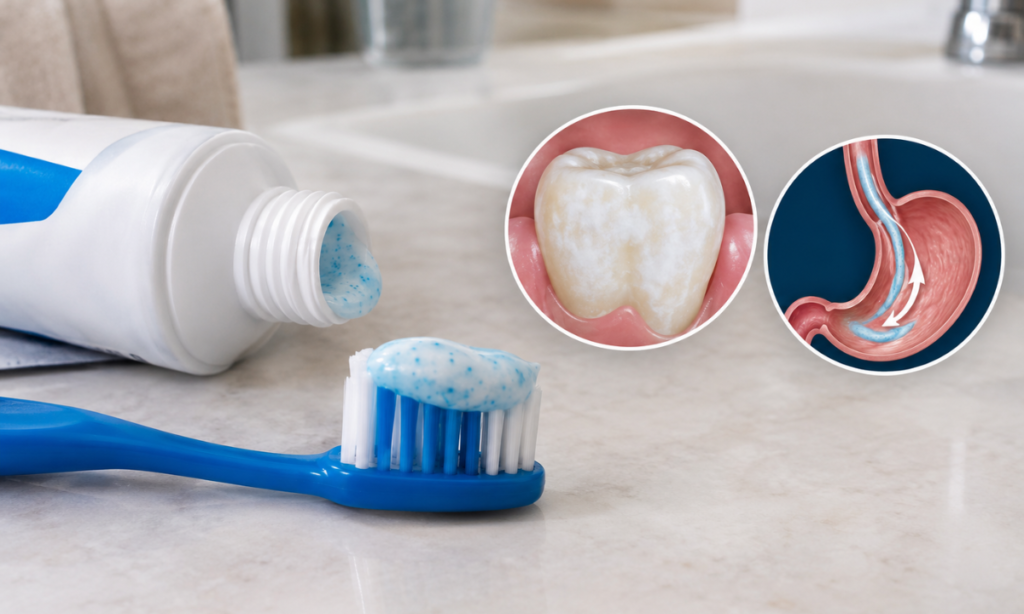
Young children may swallow fluoride toothpaste because they have not yet learned to spit it out properly, and flavoured toothpaste can make swallowing more likely. Using too much toothpaste or allowing children to brush without supervision can increase their total fluoride intake and the risk of dental fluorosis while their teeth are developing. Parents should use an age-appropriate amount of toothpaste, supervise brushing, and encourage children to spit it out.
Fluoride supplements and drinking-water exposure
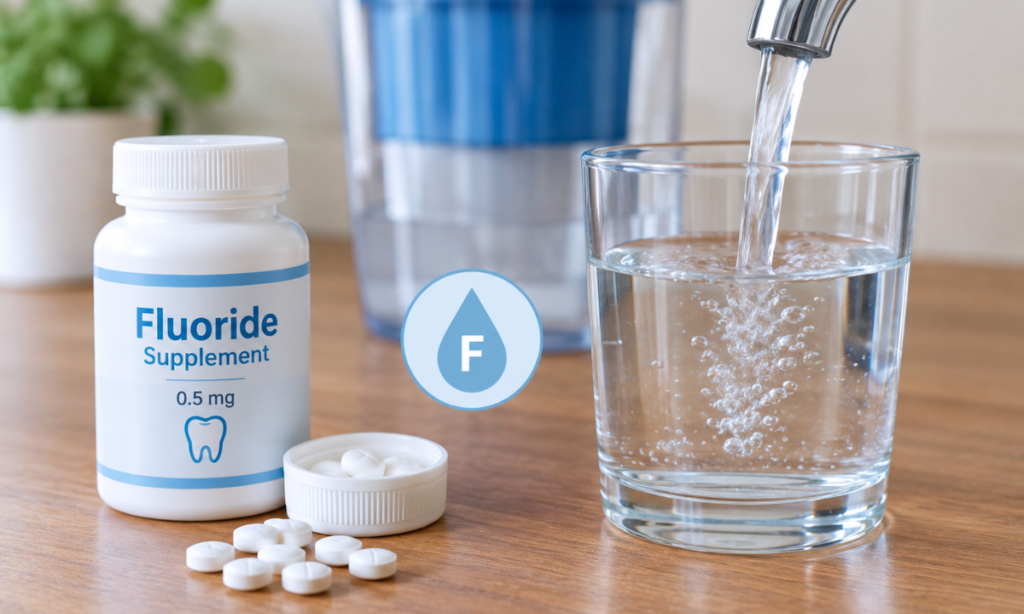
Groundwater in some districts of Karnataka and other parts of India naturally contains high levels of fluoride. Families who rely on untreated borewell water for drinking and cooking, or who use it to prepare infant formula, may expose young children to more fluoride than intended. India’s drinking-water standard (IS 10500) sets an acceptable fluoride limit of 1.0 mg/L.
Fluoride drops or tablets given without professional advice can add to this, particularly when the family’s water already contains fluoride.
Why a dentist should review the child’s total fluoride exposure
Fluoride can come from several sources, including drinking water, toothpaste, mouth rinses, and dietary supplements. Since these sources can add up, a dentist can review a child’s overall fluoride exposure by asking about their drinking water, brushing habits, the amount of toothpaste used, and any supplements they take. This assessment helps determine whether the child is receiving an appropriate amount of fluoride for their age and dental needs. Parents should avoid giving fluoride supplements without professional advice and follow age-appropriate toothpaste recommendations. Regular dental check-ups also help monitor tooth development, identify early signs of dental fluorosis, and provide personalised guidance to support healthy enamel formation.
What Are the Signs and Symptoms of Dental Fluorosis?
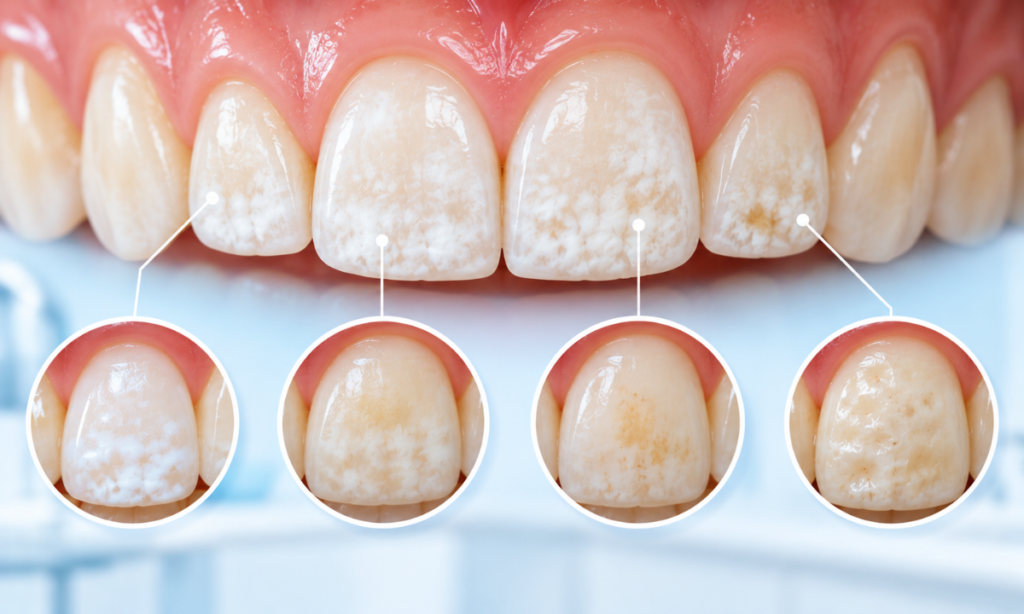
Fluorosis tends to affect matching teeth on both sides of the mouth in a similar way. If one front tooth has a faint white band, the tooth on the other side often has a similar pattern.
| Severity | What it looks like | Enamel surface |
| Very mild to mild | Small paper-white flecks, fine lines or white tips on the biting edges, covering less than half the tooth | Smooth and hard |
| Moderate | White opacities across most of the tooth, sometimes with light brown or tan staining | Usually intact, may show minor wear |
| Severe | Widespread brown staining with pits or grooves in the enamel | Rough and pitted, more prone to chipping |
Mild fluorosis and faint white markings
Mild fluorosis usually causes no symptoms at all. The markings may be hardly visible when the teeth are wet and become more noticeable when they dry out.
Moderate fluorosis and more visible discolouration
Moderate fluorosis affects more of the tooth surface and is easier to see in everyday life and photographs. Most people with moderate fluorosis seek advice for cosmetic reasons.
Severe fluorosis and enamel pitting
In severe cases, the enamel surface is pitted and weaker. These teeth can wear or chip more easily and may need restoration to protect them as well as to improve their appearance.
How Is Dental Fluorosis Diagnosed?
What a dentist looks for during an examination
A dentist examines the teeth under good lighting, often after drying them, and looks at the colour, pattern, texture and distribution of any markings. They will also ask where you grew up, your water source as a child and your childhood brushing habits, because this history is an important part of the diagnosis.
How fluorosis differs from cavities and other enamel defects
Several conditions can cause white or brown spots, and they need different management:
- Early tooth decay usually forms chalky white spots near the gumline or between teeth, where plaque collects, and the surface may feel rough or soft.
- White spots after braces appear around where brackets were attached, caused by plaque around the brackets.
- Enamel hypoplasia often affects one tooth or a few teeth unevenly and may be linked to childhood illness, injury or infection of a baby tooth.
Fluorosis typically affects matching teeth symmetrically, and the affected enamel usually remains hard. For a broader look at these conditions, read our guide to white spots and mottled enamel.
Why white spots alone do not confirm fluorosis
Because early decay can look similar to fluorosis, white spots should always be checked by a dentist. Treating decay as a cosmetic issue, or the reverse, can lead to the wrong treatment.
Can Dental Fluorosis Be Treated?
Yes. The right approach depends on how severe the fluorosis is, which teeth are affected and whether the enamel surface is intact. Mild cases may need nothing at all, or can be improved with conservative options such as microabrasion, resin infiltration or carefully supervised whitening. More severe cases may need composite bonding or veneers to cover staining and protect pitted enamel.
Our guide to dental fluorosis treatment options explains each procedure, who it suits and its limitations. You can also see published fees on our dental price list.
How Can Parents Help Prevent Dental Fluorosis?
Use age-appropriate amounts of fluoride toothpaste
For children under three, use a smear of fluoride toothpaste about the size of a grain of rice. From three to six years, use a pea-sized amount.
Supervise young children while brushing
Brush with or for your child until they can spit out toothpaste reliably, and encourage them to spit rather than swallow.
Discuss supplements with a dental professional
Do not give fluoride drops or tablets unless a dentist or paediatrician has recommended them after considering all your child’s fluoride sources.
Consider local drinking-water fluoride levels when relevant
If your family uses borewell water, consider having it tested for fluoride, especially before using it to prepare infant formula. Your dentist can advise on what the results mean for young children.
Regular check-ups from an early age help catch early enamel changes. Learn more about our kids dentistry and preventive dentistry services.
Frequently Asked Questions
Can dental fluorosis develop in adults?
No. Dental fluorosis only develops while teeth are forming in childhood. Adults may notice fluorosis that has been present since childhood, but they cannot develop it on fully formed teeth.
Does dental fluorosis weaken teeth?
Mild and moderate fluorosis do not usually affect the strength of the tooth. Severe fluorosis can leave the enamel surface pitted and more likely to chip, which is why these teeth may need restoration.
Can fluorosis disappear naturally?
No. The markings are part of the enamel structure and do not fade over time, although treatment can greatly improve their appearance.
Are all white spots on teeth caused by fluorosis?
No. Early tooth decay, white spots after braces and enamel hypoplasia can look similar. A dental examination is the only reliable way to tell them apart.
When should a dentist examine discoloured enamel?
See a dentist if you notice new white or brown spots, spots that are changing, enamel that feels rough or pitted, or sensitivity in affected teeth. A check-up is also worthwhile if the appearance of your teeth makes you self-conscious.
Book an Enamel Assessment at DDC Smiles
If white or brown markings on your teeth or your child’s teeth concern you, a dental examination will confirm the cause and whether any treatment is needed. Visit DDC Smiles in HSR Layout or Koramangala for an assessment, and read our dental fluorosis treatment options to understand what is available.
Book an Appointment at DDC Smiles
Reference:1)https://www.ncbi.nlm.nih.gov/books/NBK585039/
2)https://www.jelsciences.com/articles/jbres1431.php
