



Noticeable white specks, chalky patches, or faint brown streaks on your enamel can make you feel self-conscious about your smile.
Understanding the primary causes of mottled teeth is the first step toward restoring a smooth, bright appearance to your enamel. At DDC Smiles, a premier dental hospital in HSR Layout and Koramangala, our cosmetic specialists use high-precision 3D intraoral diagnostics and non-invasive aesthetic protocols to gently erase enamel discoloration and rebuild your smile confidence.
So, what are mottled teeth? In clinical dentistry, mottling refers to developmental changes in the enamel surface that create an uneven, patchy, or spotted appearance across one or more teeth. These opacities range from delicate, paper-white lacing to dense yellow or dark brown mottling. Unlike surface stains from coffee or dark foods, mottled enamel is an intrinsic condition incorporated into the tooth structure while it was forming deep within the jaw during early childhood.
As these mineral variations lie inside the enamel matrix rather than on the surface, scrub-based whitening pastes or over-the-counter bleaching strips often fail to fix the problem, frequently making white spots look even more pronounced by bleaching the surrounding healthy enamel.
What You Will Learn in This Guide:
- The primary biological factors behind enamel mottling, including fluoride exposure and childhood health factors.
- Non-surgical, enamel-preserving options like Icon® Resin Infiltration and microabrasion that remove white spots without drilling.
- Advanced restorative solutions such as direct composite bonding and porcelain veneers for deeper brown staining or rough surface spots.
- Practical guidelines for parents to prevent enamel mottling in developing teeth.
- How the multidisciplinary team at DDC Smiles designs a personalized, pain-free smile makeover tailored to your cosmetic goals.
Achieving a uniform, radiant smile requires a customized diagnostic evaluation to measure the exact depth of enamel changes and choose the least invasive procedure to correct them.
Medical Disclaimer
The clinical procedures, diagnostic classifications, and treatment options outlined in this article are provided strictly for educational and public health awareness purposes. This content does not constitute formal dental advice, diagnosis, or a personalized treatment plan.
Enamel conditions and fluorosis severity vary significantly among individuals. Always consult a qualified dentist, prosthodontist, or cosmetic dental specialist to evaluate your specific enamel health and treatment requirements. Never delay seeking professional dental care based on the general information provided in this article.
What Causes Mottled Teeth?
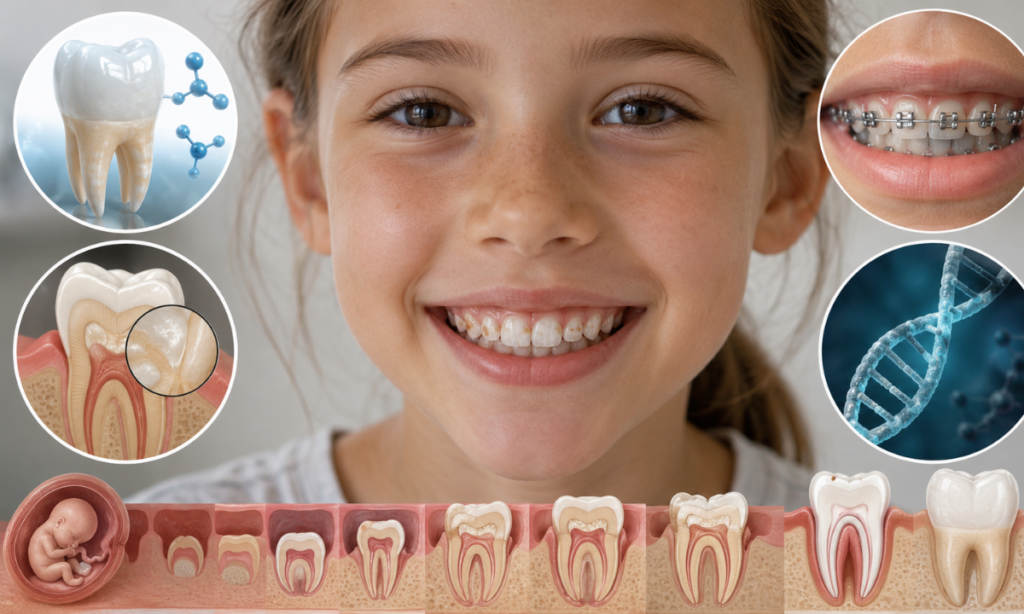
To understand why teeth develop a patchy or speckled appearance, it helps to look at how tooth enamel forms. Enamel is the hard, protective outer layer of your teeth, built by specialized cells called ameloblasts during early childhood, specifically between birth and age eight, while permanent teeth are still developing under the gums.
When anything disrupts the delicate mineral balance during this developmental stage, the resulting enamel matrix develops microscopic porosities that alter how light reflects off the tooth surface.
Primary Causes of Enamel Mottling
While several factors can interfere with normal enamel development, clinical research identifies four primary drivers:
- Dental Fluorosis (Excessive Childhood Fluoride Intake): This is by far the most common cause. Ingesting higher-than-optimal levels of fluoride through well water, swallowed toothpaste, or fluoride supplements while enamel is actively forming disrupts cell signaling. This altered mineralization creates porous zones within the enamel structure, resulting in mottling teeth with chalky white spots, yellow streaks, or pitted brown patches.
- Enamel Hypoplasia: Severe childhood fevers, malnutrition (such as Vitamin D or Calcium deficiencies), high stress during pregnancy, or early childhood illnesses (like measles or severe respiratory infections) can temporarily cause ameloblasts to shut down. This leaves localized zones of thin, under-developed, or yellowish enamel.
- Early Demineralization (Post-Orthodontic White Spot Lesions): Poor plaque control around traditional braces allows oral bacteria to produce acids that leach minerals out of smooth enamel. Once braces are removed, these demineralized areas appear as opaque, chalky white spots.
- Amelogenesis Imperfecta: A rare genetic condition that affects how enamel proteins are laid down, causing widespread structural weakness, pitting, and yellow-brown discoloration across all teeth.
How Dentists Classify Mottled Enamel?
Cosmetic dentists and endodontists use standardized clinical scales (such as Dean’s Fluorosis Index) to measure how deeply the discoloration penetrates:
| Severity Level | Visual Appearance | Enamel Structural Health
|
|---|---|---|
| Questionable / Very Mild | Small, opaque, paper-white flecks or tiny snow-capping on the tips of cusps. | Enamel remains smooth, hard, and 100% dense. |
| Mild | Delicate white lacing or chalky streaks covering up to 50% of the tooth surface. | The enamel surface is intact and structurally sound. |
| Moderate | Widespread white opacities combined with light yellow, tan, or light brown staining. | Enamel exhibits mild surface wear or superficial roughness. |
| Severe | Dark brown or greyish mottling covering most of the crown with visible surface grooves. | Enamel is brittle, pitted, and prone to chipping or surface loss. |
Key Diagnostic Takeaway: Treating mottled enamel effectively depends on knowing whether you are dealing with superficial white spots or deep structural pitting. Over-treating mild white spots with heavy drilling is unnecessary, while simple whitening won’t fix structural pitting.
Microabrasion & Resin Infiltration for White Spot Lesions

When treating mild to moderate white spots or faint surface opacities, aggressive techniques like drilling or placing full covers are entirely unnecessary. Modern cosmetic dentistry prioritizes preserving 100% of your natural, healthy tooth structure while smoothing out color inconsistencies.
Depending on how deeply the white flecks sit within your enamel, non-surgical clinical procedures can significantly fade or completely erase surface-level marks in a single visit.
1. Enamel Microabrasion: Gentle Surface Renewal for a Brighter Smile
Enamel microabrasion is a fast, painless procedure designed to buff away superficial chalky spots located on the outermost layer of enamel.
- How It Works: A specialized clinical compound containing a mild etching agent mixed with ultra-fine abrasive microscopic particles is applied to the front of the tooth. A low-speed handpiece gently polishes the enamel, removing an imperceptible fraction of a millimeter of the stained outer surface.
- Best For: Superficial paper-white flecks, thin white lacing, or shallow surface discoloration.
- Key Benefits: Entirely pain-free, completed in under 40 minutes, and permanently removes surface-level spots without requiring needles or drills.
2. Icon® Resin Infiltration: A Drill-Free Solution for White Spot Lesions
For deeper white opacities caused by fluorosis or post-braces demineralization, Icon® Resin Infiltration represents a breakthrough in micro-invasive care.
[Porous White Spot] ➔ Gentle Conditioning ➔ Liquid Resin Infiltration ➔ Light Polymerization ➔ Optical Match
- The Optical Science: Healthy enamel is dense and reflects light evenly. Mottled enamel contains microscopic porous pockets filled with air and water, which refract light differently, making the spot appear chalky and opaque white.
- The Clinical Process:
- The tooth surface is cleaned and treated with a gentle conditioning gel to open the enamel pores.
- The tooth is thoroughly dried using a specialized liquid agent.
- A high-penetration liquid resin is applied, infiltrating deep into the porous enamel structure through capillary action.
- A specialized curing light hardens the resin, sealing the micro-pores from within.
- The Outcome: The cured resin matches the exact optical refractive index of surrounding healthy enamel. The chalky white spot instantly blends into the rest of the tooth, rendering it virtually invisible.
The Limitations of Standard Whitening
Many patients attempt over-the-counter bleaching strips before seeking professional help, only to find their white spots looking brighter and more pronounced. Effective mottled teeth whitening requires carefully evaluating enamel porosity first, ensuring that treatments like Icon® infiltration or targeted microabrasion are used to equalize light refraction rather than simply bleaching the entire tooth uniformly.
Advanced Aesthetic Treatments
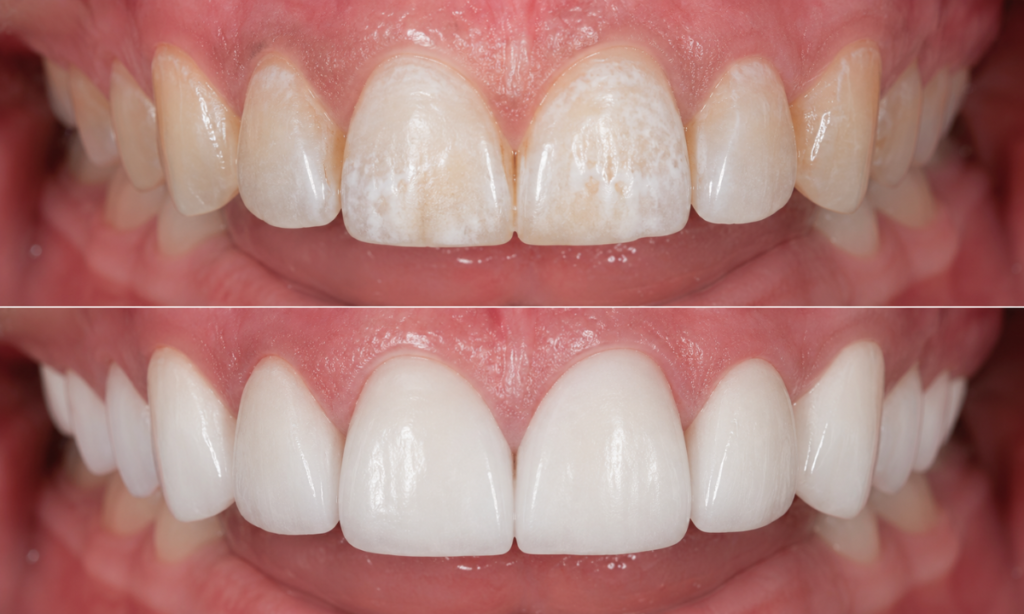
When enamel discoloration extends deeper into the tooth structure, non-invasive surface methods like microabrasion or resin infiltration may not fully mask dark yellow, caramel, or brown bands. For these moderate-to-severe cases, advanced cosmetic dental treatments can completely cover intrinsic stains while restoring a smooth, natural-looking tooth shape.
By placing tooth-colored materials over stained surfaces, modern cosmetic procedures conceal deep discoloration while preserving long-term structural health.
1. Specialized In-Office Bleaching Protocols
Standard home bleaching kits can increase contrast by whitening healthy enamel while leaving chalky white spots unchanged. However, professional fluorosis teeth bleaching performed under clinical supervision uses custom-calibrated whitening gels and precise isolation techniques.
By selectively brightening the surrounding darker enamel, the background shade is lifted to match the lighter opacities, creating a balanced, uniform appearance across your smile.
2. Direct Composite Bonding: Precision Aesthetic Tooth Repair
Composite bonding is a versatile, conservative treatment that uses medical-grade, tooth-colored composite resin to cover stubborn spots or minor surface unevenness.
- The Procedure: The dentist lightly conditions the enamel surface, applies a bonding agent, and carefully layers shade-matched composite resin over stained or pitted areas. Using sculpting tools and a curing light, the resin is hardened and polished to mimic the natural sheen of healthy tooth enamel.
- Best Indication: Localized brown spots, isolated yellow streaks, or mild surface chips associated with enamel defects.
Completed in a single appointment, highly cost-effective, and preserves nearly all natural tooth structure.
3. Custom Porcelain & E-Max Veneers: Precision Smile Makeovers
For widespread, severe discoloration across multiple front teeth, custom porcelain or lithium disilicate (E-max) veneers are the gold standard. Veneers are ultra-thin, hand-crafted ceramic shells bonded to the front surface of your teeth, completely blocking underlying dark stains while improving shape and symmetry.
| Feature Comparison | Direct Composite Bonding | Custom Porcelain / E-Max Veneers
|
|---|---|---|
| Material | Micro-hybrid composite resin | High-translucency ceramic / E-Max |
| Stain Resistance | Moderate (may need periodic polishing) | Exceptional (impervious to tea, coffee, and food dyes) |
| Durability | 5 to 7 years | 15 to 20+ years with proper care |
| Treatment Timeline | Completed in a single visit | 2 visits (Digital Scanning + Final Placement) |
| Aesthetic Result | Excellent for localized spots | Complete, seamless transformation for entire smile |
When to See a Dentist?
While mild white specks are primarily a cosmetic concern, certain signs indicate it is time to seek a comprehensive professional dental evaluation. Because mottled enamel can range from smooth surface flecks to brittle, porous outer layers, knowing when to consult a specialist ensures your teeth stay strong, healthy, and functional.
Key Warning Signs: When to Seek Professional Evaluation
You should schedule a clinical consultation if you or your child experience any of the following:
- Visible Surface Pitting or Roughness: If enamel feels jagged, rough to the touch, or shows small physical depressions, the protective outer layer may be compromised and prone to decay.
- Rapid Discoloration Changes: Dark yellow, tan, or brown spots that appear suddenly or darken over time warrant a professional assessment.
- Increased Sensitivity: Hot, cold, or sweet sensitivity can indicate that porous enamel is allowing temperature changes to reach the sensitive dentin layer beneath.
- Cosmetic Insecurity: If enamel spots make you hesitant to smile freely in photos or social settings, modern non-invasive cosmetic dentistry can safely restore shade uniformity.
Consulting an experienced dentist in Koramangala allows for a precise diagnostic evaluation using digital shade mapping and intraoral cameras to determine whether non-surgical resin infiltration or restorative bonding is the right choice for your smile.
How to Prevent Enamel Mottling in Children

As dental fluorosis only develops while permanent teeth are forming under the gums (between birth and age eight), prevention during early childhood is crucial. Fluoride is essential for preventing cavities, but keeping intake balanced protects growing enamel:
| Under Age 3 | Smear / Rice-Grain Amount of Toothpaste |
| Ages 3 to 6 | Pea-Sized Amount of Toothpaste + Supervised Spitting |
| Well Water Users | Water Testing for Natural Fluoride Levels |
Necessary Steps to Prevent Enamel Mottling in Children
- Monitor Toothpaste Portions: For children under age three, use no more than a tiny smear (rice-grain size) of fluoridated toothpaste. For children aged three to six, increase to a pea-sized amount.
- Teach Proper Rinsing & Spitting: Supervise young children while brushing to ensure they spit out toothpaste rather than swallowing it.
- Test Home Drinking Water: If your family relies on deep tube-well water, test the natural fluoride levels. If fluoride concentrations exceed 1.5 mg/L (ppm), consult a pediatric dentist about alternative drinking water options for young children.
- Avoid Unprescribed Supplements: Never give children dietary fluoride drops or tablets unless explicitly prescribed by a dentist or pediatrician after evaluating all sources of fluoride intake.
Precision Cosmetic Care & Diagnostic Technology at DDC Smiles
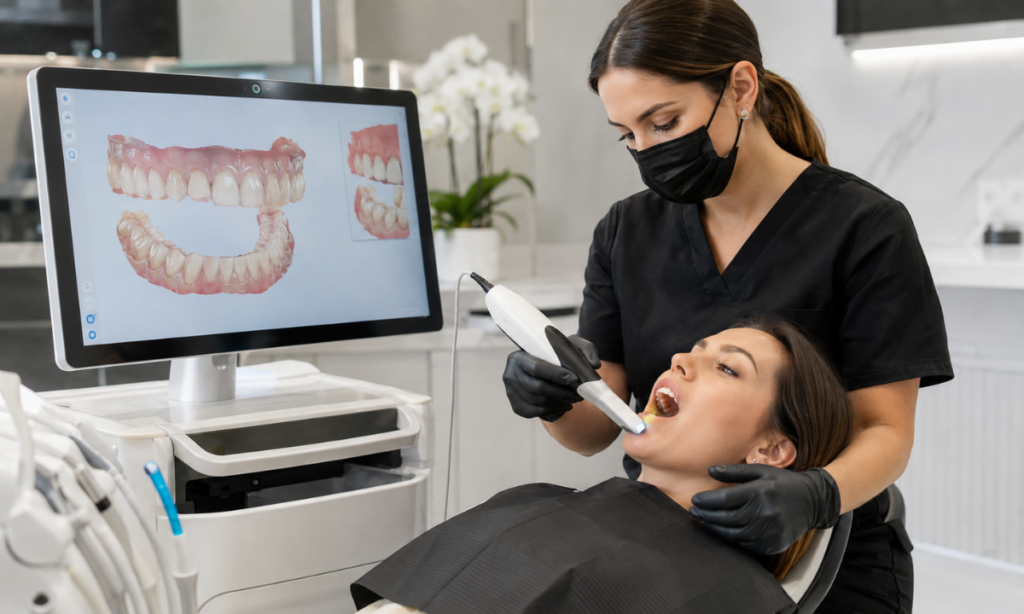
Correcting mottled teeth requires a delicate balance of biological understanding, diagnostic accuracy, and cosmetic craftsmanship. At DDC Smiles, we believe that no two smiles are identical, and no single procedure fits every degree of enamel discoloration. Our multi-specialty practice is dedicated to providing patient-centered cosmetic dentistry that prioritizes natural enamel preservation while delivering bright, uniform results.
From your initial consultation through final polishing, our clinical team uses advanced digital diagnostic tools to map out enamel density and color variations, ensuring you receive the least invasive and most durable treatment possible.
Why Choose DDC Smiles for Mottled Teeth Treatment?
- In-House 3D Digital Diagnostics: We utilize high-resolution 3D intraoral scanners and digital shade mapping to analyze the exact depth of enamel opacities, allowing us to plan micro-invasive treatments with sub-millimeter precision.
- Enamel-Preserving Philosophy: Our specialists always prioritize non-surgical, tissue-sparing options such as Icon® Resin Infiltration and microabrasion to erase white spots without drilling away healthy natural enamel.
- Advanced Dental Technology: Equipped with soft-tissue diode lasers and micro-polishing tools, we ensure every cosmetic step is smooth, gentle, and virtually free of post-procedure sensitivity.
- Veteran Multi-Specialty Leadership: Guided by Dr H.J. Jai Krishna (MDS, PGDMLE, FDS RCPS Glasgow) and supported by experienced prosthodontists, endodontists, and cosmetic surgeons, your care is managed by leading experts under one roof.
- Comprehensive Care in HSR Layout & Koramangala: With state-of-the-art facilities across prime locations in Bangalore, receiving world-class aesthetic dental care is convenient and seamless.
Whether you need a quick, non-drilling resin infiltration for white spots or a complete veneer transformation for deep fluorosis, consulting a skilled dentist in HSR Layout ensures your treatment plan is tailored to your unique aesthetic goals and long-term oral health.
Conclusion
Living with mottled teeth or patchy enamel discoloration can hinder your confidence, but attempting aggressive DIY whitening or abrasive home pastes often makes white spots stand out even more. Modern cosmetic dentistry offers predictable, painless, and highly conservative solutions for every stage of enamel mottling. By partnering with a specialized dental diagnostic and treatment center, you can safely eliminate spots, protect your natural tooth structure, and enjoy a radiant, uniform smile.
Reference:
1. https://en.wikipedia.org/wiki/Dental_fluorosis
2. https://leedervilledental.com.au/what-causes-mottling-of-teeth-common-factors-explained/
