

Discovering chalky white spots, faint yellow liprones, or dark brown patches on your front teeth can make you self-conscious about smiling. Dental fluorosis occurs during early childhood when developing enamel absorbs higher concentrations of fluoride.
Finding the right treatment for fluorosis teeth can safely eliminate surface unevenness and restore a bright, natural aesthetic. At DDC Smiles, a leading dental hospital in HSR Layout and Koramangala, our specialists combine high-precision 3D intraoral diagnostics with minimally invasive, enamel-preserving techniques, giving you a predictable path to a uniform smile.
Unlike surface stains caused by coffee, tea, or smoking which sit on top of mature enamel fluorosis is an intrinsic mineral variations incorporated into the enamel structure itself while teeth are forming under the gums before age eight. As these mineral changes affect how light reflects off your teeth, standard over-the-counter whitening kits often fail to fix the problem and can even make white spots stand out more by bleaching the surrounding healthy enamel.
What You Will Learn in This Guide:
- How to identify whether your fluorosis is mild, moderate, or severe.
- Enamel-preserving, non-surgical procedures like microabrasion and resin infiltration (ICON) that erase white spots without drilling.
- Advanced cosmetic solutions including direct composite bonding, custom porcelain veneers, and crowns for deeper discoloration or pitted enamel.
- How the multidisciplinary team at DDC Smiles crafts a personalized, pain-free smile redesign tailored to your cosmetic goals.
Achieving a seamless, brilliant smile requires an individualized clinical approach that addresses the exact depth and severity of your enamel changes, rather than a one-size-fits-all product.
Medical Disclaimer
The clinical procedures, diagnostic classifications, and treatment options described in this article are provided strictly for educational and public health awareness purposes.
This content does not constitute formal dental advice, diagnosis, or a personalized treatment plan. Dental fluorosis severity and enamel conditions vary significantly between individuals. Always consult a qualified dentist, prosthodontist, or cosmetic dental specialist to evaluate your specific enamel health and treatment requirements. Never delay seeking professional dental care based on the general information provided in this article.
Identifying Your Stage: Mild, Moderate, or Severe Fluorosis
Dental fluorosis affects everyone differently. Depending on the concentration of fluoride present while your enamel was forming, visual changes can range from barely noticeable white specks to noticeable brown discoloration and surface rough spots.
When evaluating teeth with fluorosis, cosmetic dentists and endodontists classify the enamel changes into distinct stages based on visual coverage, stain depth, and structural integrity.
The Clinical Spectrum of Dental Fluorosis
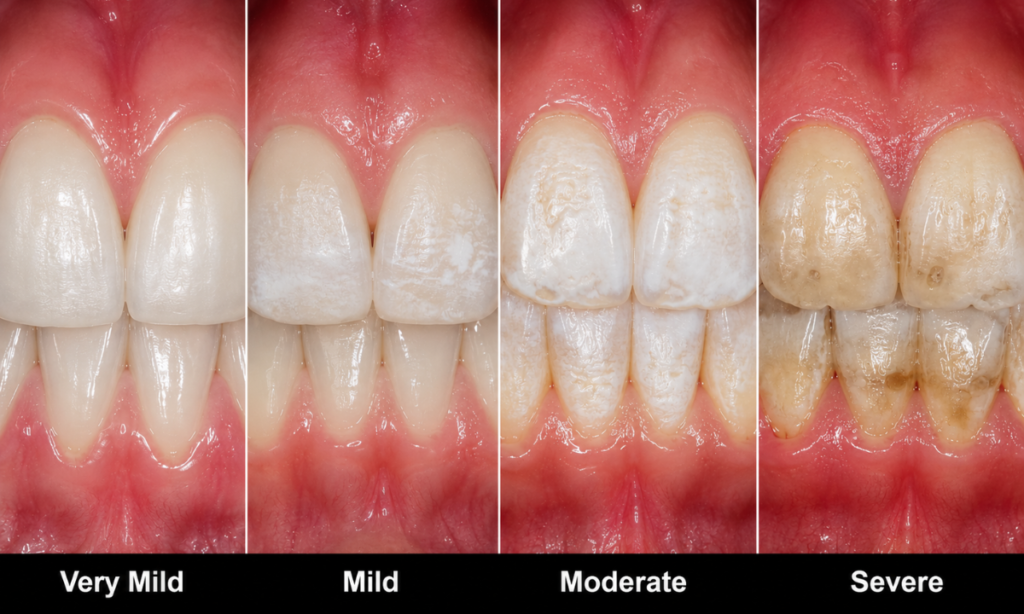
Understanding where your teeth fall on this spectrum is crucial because it directly dictates the most effective treatment approach, ensuring you don’t over-treat mild white spots or attempt ineffective remedies on deep enamel pitting.
| Fluorosis Stage | Visual Characteristics | Enamel Surface Integrity | Recommended Clinical Approach
|
|---|---|---|---|
| Very Mild & Mild | Faint white flecks, paper-white lacing, or small opaque spots covering less than 50% of the tooth surface. | Enamel remains smooth, dense, and structurally complete. | Enamel-preserving options: Microabrasion or Resin Infiltration (ICON). |
| Moderate | Noticeable white opacities accompanied by light yellow, tan, or caramel-colored streaks across broader areas. | The enamel surface is intact but shows deeper intrinsic mineral staining. | Professional whitening, microabrasion, or direct composite bonding. |
| Severe | Dark brown or greyish mottling covering most of the crown, often making teeth look weathered or uneven. | Enamel exhibits pitting, chipping, hypoplasia (thinning), or rough surface grooves. | Advanced restorative care: Porcelain/E-max veneers or full-coverage crowns. |
Why Self-Diagnosis Can Be Tricky
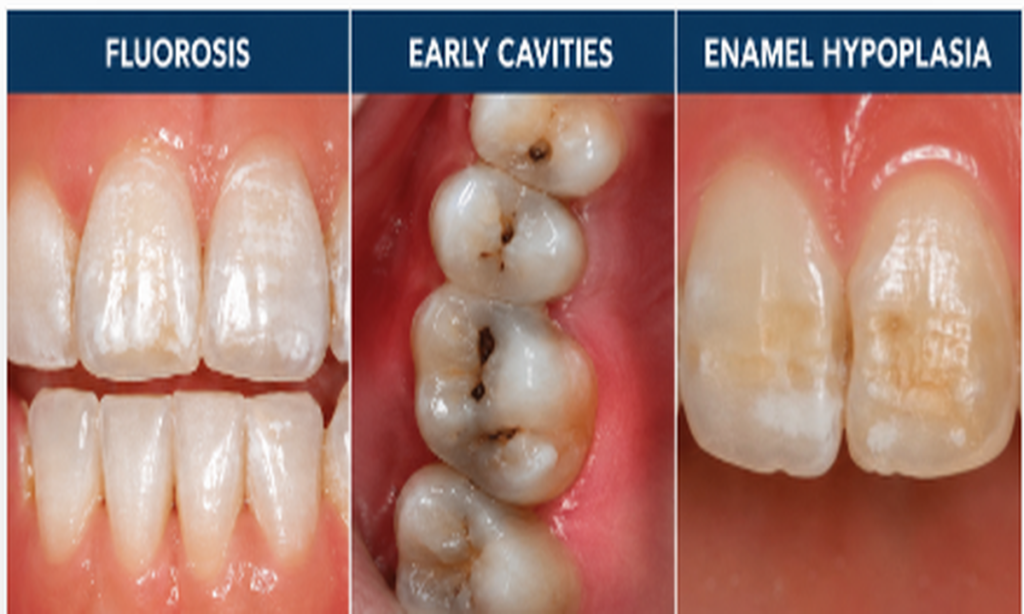
It is easy to mistake fluorosis for other common dental conditions, such as:
- Early-Stage Cavities (De-mineralization): White spot lesions caused by plaque buildup or post-orthodontic brace removal.
- Enamel Hypoplasia: White or yellowish spots caused by high childhood fevers, nutritional deficits, or medication during tooth development.
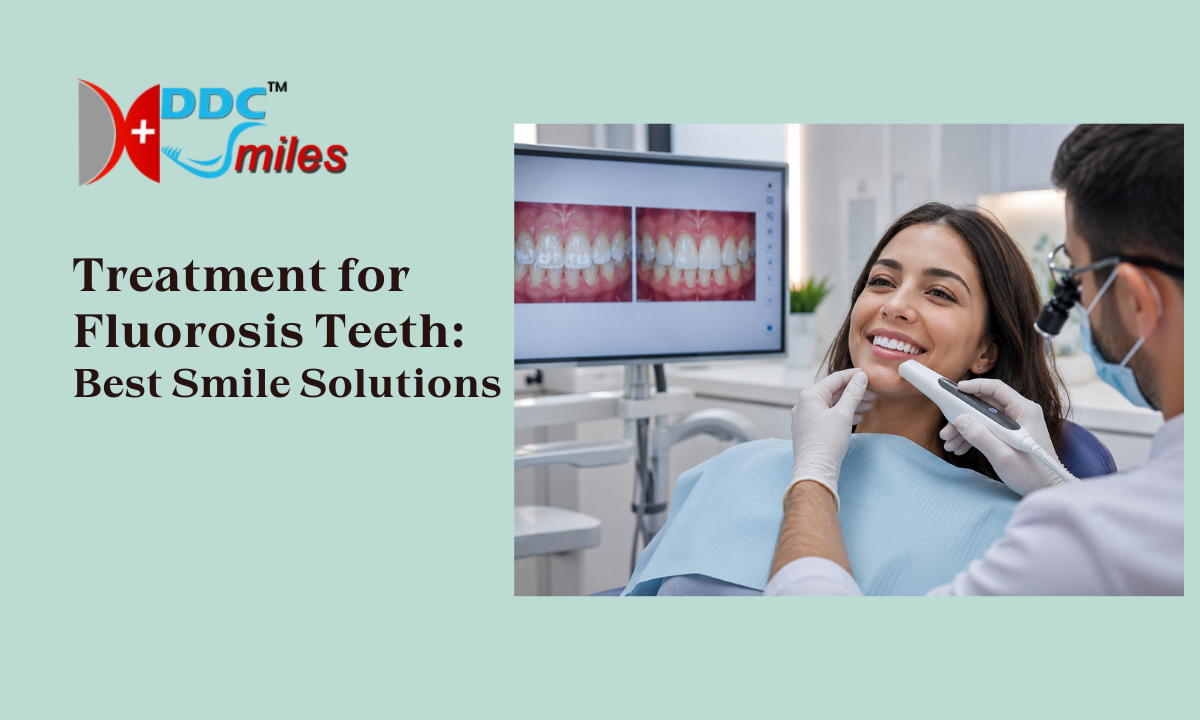
Our specialists use high-resolution intraoral digital cameras and shade mapping to evaluate enamel density. This diagnostic step ensures we pinpoint the exact depth of the staining before creating a treatment plan tailored to your smile.
Minimally Invasive Options: Microabrasion, Bleaching & Resin Infiltration
For mild to moderate white spots and faint surface opacities, aggressive procedures like drilling or filing down enamel are completely unnecessary. Modern cosmetic dentistry focuses on preserving 100% of your natural tooth structure while restoring a smooth, uniform color across your smile.
Depending on the depth of the white specks, non-surgical clinical treatments can significantly fade or completely erase fluorosis marks.
1. Enamel Microabrasion: Gentle Surface Refinishing
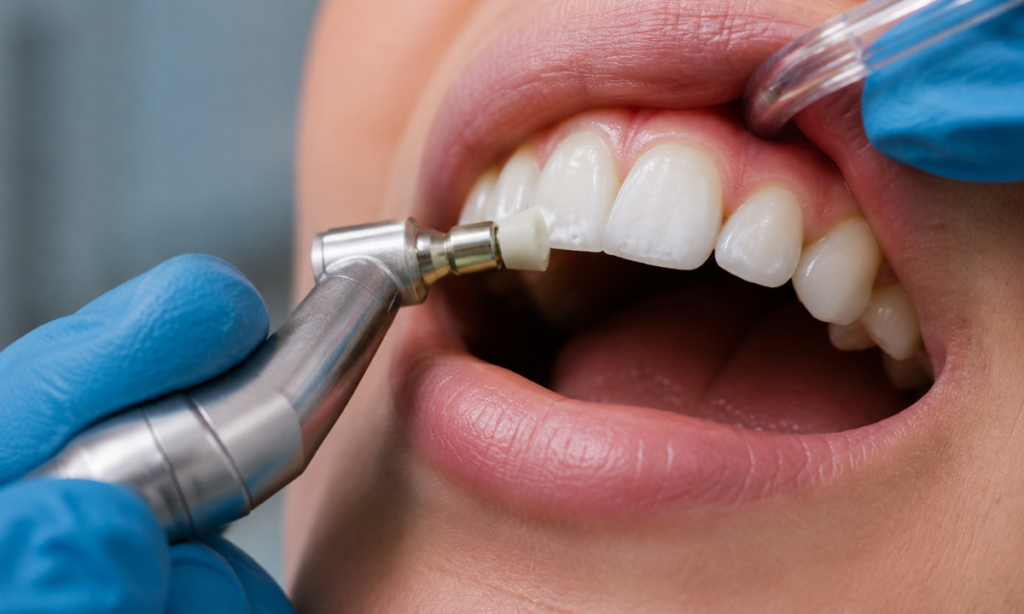
Enamel microabrasion is a quick, painless procedure designed to gently remove superficial, microscopic chalky spots on the outer layer of your enamel.
- How It Works: A specialized gel containing a mild compound mixed with ultra-fine abrasive microscopic particles is applied to the front surface of the tooth. A low-speed handpiece gently polishes the enamel, removing a microscopic layer (less than a fraction of a millimeter) of the affected outer surface.
- Best For: Very mild, superficial white flecks or thin surface lines.
- Benefits: Entirely pain-free, completed in a single 30-minute visit, and permanently removes surface-level marks.
2. Specialized In-Office Teeth Whitening Protocols
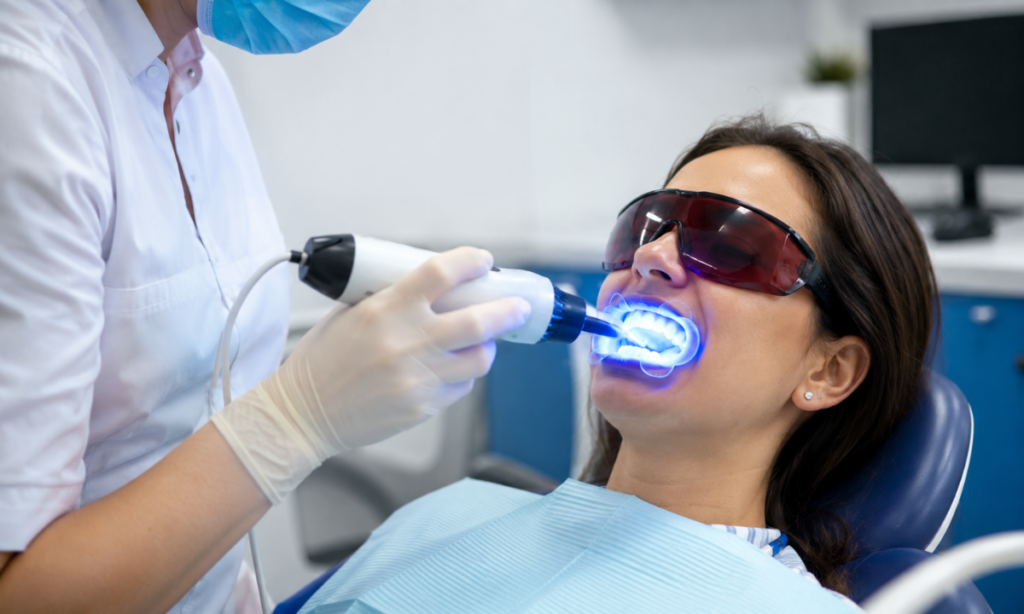
Standard over-the-counter bleaching strips often make white spots more obvious because they bleach the entire tooth evenly, maintaining the contrast between healthy enamel and white flecks.
In contrast, professional teeth fluorosis whitening administered by experienced cosmetic dentists uses carefully calibrated, high-grade bleaching agents alongside targeted application techniques. By selectively lightening the darker background enamel, the surrounding tooth shade is lifted to match the white specks, drastically reducing color contrast and creating a harmonious, brighter smile.
3. Icon® Resin Infiltration: Erasing White Spots Without Drilling
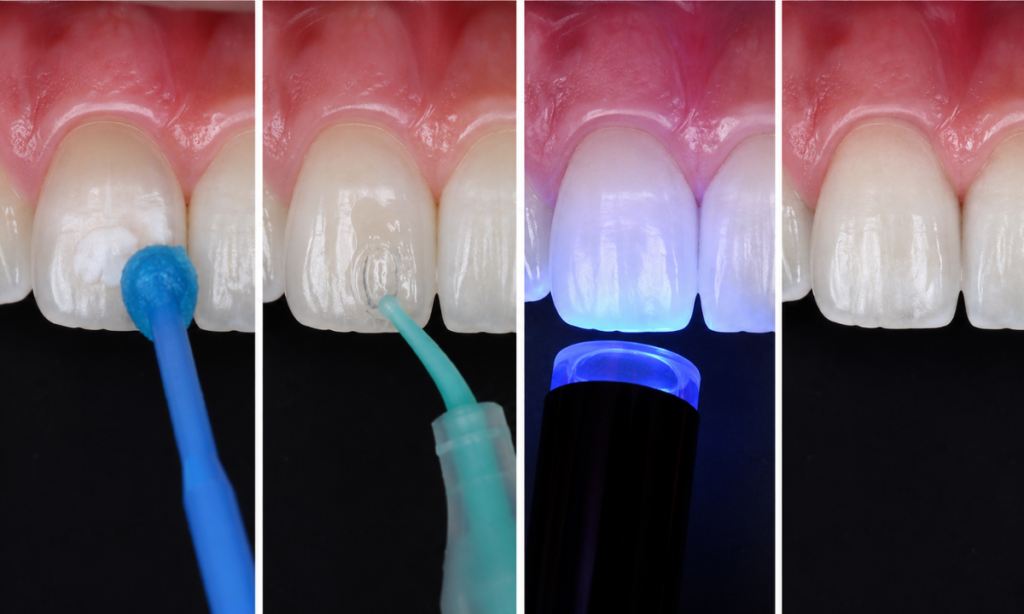
Icon® Resin Infiltration is a breakthrough, non-invasive technology designed specifically to treat chalky white spot lesions without needles, drilling, or loss of healthy enamel.
[White Spot Porosity] ➔ Gentle Etch & Dry ➔ Infiltrate Liquid Resin ➔ Light Cure ➔ Natural Enamel Optical Match
1. The Science Behind It: Fluorosis creates porous, hypo-mineralized zones inside the enamel that refract light differently than healthy enamel, making the spot look opaque and chalky white.
2. The Procedure:
- The tooth surface is prepared with a gentle etching gel to open the enamel pores.
- A liquid, tooth-colored resin infiltrates deep into the micro-porous structure of the white spot via capillary action.
- A specialized curing light hardens the resin inside the tooth.
3. The Result: The infiltrated resin matches the exact optical refractive index of healthy, natural enamel. The chalky white spot instantly blends into the surrounding tooth structure, making it virtually invisible.
Advanced Restorative Solutions: Composite Bonding & Porcelain Veneers
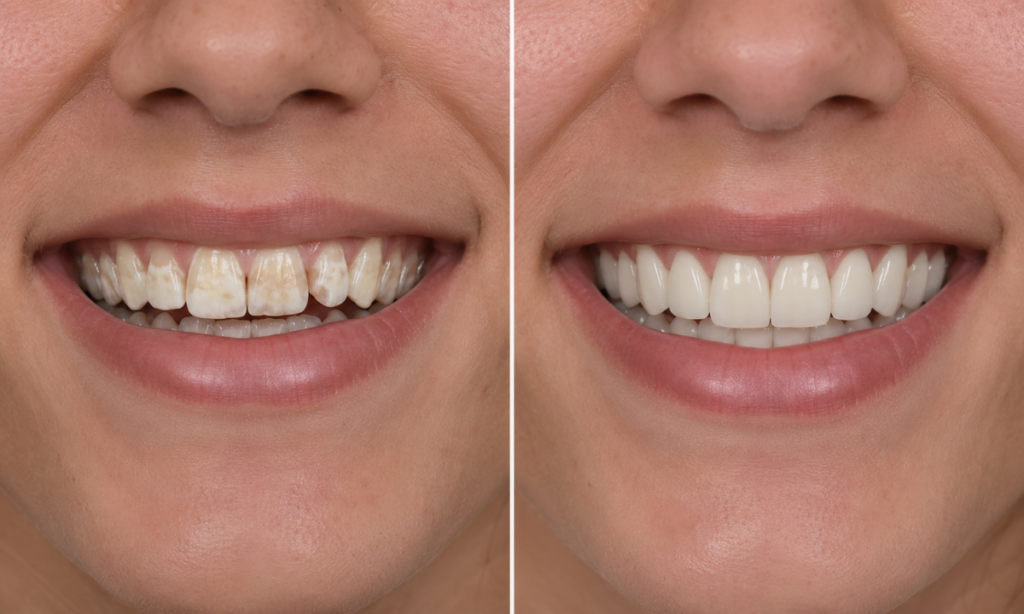
When intrinsic discoloration extends deeper into the enamel, superficial treatments like microabrasion or resin infiltration may not fully mask dark yellow, tan, or brown bands. In these moderate-to-severe cases, advanced restorative fluorosis treatment options allow cosmetic dentists to mask deep stains completely while building a smooth, symmetrical, and natural-looking tooth surface.
By applying custom tooth-colored materials over the front-facing surfaces, restorative dentistry bridges the gap between masking deep discoloration and preserving structural health.
1. Direct Composite Bonding: Single-Visit Aesthetic Restoration
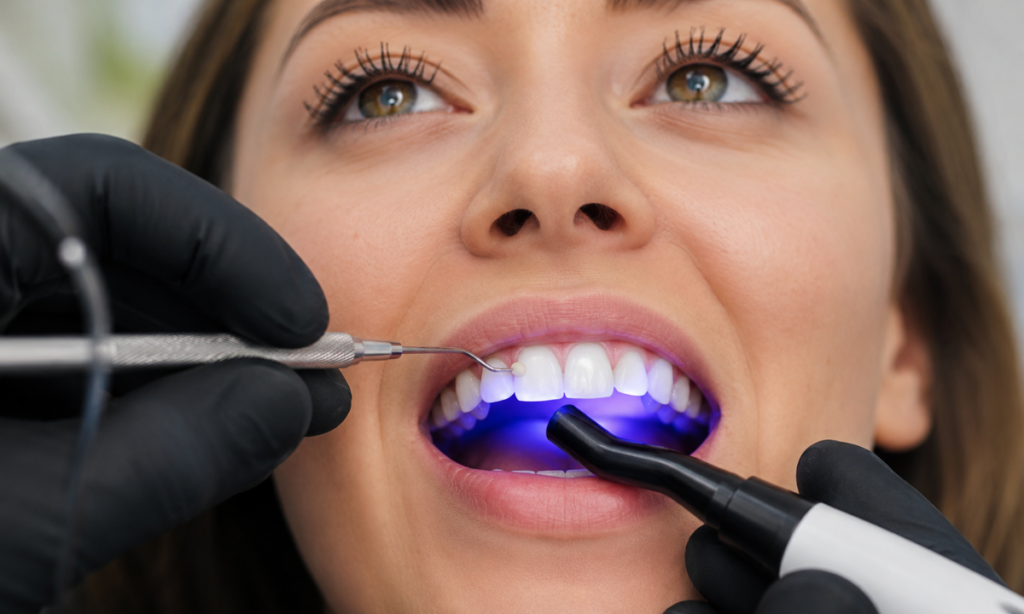
Composite bonding is an efficient, minimally invasive procedure that uses medical-grade, tooth-colored resin to sculpt over areas of noticeable discoloration or minor enamel defects.
1. The Procedure: The dentist selectively prepares the tooth surface, applies a liquid conditioning agent, and layers shade-matched composite resin directly over the stained areas. Using specialized hand instruments and curing lights, the resin is hardened, shaped, and polished to match the natural sheen of surrounding enamel.
2. Best Indication: Localized brown spots, isolated yellow streaks, or mild surface chips associated with fluorosis.
3. Key Advantages:
- Completed in a single appointment.
- Preserves nearly all natural tooth structure (requires minimal to no enamel removal).
- Highly cost-effective initial investment.
4. Considerations: While durable, composite resin is slightly porous over time and may require touch-up polishing every 5 to 7 years to maintain its luster.
2. Custom Porcelain & E-Max Veneers: The Ultimate Smile Transformation
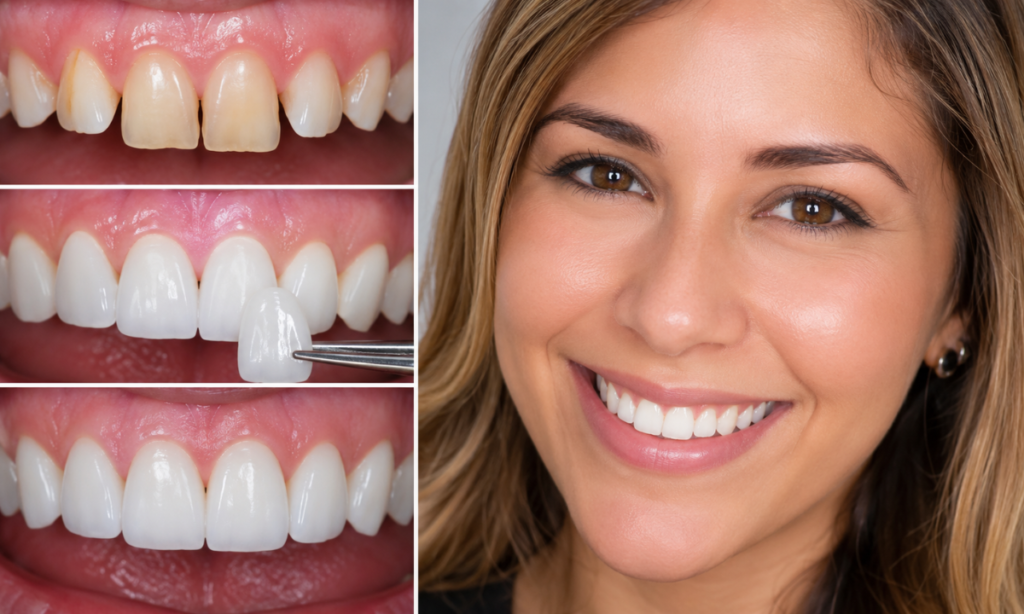
For widespread, moderate-to-severe discoloration across multiple front teeth, custom porcelain or lithium disilicate (E-max) veneers represent the gold standard in cosmetic dentistry.
Veneers are ultra-thin, custom-crafted ceramic shells designed to cover the front surface of your teeth, completely blocking out dark underlying stains while creating perfect alignment and shade uniformity.
| Feature Comparison | Direct Composite Bonding | Custom Porcelain / E-Max Veneers
|
|---|---|---|
| Material | High-density micro-hybrid resin | High-translucency ceramic / Lithium Disilicate |
| Stain Resistance | Moderate (requires periodic polishing) | Exceptional (impervious to coffee, tea, and food dyes) |
| Longevity | 5 to 7 years | 15 to 20+ years with proper oral care |
| Treatment Timeline | Single-visit chairside procedure | 2 visits (Digital Scanning + Final Bonding) |
| Aesthetic Result | Excellent for localized defects | Flawless, natural translucency for complete smile makeovers |
Precision at DDC Smiles
Masking dark underlying fluorosis stains with ultra-thin porcelain requires precise color blocking so the dark stain does not bleed through the translucent ceramic.
Our cosmetic specialists at DDC Smiles use 3D Intraoral Digital Scanners and Digital Smile Design (DSD) technology to capture sub-millimeter 3D models of your teeth. This enables our master dental ceramists to build custom, multi-layered veneers with specialized opaque inner cores that completely block dark fluorosis bands while maintaining the natural, light-reflecting vitality of a healthy tooth.
Full Structural Protection: Custom Dental Crowns for Severe Pitting
In its most severe form, dental fluorosis moves beyond cosmetic discoloration to cause structural vulnerability. When fluoride exposure during early childhood is exceptionally high, the developing enamel matrix becomes brittle, porous, and prone to surface loss. This manifests as deep pitted grooves, rough brown depressions, or brittle edges that chip easily during regular chewing.
When surface enamel is significantly eroded or pitted, aesthetic covers like thin veneers or bonding may not have enough sound enamel to bond securely. In these cases, full-coverage custom crowns provide the necessary 360-degree structural reinforcement while completely transforming the appearance of your smile.
Why Severe Fluorosis Requires Full Structural Coverage?
Restoring severely pitted teeth requires balancing aesthetic transformation with long-term structural integrity:
- Comprehensive 360-Degree Protection: Unlike veneers that cover only the front surface, a dental crown encapsulates the entire visible portion of the tooth down to the gumline. This prevents further enamel crumbling, protects sensitive underlying dentin, and seals out bacteria.
- Restoring Bite Mechanics & Function: Severe pitting can alter how top and bottom teeth bite together (occlusion). High-strength crowns restore missing tooth volume, re-establishing proper chewing efficiency and jaw alignment.
- Impervious Stain Shielding: High-translucency Zirconia and full-ceramic E-max crowns completely block out dark, deep-seated brown or grey fluorosis stains, ensuring a uniform, radiant smile that never discolors over time.
Precision Restoration at DDC Smiles:
Evaluating severely pitted enamel requires a careful balance between preserving natural tooth structure and ensuring restorative strength. Consulting an experienced dentist in HSR Layout ensures your teeth receive a thorough 3D digital assessment to determine whether veneers or full-coverage crowns are the safest, most durable choice for your long-term oral health.
Why Choose DDC Smiles for Your Fluorosis Treatment?
Correcting dental fluorosis requires a careful blend of diagnostic accuracy, artistic precision, and conservative clinical techniques. At DDC Smiles, we believe no two smiles are identical, and no single procedure fits every stage of enamel discoloration. Our multi-specialty hospital provides comprehensive, patient-centered cosmetic care designed to restore natural brightness and structural harmony to your teeth.
From your very first consultation, our team utilizes modern digital dental technology to evaluate the exact depth of enamel staining, ensuring you receive the least invasive, most durable solution possible.
- Advanced 3D Digital Imaging: We utilize 3D CBCT scans and high-resolution 3D Intraoral Scanners to create precise digital models of your teeth, eliminating messy traditional impression trays and ensuring sub-millimeter fitting for veneers or crowns.
- Enamel-Preserving First Policy: Our specialists always prioritize non-surgical techniques such as Icon® Resin Infiltration and microabrasion to erase white spots without removing healthy natural tooth structure whenever clinically possible.
- In-House Shade & Aesthetic Matching: Digital shade mapping allows our cosmetic dentists to analyze light transmission and color translucency, crafting restorations that blend seamlessly with your surrounding natural teeth.
- Pain-Free & Gentle Dentistry: Equipped with soft-tissue diode lasers and gentle polishing protocols, every step of your smile makeover is designed for maximum physical comfort and minimal post-procedure sensitivity.
- Veteran Multi-Specialty Leadership: Guided by Dr H.J. Jai Krishna (MDS, PGDMLE, FDS RCPS Glasgow) and a team of seasoned endodontists, prosthodontists, and cosmetic surgeons, your care is managed by leading experts under one roof.
Whether you require conservative resin infiltration or a complete veneer transformation, consulting an experienced dentist in Koramangala ensures every detail of your treatment is digitally planned and executed with gentle precision. At DDC Smiles, we take the anxiety out of cosmetic dental procedures, helping you smile with complete confidence.
Conclusion
Living with fluorosis spots or uneven enamel discoloration can affect your self-esteem, but trying DIY whitening strips or aggressive abrasive pastes often makes white marks stand out even more. Modern cosmetic dentistry offers safe, highly predictable, and pain-free clinical solutions tailored to every stage of fluorosis. By partnering with a specialized dental diagnostic and treatment center, you can safely eliminate stains, preserve your natural enamel, and achieve the bright, uniform smile you deserve.
Reference:
1 https://adr.org.in/archive/volume/13/issue/1/article/805
2. https://my.clevelandclinic.org/health/diseases/23227-fluorosis
