

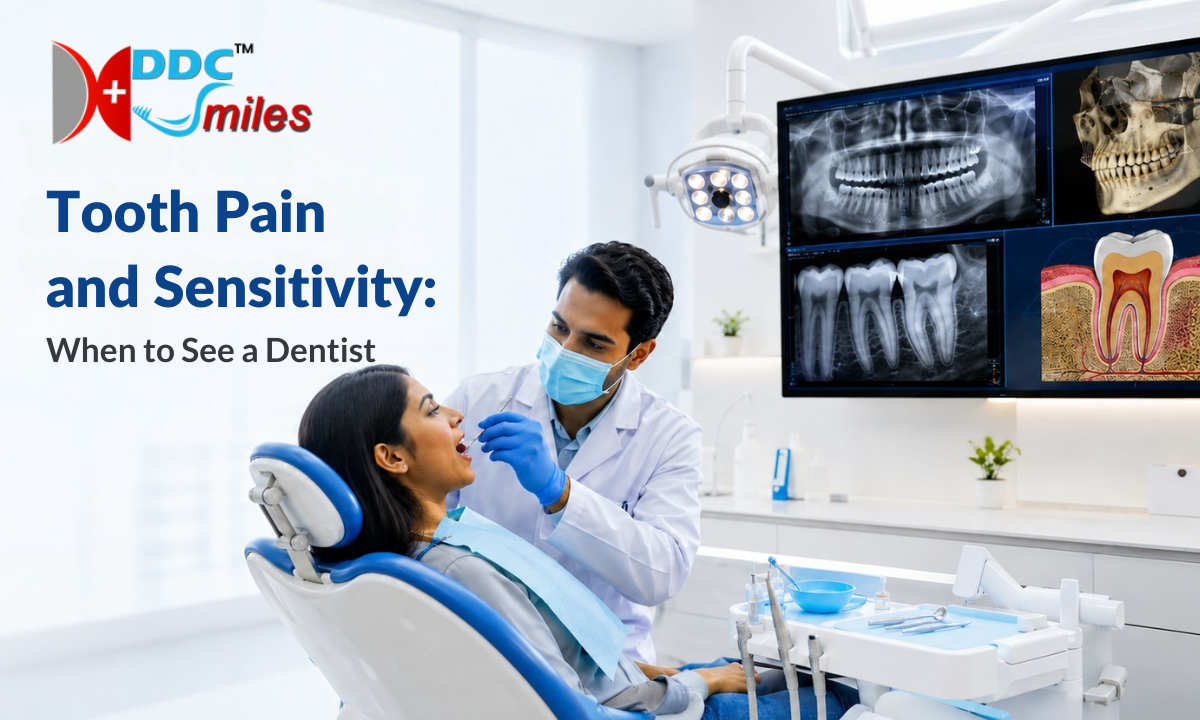
Experiencing a sudden flash of discomfort while enjoying your favorite meal is a clear sign that your oral health requires attention. Ignoring chronic teeth pain and sensitivity can turn minor enamel issues into deep, complex nerve problems that affect your daily life.
Scheduling an assessment at a premier dental hospital in Koramangala gives patients access to the advanced 3D diagnostic tools needed to find the root cause of dental discomfort early, ensuring a fast path to a pain-free smile.
Many people assume oral discomfort is just a temporary inconvenience caused by cold weather or an extra sweet treat. However, the structures inside a tooth are incredibly delicate, protected by a hard outer layer of enamel.
When this defensive shield is compromised by micro-fractures, structural wear, or gum recession, the deeper, living layers of the tooth become exposed to daily environmental changes.
Modern dental science views persistent oral pain not merely as a symptom to suppress with temporary home remedies, but as a dynamic diagnostic message from the nervous system. Advanced dental institutions utilize high-definition intraoral scanners and precise digital imaging to look deep past the surface of the tooth.
By identifying these structural shifts before they trigger widespread swelling or irreversible internal nerve changes, dental teams can apply minimally invasive treatments that successfully preserve your natural teeth and restore your long-term comfort.
Medical Disclaimer
The anatomical models, symptomatic descriptions, and daily hygiene checklists outlined in this guide are intended strictly for educational and public health awareness purposes. This informational post does not substitute for professional medical advice, comprehensive clinical checkups, official prescriptions, or direct face-to-face dental diagnoses. Teeth pain, enamel thinning, and progressive sensitivity can arise from a wide range of structural, bacterial, or systemic conditions that require specialized imaging.
Always consult a qualified endodontist, periodontist, or licensed dentist to thoroughly examine your specific physical symptoms or diagnostic results. Never delay, ignore, or disregard direct professional dental recommendations because of the general educational information shared in this document.
The Mechanism of Nerve Irritation and Knowing What’s Happening Inside?
To understand why a sudden jolt of discomfort catches you off guard, we need to look past the white, visible surface of your smile. Many people mistake chronic oral discomfort for a simple surface-level irritation, but teeth pain due to sensitivity is actually a dynamic, structural reaction driven by microscopic fluid movements deep inside your dental anatomy.
The Structural Design of a Tooth
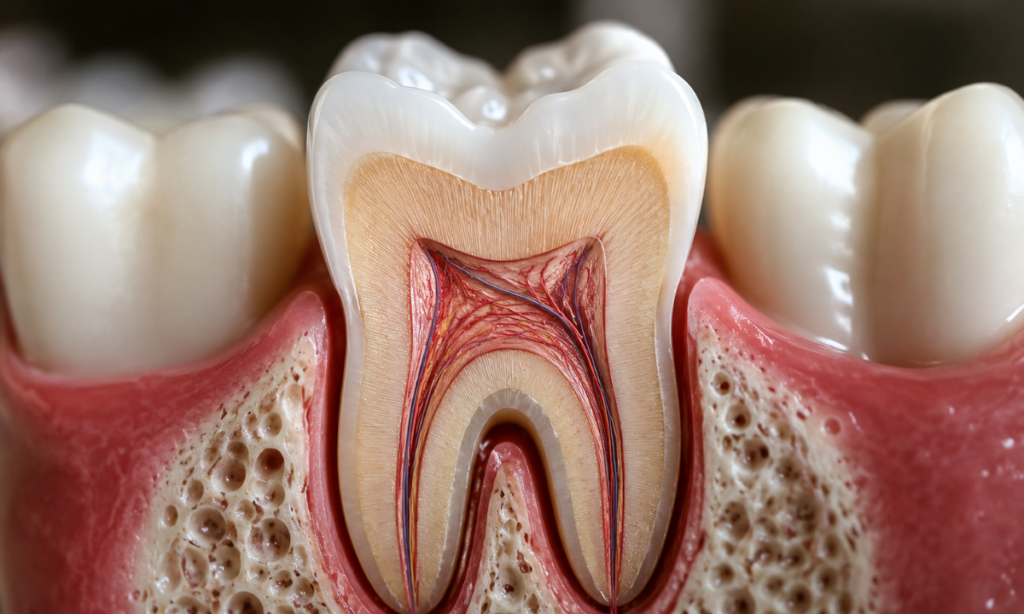
To see how this reaction unfolds, think of your tooth as a secure vault built with three distinct anatomical layers:
1. The Enamel Shield: The outer, mineralized ceramic layer. It has zero nerve endings, acts as a protective shield, and handles the daily forces of chewing.
2. The Dentin Matrix: The living middle layer, which is much softer than enamel. It is packed with millions of microscopic, fluid-filled channels known as dentinal tubules.
3. The Inner Pulp Chamber: The central core of the tooth that houses the main nerve endings and microscopic blood vessels responsible for keeping the tooth alive.
How Exposed Dentin Triggers Tooth Sensitivity
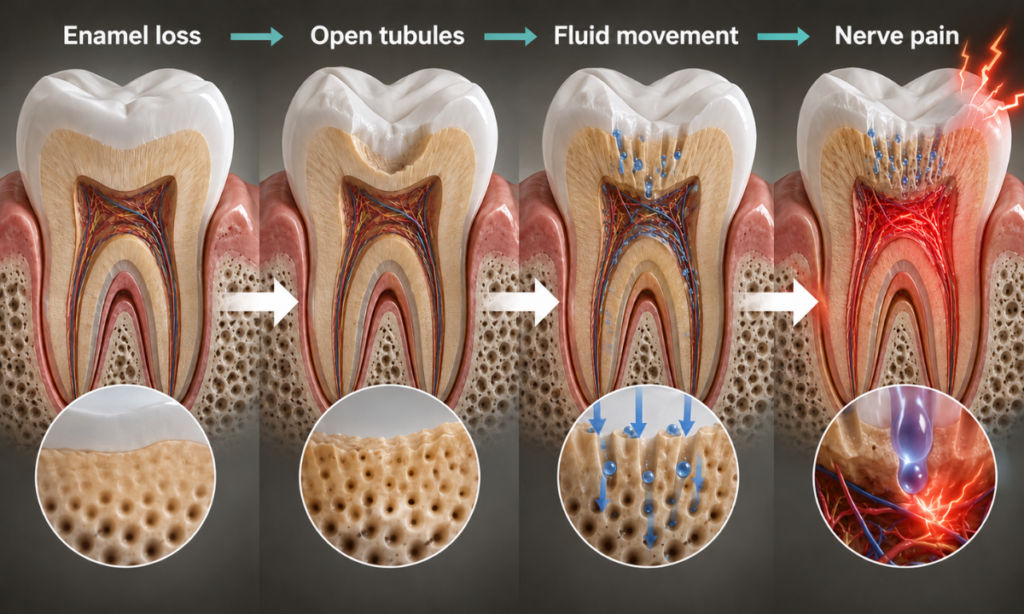
When your outer enamel shield thins or your gumline recedes even a fraction of a millimeter, it exposes the dentin matrix to the open environment of your mouth. This exposure triggers teeth sensitivity by initiating a microscopic chain reaction:
1. Open Micro-Pipelines: The dentinal tubules effectively become open pathways leading directly from the outside world straight to the tooth’s internal nerve center.
2. The Fluid Shockwave: When hot, cold, sweet, or highly acidic inputs hit these open pipelines, it causes the microscopic fluid inside the channels to instantly shift, expand, or contract.
3. The Nerve Alarm: This rapid fluid movement creates a sudden change in physical pressure within the tubule. The pressure shifts pull or push against the delicate nerve endings in the pulp chamber, which your brain instantly reads as a sharp, electric shock.
What Happens When Exposed Dentin Is Left Untreated
Leaving these fluid pathways exposed does more than just cause temporary twinges; it actively sets the stage for progressive dental issues:
1. Bacterial Infiltration: Open tubules act as microscopic highways, allowing plaque bacteria to slowly migrate downward toward the central nerve chamber.
2. Chronic Irritation: Continuous fluid movement keeps the inner nerve in a constant state of low-grade stress, steadily lowering your natural threshold for pain.
3. Accelerated Tissue Wear: Unprotected dentin wears away significantly faster than enamel, steadily deepening the structural grooves over time.
Uncovering the Root Causes
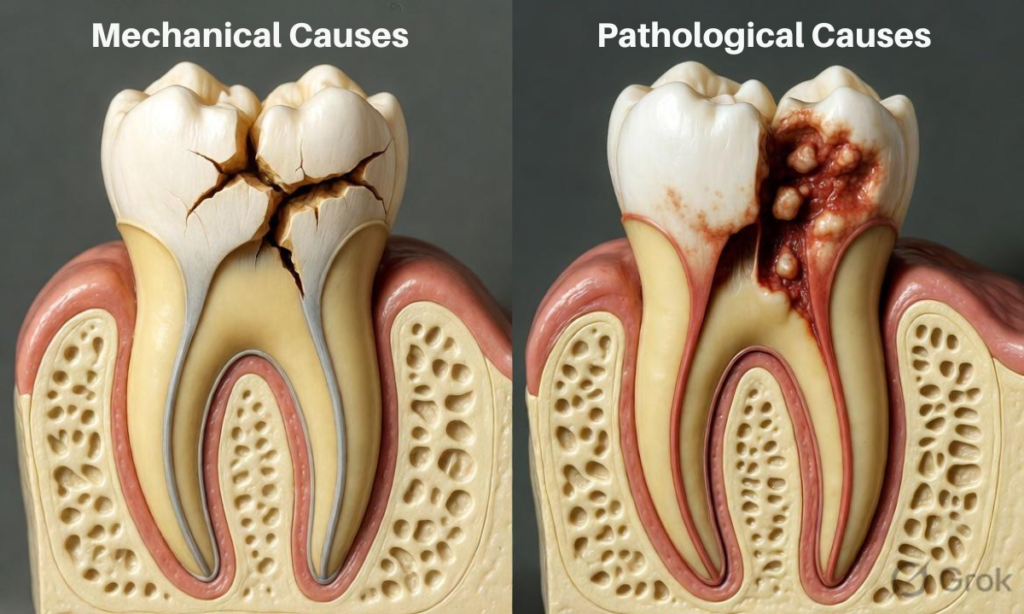
When patients arrive at our clinic asking why their teeth hurt, the answer rarely traces back to a single, isolated problem. Dental discomfort is usually the final result of overlapping structural, behavioral, or pathological factors working together beneath the surface. To provide a clear overview of these triggers, we can categorize the primary dental causes of chronic dental discomfort into two distinct matrices: daily mechanical habits and progressive structural pathologies.
1. Mechanical and Behavioral Triggers
The table below outlines how regular daily habits and physical stresses wear down your teeth’s natural protective layers over time:
| Triggering Habit or Force | How It Damages the Tooth Structure | Long-Term Clinical Consequence
|
|---|---|---|
| Aggressive Brushing | Using a hard-bristled toothbrush or applying excessive horizontal pressure physically scrubs away thin enamel. | Exposes the softer dentin layer around the gumline, creating permanent notches (abrasions). |
| Chronic Nocturnal Bruxism | Clenching or grinding your jaws during sleep subjects your teeth to immense, continuous pressure. | Flattens the biting surfaces, causes micro-fractures, and stresses the surrounding ligaments. |
| Acidic Dietary Erosion | Regular consumption of carbonated sodas, citrus fruits, and sports drinks chemically dissolves tooth minerals. | Thins out the protective enamel across multiple teeth, making them highly reactive to daily temperature changes. |
2. Pathological and Structural Triggers
When the discomfort moves past basic wear and tear, it usually points to an underlying disease or structural breakdown that requires specialized clinical treatment:
| Underlying Dental Pathology | Hidden Manifestation Inside the Mouth | How Advanced Diagnostics Resolve It
|
|---|---|---|
| Deep Micro-Cavities | Bacterial decay breaks through the enamel shield and actively moves into the inner dentin matrix. | Uses digital X-rays (RVG) to locate hidden decay hiding between teeth before it infects the nerve. |
| Cracked Tooth Syndrome | Microscopic fractures form along the enamel or root, opening slightly under biting pressure. | Utilizes high-definition 3D CBCT imaging to trace deep structural cracks that normal visual exams miss. |
| Progressive Gum Recession | Chronic inflammation (periodontitis) causes the gums to pull away, leaving the tooth roots exposed. | Employs deep periodontal pocket mapping to check bone levels and secure the tooth’s foundation. |
By separating these triggers into clear behavioral and structural categories, our medical team can pinpoint the exact cause of your discomfort. This targeted approach ensures you receive a customized care plan that goes beyond simply masking the pain to truly protecting your natural smile.
Identifying Chronic Nerve Stresses: Transient vs. Progressive Damage
Every tooth has a built-in threshold for handling everyday temperatures and textures. A brief, two-second flash of discomfort that vanishes the moment a cold food or drink leaves your mouth is usually a minor, temporary reaction. However, when you experience persistent tooth sensitivity where a dull, throbbing ache lingers for minutes or hours after the initial trigger is gone, the condition has moved past simple enamel wear into a more serious stage of internal nerve stress.
Reversible vs. Irreversible Nerve Changes
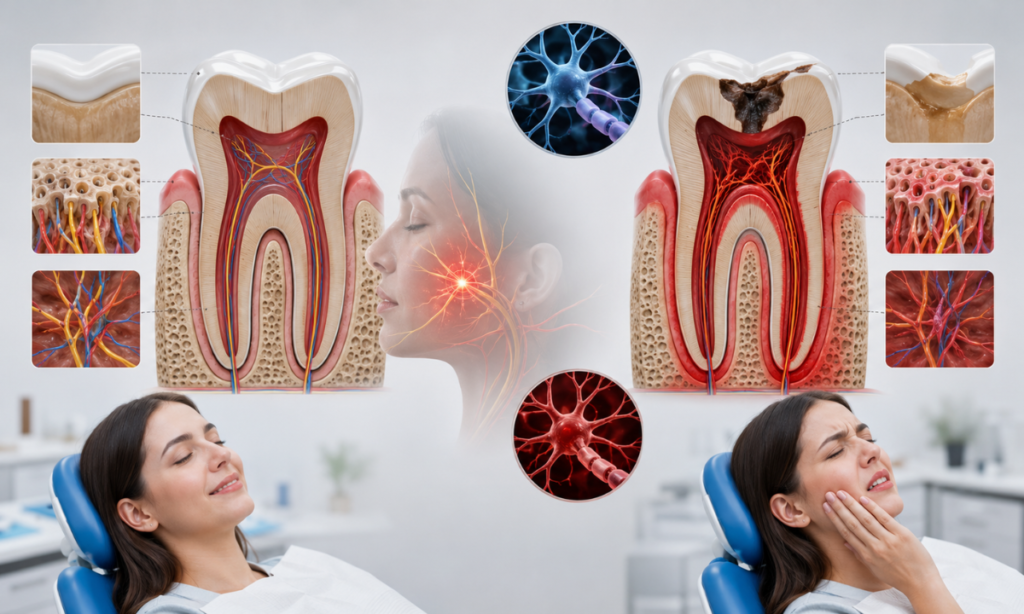
In advanced dentistry, chronic oral discomfort is classified by how deeply the internal nerve tissue is affected. Radiologists and specialists look at two distinct phases of inflammation:
1. Reversible Pulpitis: This occurs when the inner pulp chamber experiences mild, temporary inflammation. The nerve is irritated by an outside trigger such as a new microscopic cavity or a minor gum recession, but it retains the biological ability to fully heal. Once a specialist cleans the area or seals the exposed surface, the internal pressure drops, and the nerve returns to its normal, healthy state.
2. Irreversible Pulpitis: This represents the critical tipping point where the inner nerve is damaged beyond its ability to self-repair. Because the pulp tissue is trapped inside the completely rigid, unyielding walls of the tooth structure, any ongoing inflammation causes blood vessels to swell rapidly.
This swelling cuts off the tooth’s internal blood supply, causing the delicate living tissue inside to slowly suffocate and break down.
Key Signs of Long-Term Nerve Strain
When internal structural damage progresses, it produces distinct behavioral warning signs that point to deeper issues:
1. Unprovoked Discomfort: The tooth begins to throb spontaneously, aching out of nowhere even when you are not eating, drinking, or chewing.
2. Postural Pressure Changes: The dull ache intensifies significantly when you lie down flat or bend forward, as the natural shift in blood pressure toward the head increases the physical fluid pressure inside the pulp chamber.
3. Lingering Thermal Aftershocks: Instead of a sharp, immediate shock that leaves as quickly as it came, the tooth experiences a deep, radiating ache that echoes across your entire jaw long after you finish a meal.
Recognizing these key indicators early allows dental teams to intervene before the underlying tissue breaks down completely, preserving the natural tooth structure and stopping a progressive issue from turning into a nighttime emergency.
Why Hot and Cold Foods Trigger Tooth Sensitivity
Daily meals often become an unexpected test of endurance when your oral structures are compromised. For many individuals, the realization that something is wrong happens during simple daily activities, noticing that their teeth hurt when drinking cold water or feeling a sudden ache while eating a warm bowl of soup. This intense reaction is directly tied to sudden changes in temperature within the mouth.
How Temperature Changes Trigger Tooth Sensitivity
As illustrated in the detailed structural diagram above, losing your protective enamel shield creates an open pathway to the inner tooth structures. When exposed dentin comes into contact with extreme temperatures, it initiates a rapid sequence of events:
1. Cold Sensitivity and Fluid Contraction: Ice-cold drinks cause the microscopic fluid inside the open dentin tubules to contract rapidly, pulling outward from the center of the tooth. This sudden movement creates tension along the internal nerve fibers.
2. Heat Sensitivity and Fluid Expansion: Hot drinks or steaming foods cause the microscopic fluid to expand quickly, pushing inward toward the pulp chamber. This increased pressure irritates the delicate nerve tissues.
3. Pain Stays Longer: Healthy teeth adapt to these rapid temperature shifts within seconds. However, if the inner nerve tissue is already stressed, the pain shifts from a quick flash into a deep, radiating ache that persists long after you finish your drink.
How Long-Lasting Tooth Pain Can Indicate a Deeper Problem
Paying close attention to how long the discomfort lasts helps determine whether the inner tooth structures are recovering or experiencing ongoing stress:
1. Brief Sensitivity (0 to 5 Seconds): A sharp, brief twinge that disappears the moment the cold liquid is swallowed. This indicates early dentin exposure, meaning the protective enamel shield is thinning, but the internal nerve tissue remains healthy.
2. Prolonged Sensitivity (5 to 30 Seconds): The discomfort lingers even after the mouth returns to normal room temperature. This shows that the micro-channels are deeply exposed and the internal nerve is beginning to experience low-grade irritation.
3. Persistent Tooth Pain (Greater than 60 Seconds): A throbbing pain that continues to radiate through the jaw long after a meal. This is a clear indicator that the internal tissue has moved past simple surface sensitivity and is experiencing progressive nerve strain.
Understanding these thermal reactions helps you identify early warning signs before they escalate. Instead of avoiding your favorite foods or changing how you eat, tracking these temperature responses can give your dental team the essential insights needed to provide targeted, protective care.
When Home Care Isn’t Enough?
It is common to try to manage early twinges of oral discomfort by changing how you chew or switching to a different toothpaste. However, relying solely on temporary adjustments can cause you to miss the exact window where a conservative treatment could completely save a tooth. Knowing when to see a dentist for tooth sensitivity is the most important step in preventing a minor structural wear issue from turning into a severe, deep-seated infection.
Red Flags That Require Immediate Diagnostic Attention
If your oral symptoms progress past occasional mild twinges, look for these specific indicators that show the internal nerve tissue requires professional care:
1. Throbbing Tooth Pain: Discomfort that wakes you up in the middle of the night or intensifies the moment you lie flat.
2. Localized Gum Swelling: The appearance of a small, tender bump or pimple-like swelling on the gums near the aching tooth root.
3. Hot or Cold Sensitivity That Lingers: Pain from hot or cold inputs that lasts for several minutes after the food or drink is completely gone.
4. Pain When Biting or Chewing: A sharp pain that strikes whenever the tooth makes contact during normal chewing or tapping.
Proactive Daily Maintenance: Your Home Oral Care Checklist
While progressive structural issues require professional diagnosis, maintaining a structured, defensive routine at home keeps your enamel strong and protects exposed dentin pathways.
Use this quick, 8-point daily checklist to keep your oral hygiene on track:
1. Use a Soft-Bristled Brush: Always opt for soft or ultra-soft bristles. Avoid hard bristles, which can scrub away thin enamel and irritate your gumline.
2. Master the 45-Degree Angle: Tilt your brush handle at a 45-degree angle toward the gumline. Use gentle, circular motions rather than sawing back and forth horizontally.
3. Track Your Two Minutes: Brush for a full 120 seconds, ensuring you clean the outer, inner, and biting surfaces of every single tooth.
4. Clean Between with Floss: Clear out food debris and plaque from the tight spaces between teeth daily where standard toothbrush bristles cannot reach.
5. Incorporate Tongue Scraping: Use a gentle tongue scraper from back to front to clear away trapped bacteria and keep your breath fresh.
6. Choose Fluoride or Calming Toothpastes: If your enamel is thinning, use a toothpaste designed to block exposed pathways and strengthen mineral layers.
7. Rinse with Water After Acidic Meals: After consuming citrus fruits, coffee, or tomatoes, rinse thoroughly with plain water to wash away surface acids before brushing.
8. Perform a Brief Mirror Check: Take ten seconds daily to look for early warning signs like minor gum redness, bleeding while flossing, or new dark spots on biting surfaces.
Why Choose DDC Smiles?
Resolving chronic dental discomfort requires moving past guesswork and utilizing precise diagnostic technology. Finding a comprehensive dental hospital in HSR Layout that combines specialized, multi-decade clinical experience with on-site advanced imaging ensures your oral health is managed under the highest standards of safety and accuracy. Our diagnostic facilities in HSR Layout and Koramangala provide patients with an unmatched level of imaging clarity, a warm and welcoming space, and completely personalized treatment strategies.
Our Clinical Specializations & Patient-First Care
1. Advanced On-Site Diagnostics: We feature 21st-century imaging infrastructure, including high-definition Dental CBCT (3D Cone Beam Computed Tomography), digital intraoral radiography (RVG), and OPG scans. This allows us to map your dental anatomy in 3D right during your visit, eliminating the need for external diagnostic referrals.
2. Veteran Medical Leadership: Our clinical ecosystem is guided by Dr H.J. Jai Krishna, MDS, FDS RCPS (Glasgow), bringing over 30 years of elite international expertise in complex oral reconstructions, alongside senior multi-specialty dental partners.
3. Pain-Free Treatment Philosophies: We understand that dental anxiety is a very real hurdle. Our teams utilize minimally invasive procedural techniques, soft-tissue lasers, and micro-endodontic tools to ensure every single treatment is virtually pain-free.
We believe world-class oral care should be stress-free. DDC Smiles provides fully transparent billing structures paired with flexible zero-interest EMI financing plans for high-value treatments like invisible braces or advanced titanium implants.
Conclusion
Living with chronic oral discomfort can impact your everyday happiness, making simple joys like sharing a cold drink or enjoying a meal stressful. It is essential to remember that healthy teeth are not meant to hurt. By understanding the dynamic anatomical messages your nervous system sends and moving past temporary home fixes, you can protect your teeth before minor wear escalates into significant structural damage.
Partnering with an advanced diagnostic team at DDC Smiles ensures that every tooth structure, nerve pathway, and root layer is evaluated with absolute spatial precision. Early, proactive care is the single most effective way to protect your natural smile, eliminate lingering discomfort, and secure your long-term peace of mind.
Remember that early, accurate identification is the single most powerful tool in modern medicine, providing a clear path forward and securing your long-term peace of mind.
Reference:
1. https://www.hopkinsmedicine.org/health/conditions-and-diseases/sensitive-teeth
2. https://my.clevelandclinic.org/health/diseases/10957-toothache
