


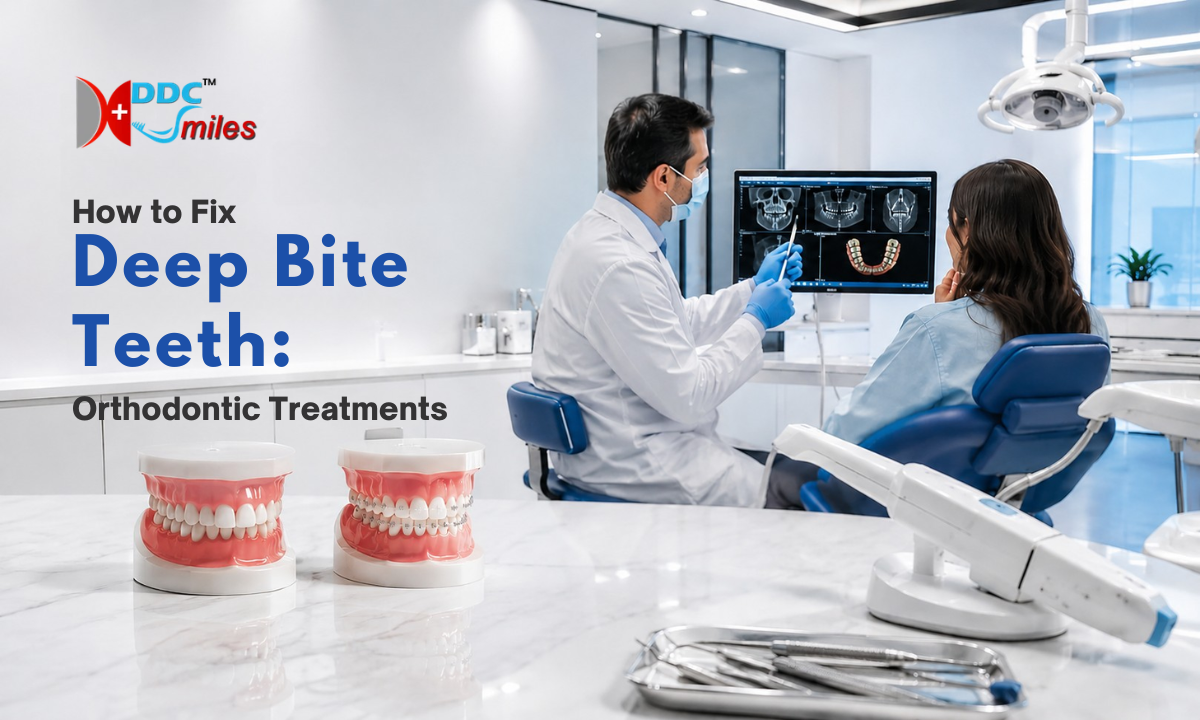
When evaluating facial symmetry, many individuals overlook how their upper and lower jaws meet vertically. If your upper front teeth overlap your lower teeth excessively when closing your mouth, you may be dealing with deep bite teeth.
Correcting this condition is vital for preserving your jaw joints and preventing premature enamel wear. Seeking an evaluation at a specialized dental hospital in Koramangala allows our expert orthodontic team to examine your bite profile using advanced digital imaging, helping you transition from hidden structural strain to a perfectly balanced, functional smile.
It is important to realize that an excessive vertical overlap is far more than a simple cosmetic preference. As a misaligned bite alters how chewing forces are distributed across your mouth, it can silently trigger chronic jaw fatigue, headaches, and uneven tooth erosion over time.
We prioritize patient education, helping you look past the surface of your smile to understand the deep structural dynamics of your teeth. By identifying this condition early, we can craft a personalized path to realign your jaw mechanics and protect your long-term health.
Medical Disclaimer
The clinical insights, anatomical breakdowns, and orthodontic strategies presented in this guide are intended strictly for educational and informational purposes. This content does not constitute professional medical advice, a formal dental diagnosis, or a definitive treatment plan. Bite profiles, jaw growth rotations, and enamel wear patterns are highly unique physical characteristics influenced by genetics, muscular forces, and age.
Always consult a qualified orthodontist or a board-certified dental specialist to evaluate your specific skeletal and dental parameters before beginning any alignment tracking, clear tray therapy, or full-mouth restorative protocol. Never delay seeking professional oral healthcare based on the material read in this article.
The Anatomical Divide: Dental vs. Skeletal Misalignment
To the untrained eye, every deep bite looks roughly the same; the upper teeth simply mask the lower teeth during a smile. However, beneath the surface, human alignment variations fall into two completely distinct categories based on their anatomical origin.
Determining whether your vertical overlap is rooted in the positions of your teeth or the underlying architecture of your facial bones is the crucial first step in mapping out a successful treatment strategy.
1. The Dental Deep Bite (Tooth Positioning)
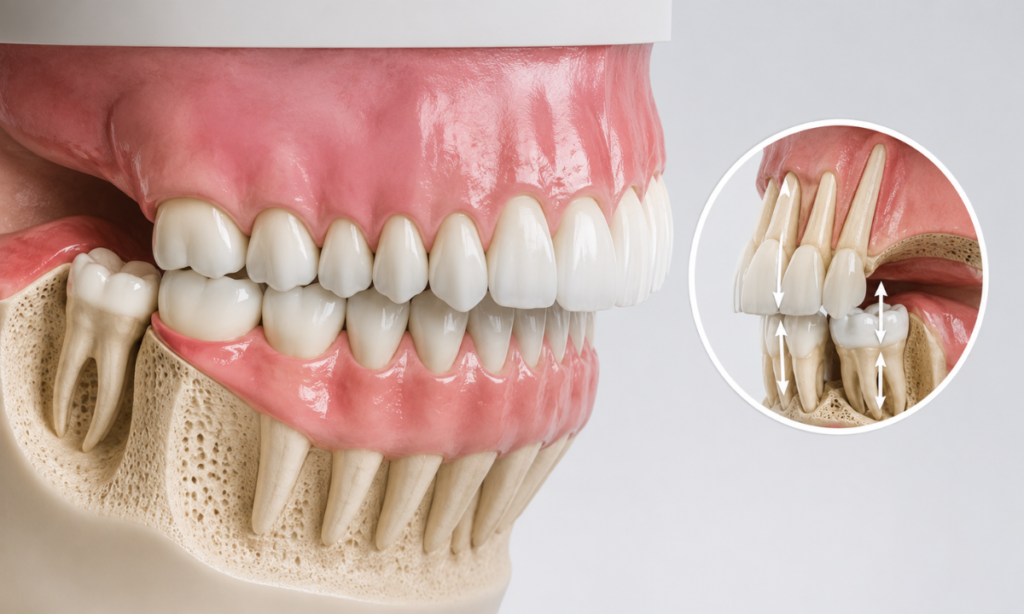
A dental deep bite occurs when the jaw bones themselves are perfectly proportioned, but the teeth have grown or shifted into improper positions. This type of misalignment is typically driven by two distinct dental movements:
Over-Eruption of Front Teeth: In many cases, the upper or lower front incisors continue to grow vertically past their ideal stopping point, as they never met a solid counter-surface from the opposing jaw. They keep erupting until they physically strike the opposing gum tissue or create an exaggerated overlap.
Under-Eruption of Back Teeth: Conversely, if the back molars do not grow tall enough during childhood development, the entire back of the bite collapses slightly. This loss of vertical height causes the jaws to close too far together, forcing the front teeth to overlap dramatically.
As a dental deep bite is confined to the teeth themselves, it is highly responsive to standard force vectors that guide individual teeth up or down into their correct positions.
2. The Skeletal Deep Bite (Jawbone Structure)
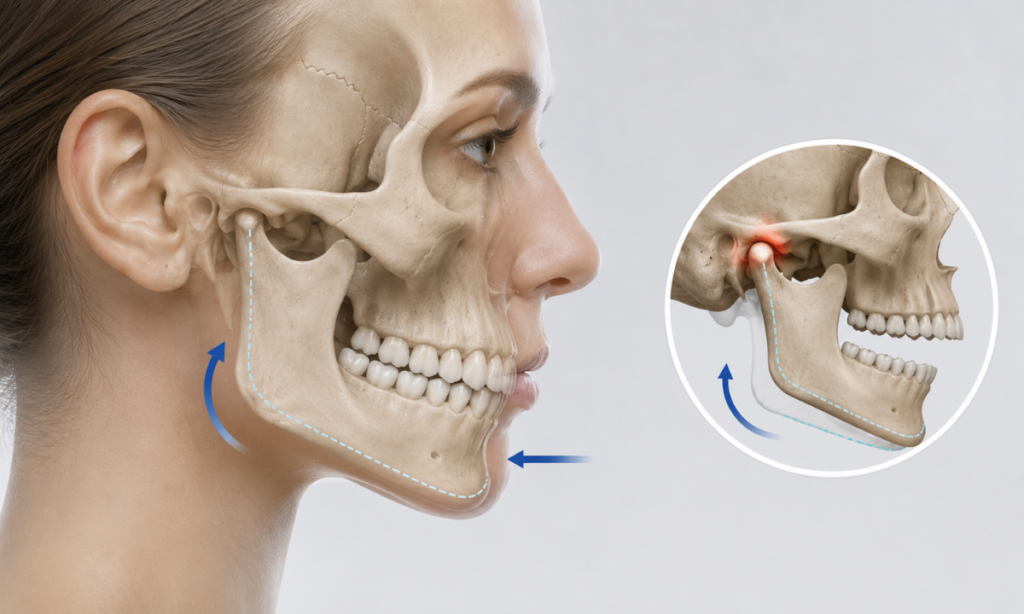
A skeletal deep bite is an entirely different structural scenario, rooted deeply in genetics and bone development. Here, the teeth are often placed fine within their individual sockets, but the facial skeleton features a structural mismatch between the upper and lower jawbones.
Jaw Growth Discrepancies: This typically happens when a person’s lower jaw (mandible) is genetically shorter than their upper jaw, or when the growth pattern of the face is more horizontal than vertical.
The Rotation Effect: When the lower jaw exhibits a forward and upward growth rotation, it automatically deepens the vertical overlap, creating a very strong, compressed bite profile.
Diagnostic Significance: Distinguishing between these two types is where advanced imaging becomes indispensable. A dental specialist must use precise lateral cephalometric scans (profile X-rays) to analyze the exact angles of the jawbones relative to the skull base.
Treating a bone-level discrepancy requires moving beyond simple tooth shifts to actively modify jaw relationships or re-establish correct facial proportions.
Why a Deep Bite Demands Attention?
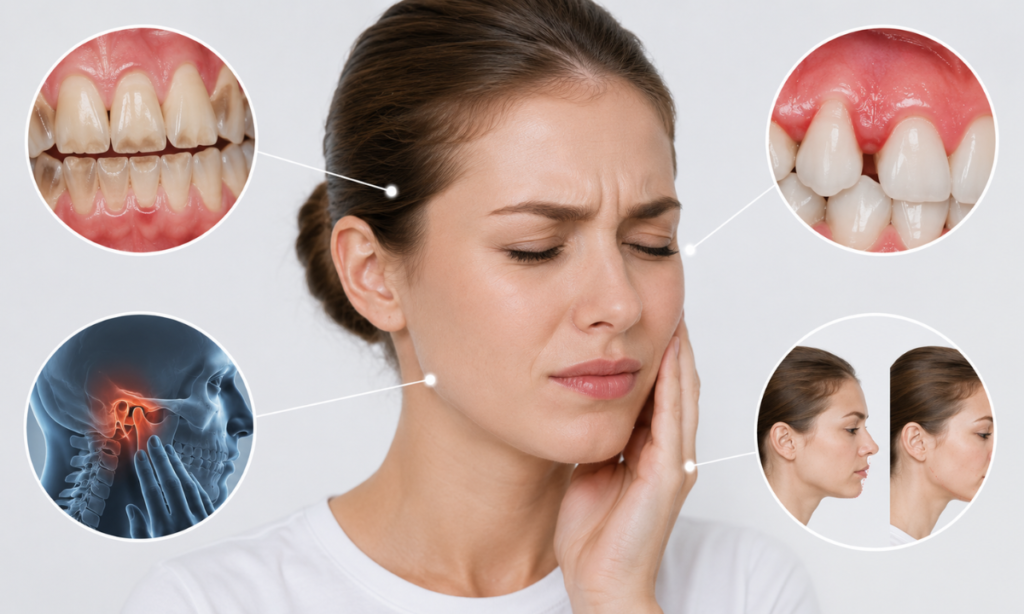
Leaving an excessive vertical overlap unaddressed can lead to a variety of long-term structural and functional issues. As your mouth operates as a finely balanced mechanical system, any variation in how your teeth meet changes how chewing forces are distributed across your entire face. Over years or decades, this structural imbalance can cause significant wear and tear on your teeth, gums, and jaw joints.
Understanding the specific physical consequences of this misalignment highlights why timely intervention is so important for your oral health.
The Cascade of Complications
| Area Affected | Specific Physical Impact | Long-Term Health Consequence
|
|---|---|---|
| Tooth Structure | Chronic friction as the lower front teeth scrape against the back surfaces of the upper front teeth. | Severe enamel thinning, chipped biting edges, and heightened dentin sensitivity. |
| Soft Gum Tissue | Lower incisors bite directly into the delicate palatal mucosa (the roof of the mouth) behind the upper teeth. | Chronic irritation, painful sores, and localized gum recession that can compromise root stability. |
| Jaw Mechanics | The lower jaw is forced backwards into its socket, compressing the sensitive tissues of the temporomandibular joint. | Chronic jaw clicking, popping, limited opening, and persistent tension headaches. |
| Facial Aesthetics | The lower third of the face appears shortened due to the collapsed vertical distance between the nose and chin. | Pronounced chin creases, thinner-looking lips, and a prematurely aged facial profile. |
Understanding the Enamel Degradation
The physical damage caused by an incorrect vertical bite relationship is often progressive. Under normal circumstances, your back molars absorb the heavy forces of chewing, while your front teeth act as guides when your jaw moves side-to-side.
In a severe vertical overlap, this natural protective mechanism is disrupted. The lower jaw is structurally restricted, preventing it from moving freely. As a result, when you chew, your front teeth slide against each other with excessive force.
This continuous friction strips away the protective enamel layer, exposing the softer dentin underneath. Over time, this can cause the lower front teeth to look noticeably shortened, uneven, or flattened along their biting edges. By recognizing these structural risks, it becomes clear that adjusting an incorrect bite profile is about much more than just straight teeth.
It is a vital preventive step that protects your enamel, guards your gum tissue, and keeps your jaw joints moving smoothly and comfortably for a lifetime.
Advanced Orthodontics and Modern Alignment Methods
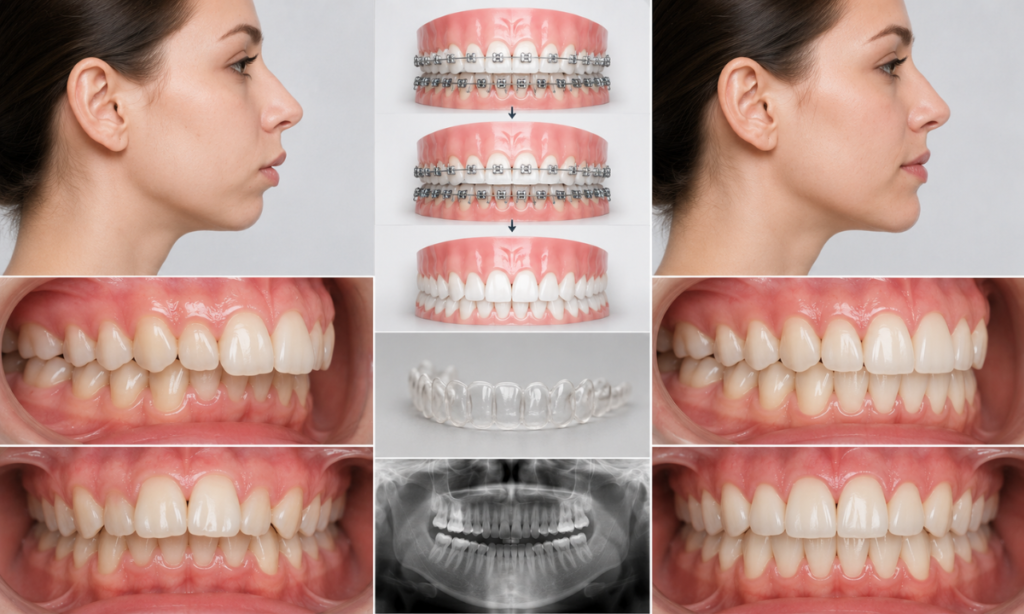
Correcting a deep vertical overlap requires a strategic approach that alters the height and position of specific teeth.
To achieve a successful deep bite correction, orthodontists use precise, controlled forces to manipulate the dental arch. The goal is to open up the bite, creating a balanced space where the front teeth no longer excessively mask the lower jaw.
Modern dental science provides highly sophisticated pathways to safely reshape these tooth relationships, giving patients options that fit their lifestyle and cosmetic preferences.
The Biomechanics of Opening a Bite
To correct a deep overlap, an orthodontist must adjust the vertical levels of the teeth. This is accomplished through two core mechanical movements, often used in combination:
Incisor Intrusion: The front teeth are gently pushed vertically back into their supporting jawbone. This decreases their height, reducing the vertical curtain effect over the lower teeth.
Molar Extrusion: The back molars are carefully guided to grow taller out of the bone. By raising the height of the back teeth, the entire jaw relationship opens up, naturally creating a safe clearance zone for the front teeth.
Modern Realignment Systems
Customized Clear Aligners: For patients seeking a discrete, flexible solution, clear aligners represent a major leap forward in dental technology. These removable, transparent trays are engineered using 3D digital software to apply highly specific force vectors to individual teeth. Specialized attachments tiny, tooth-colored shapes bonded temporarily to the enamel act as handles, allowing the trays to pull the back molars upward or push the front incisors downward with incredible predictability.
Traditional and Ceramic Braces: Conventional fixed brackets remain a highly reliable option for severe or complex skeletal deep bites. By running a continuous, shape-memory archwire through brackets bonded to each tooth, orthodontists can place constant, highly stable pressure across the entire arch to open the bite.
Temporary Anchorage Devices (TADs): In more complex vertical cases, orthodontists may use micro-screws placed temporarily into the jawbone. These devices serve as fixed, unyielding anchors, allowing the dental team to push front teeth upward without accidentally pulling back teeth out of position.
Patient Note: As altering vertical heights requires remodeling the supporting bone structure around the roots, the process must be slow, steady, and carefully monitored. This approach ensures the roots remain perfectly healthy and stable throughout your alignment journey.
Restorative Coordination: Elevating Vertical Dimension
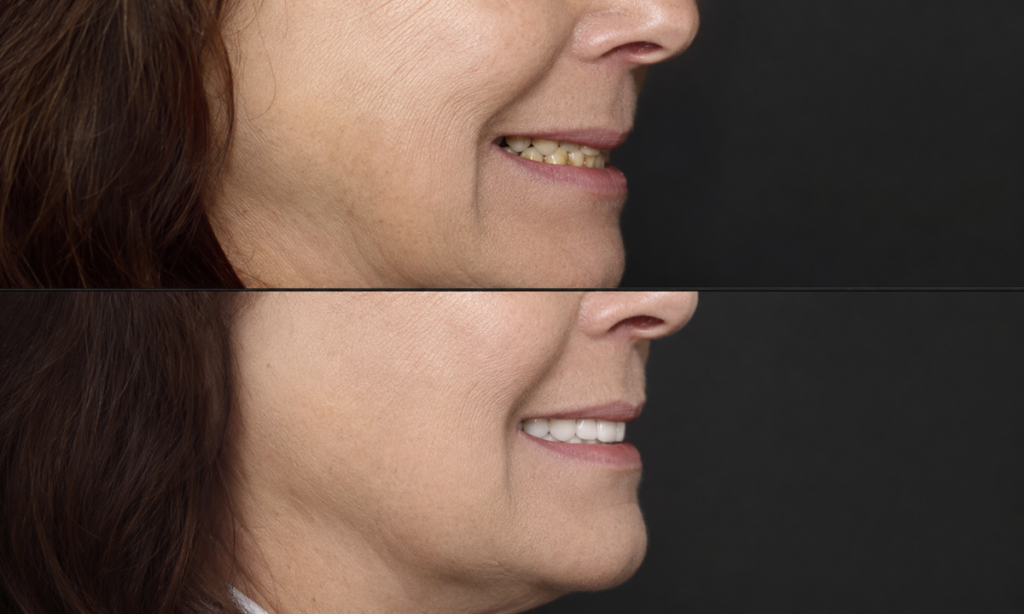
While advanced orthodontics can beautifully reposition teeth within the jawbone, adult patients who have lived with a vertical overlap for decades often require a more comprehensive solution. Over time, a severe deep bite forces the back molars to bear excessive, uneven biting pressures.
This continuous grinding leads to severe attrition, the progressive wearing away of the natural enamel cushions on your chewing surfaces. When these back teeth lose their height, the entire lower third of the face compresses, collapsing what dental specialists call the occlusal vertical dimension (the natural vertical height of your bite).
In these advanced scenarios, simply moving the teeth into a straight line is only half the battle. To truly fix the bite, the lost tooth structure must be physically rebuilt through full-mouth restorative treatment.
This requires a coordinated effort between orthodontics and prosthodontics (the dental specialty focused on restoring missing or damaged teeth) to safely lift the bite back to its ideal, healthy height.
The Step-by-Step Restoration Process
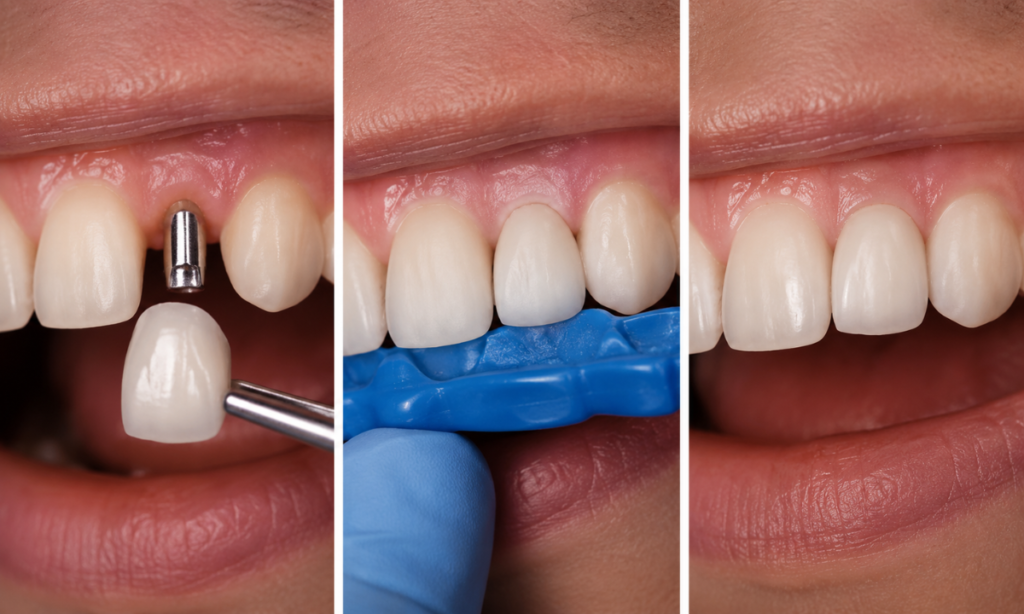
Reclaiming your natural vertical bite height is a highly structured process that balances both joint health and dental aesthetics:
Phase 1: Stabilization and Alignment:
The journey typically begins with a brief phase of orthodontic treatment to straighten the roots and ensure the teeth are upright and properly spaced. This establishes a stable foundation for the upcoming structural work.
Phase 2: Establishing the Trial Height:
Before making permanent changes, your dental team creates a temporary, tooth-colored resin overlay. This allows you to test the new, opened bite height for a few weeks, ensuring your jaw muscles and joints adapt comfortably to the increased vertical space.
Phase 3: Permanent Structural Rebuilding:
Once your jaw joints are completely comfortable with the new position, the temporary overlays are replaced with permanent, highly durable ceramic restorations. For patients dealing with broken, heavily worn, or missing teeth that have caused the bite to collapse, a custom-engineered Crowns and bridges treatment is utilized to permanently reshape and reinforce the chewing surfaces. This process places durable ceramic caps over worn individual teeth or bridges across gaps, locking in the ideal vertical height.
Key Benefits of Rebuilding Restorative Height
Permanent Joint Decompression:
Physically lengthening the back teeth creates a natural stop that prevents the lower jaw from over-closing. This immediately relieves the chronic pressure on the temporomandibular joint (TMJ), reducing muscle spasms and jaw clicking.
Enamel Shielding:
Modern dental ceramics are engineered to mimic the natural resilience of human enamel. By capping worn surfaces, you shield the vulnerable, sensitive inner dentin layers from further structural decay.
Facial Profile Rejuvenation:
Opening up the vertical dimension restores the natural distance between your nose and chin. This subtly smooths out deep facial creases around the mouth, supports the lips, and restores balanced proportions to your overall facial structure.
Pairing modern alignment systems with precision restorations, a collapsed bite can be completely transformed. This comprehensive approach turns a worn, uncomfortable jaw relationship into a balanced, highly functional system built to last for decades.
Why Choose DDC Smiles?
Correcting an over-closed bite requires a high level of clinical expertise and advanced diagnostic tools. If you are ready to address an excessive vertical overlap or explore modern alignment options, scheduling a consultation at a specialized dental hospital in HSR Layout ensures you have direct access to comprehensive, multi-disciplinary oral care under one roof.
We at DDC Smiles eliminate the guesswork by mapping your specific jaw bone geometry before your treatment begins. Our clinical environment is fully optimized to manage complex bite realignments smoothly and comfortably:
1. On-Site 3D Digital Diagnostics: Equipped with advanced lateral cephalometric and digital imaging suites to instantly analyze your exact skeletal profile.
2. Multi-Disciplinary MDS Panel: A collaborative team of over 12 specialized doctors, pairing expert orthodontists with elite prosthodontists for seamless care.
3. Conservative Clinical Focus: Prioritizing advanced jaw-opening techniques that preserve your natural enamel while avoiding unnecessary tooth extractions.
Tiered and clear pricing models and flexible monthly payment options to keep premium orthodontic care highly accessible.
Conclusion
An excessive vertical overlap is far more than a simple aesthetic concern; it is a complex mechanical imbalance that places continuous stress on your teeth, gums, and jaw joints. Whether your condition stems from poorly positioned teeth, a genetically short lower jaw, or decades of progressive surface wear, modern dental science offers reliable, predictable pathways to restore proper balance to your smile.
Combining precision alignment with state-of-the-art restorative care, you can permanently decompress your jaw joints, shield your enamel from future wear, and revitalize your natural facial proportions.
Partnering with a dedicated dental team allows you to step away from constant dietary restrictions and move forward with a healthy, functional smile built to last a lifetime.
Reference:
1. https://aaoinfo.org/whats-trending/what-is-a-deep-bite/
2. https://pmc.ncbi.nlm.nih.gov/articles/PMC10608509/
