


Root canal treatment saves millions of natural teeth every year, and most treated teeth stay healthy for a very long time. Occasionally, though, a tooth that has already had a root canal starts to cause problems again, sometimes months later and sometimes years later.
If that has happened to you, it is natural to worry that the treatment has failed and the tooth is lost. Neither is necessarily true. Some discomfort after treatment is temporary, and even when a problem does develop, a previously treated tooth can often be saved with root canal retreatment.
This guide explains what retreatment involves, the signs that a treated tooth may need attention, why problems occur, and what to expect if your dentist recommends it.
What Is Root Canal Retreatment?
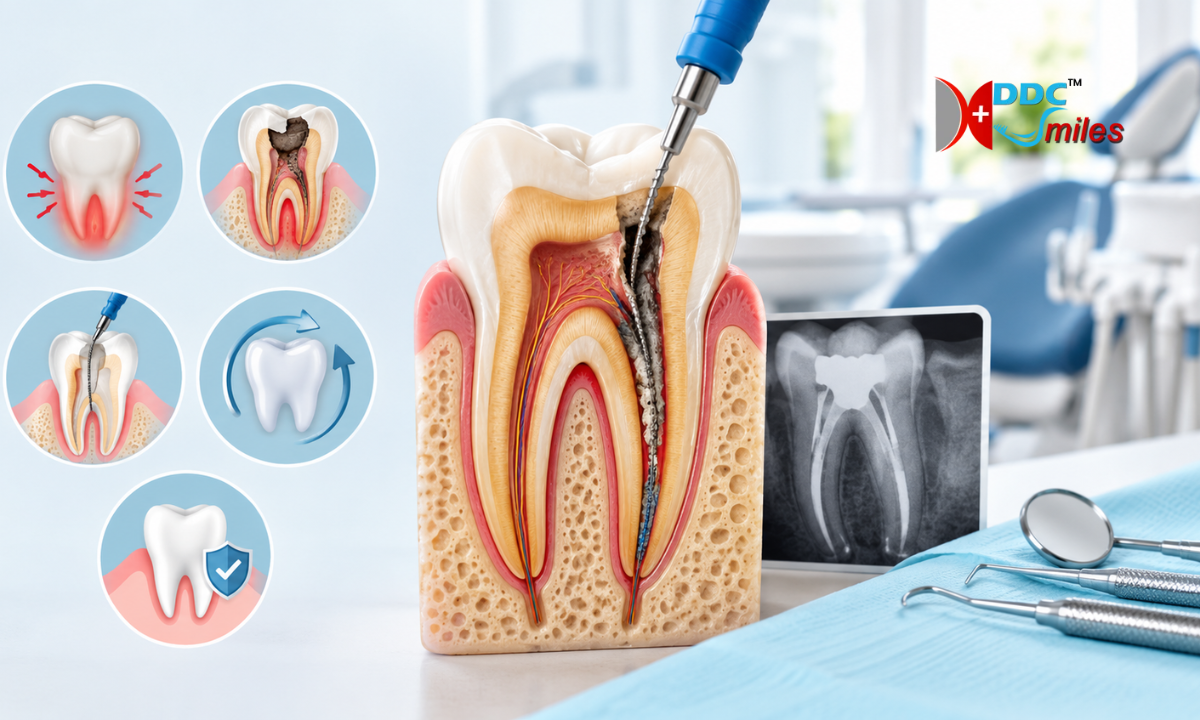
Root canal retreatment is a procedure to treat a tooth that has already had a root canal but has developed a new or persistent infection. The dentist reopens the tooth, removes the existing root filling material, cleans and disinfects the canals again, and then reseals them.
It differs from a first root canal in a few important ways. The dentist must first remove the crown or filling and the old root filling material before reaching the canals. They also need to find out why the original treatment did not heal, whether that is a missed canal, remaining bacteria or a leaking restoration, so the cause is addressed this time.
The aim is the same as the original treatment: to control infection and keep your natural tooth wherever that is possible.
What Are the Signs That a Root Canal May Need Retreatment?
Persistent or recurring tooth pain
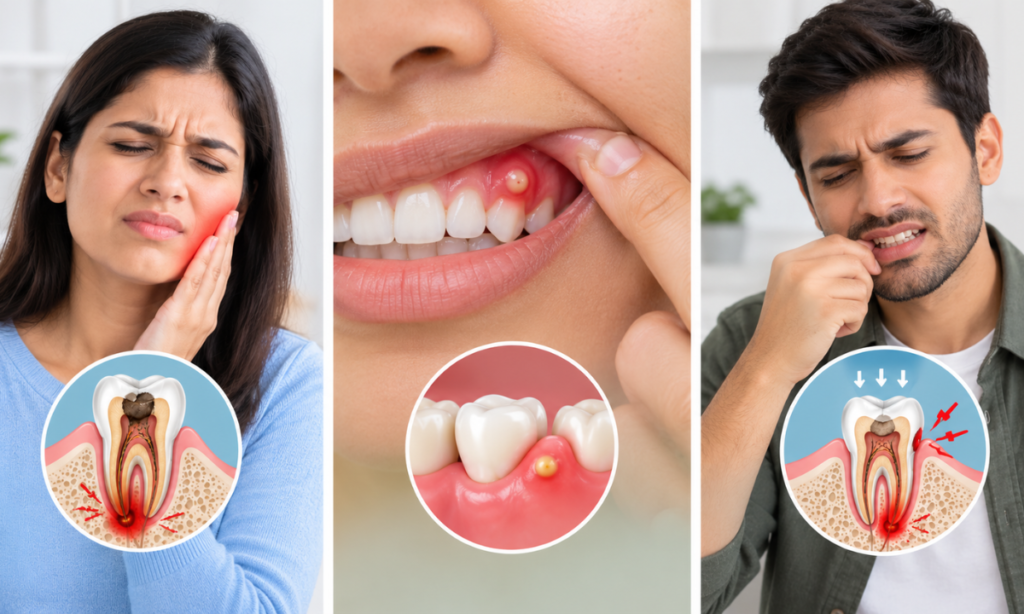
Some tenderness for a few days after a root canal is normal. Pain that continues for weeks, or returns after the tooth had settled, should be checked by a dentist.
Swelling or a pimple on the gums
A small bump or pimple on the gum near the treated tooth, sometimes releasing a bad taste, can be a sign of infection draining from the root area. Swelling of the gum or face is also a reason to book an assessment.
Pain or discomfort when biting
Tenderness when you bite down or tap the tooth may point to inflammation around the root tip.
A previously treated tooth that develops new symptoms
Not every reinfection causes pain. Some are found only on a routine X-ray, where a dark area appears around the root tip. Equally, symptoms around a treated tooth are not always caused by the root canal itself: gum problems, a cracked tooth or a neighbouring tooth can produce similar sensations. Only a dental examination can identify the real cause.
Why Can a Root Canal Fail After Treatment?
A recurring problem does not automatically mean the original treatment was poorly done. Teeth are complex, and several factors can affect healing.
Complex or narrow root canals
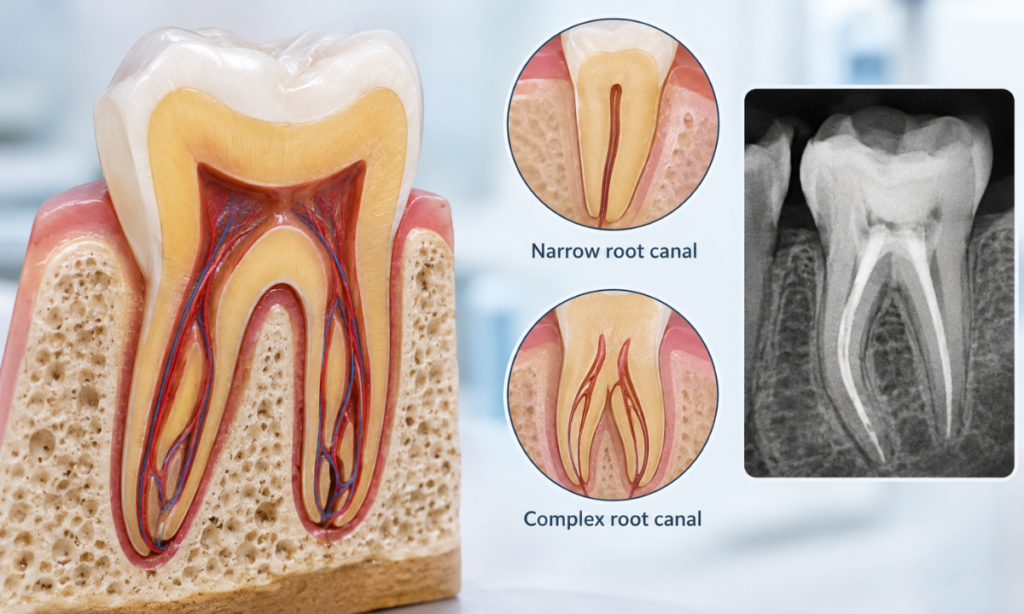
Some teeth, especially molars, have curved, very narrow or extra canals that are difficult to locate. A canal that was not found and cleaned can harbour bacteria that later cause infection.
Bacteria remaining inside the root canal
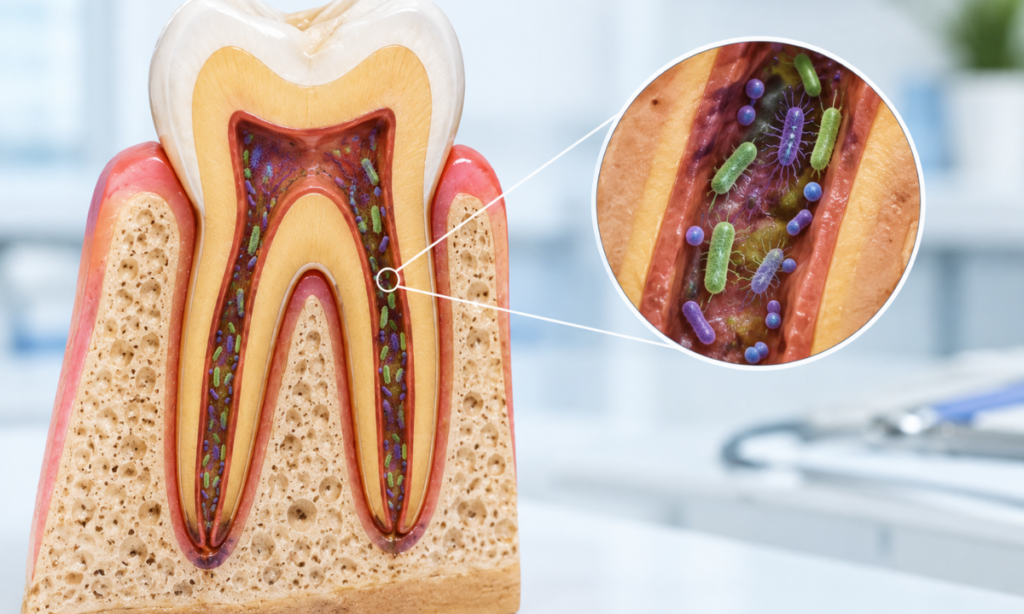
Root canal systems contain tiny branches and irregularities. Even after careful cleaning, bacteria can occasionally survive and multiply over time.
Delayed or damaged dental restoration
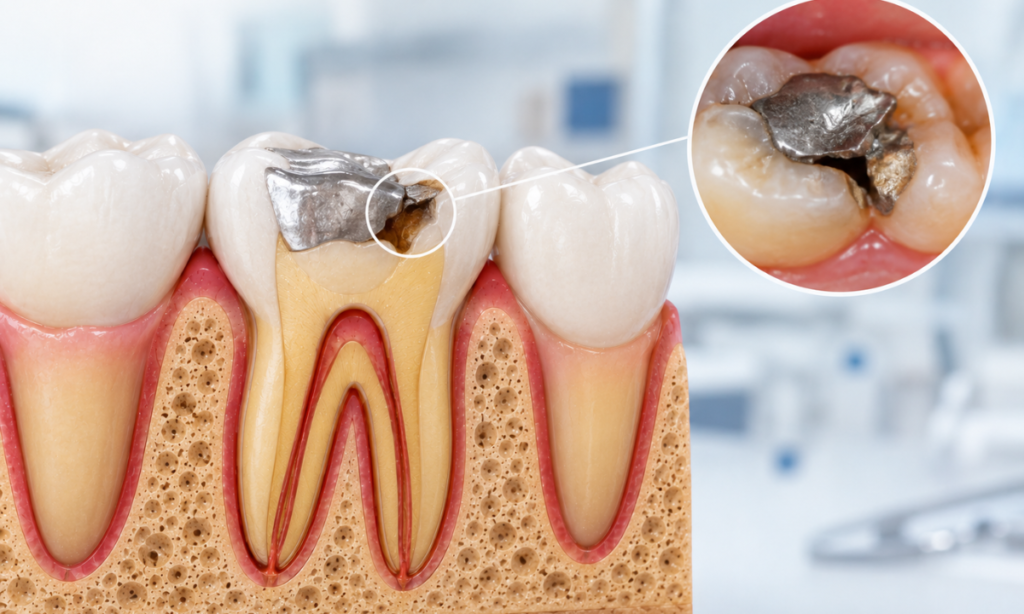
After a root canal, the tooth needs a well-sealed filling or crown. If the permanent restoration is delayed, or if an existing crown or filling breaks or leaks, saliva and bacteria can seep back into the canals.
New decay around the treated tooth
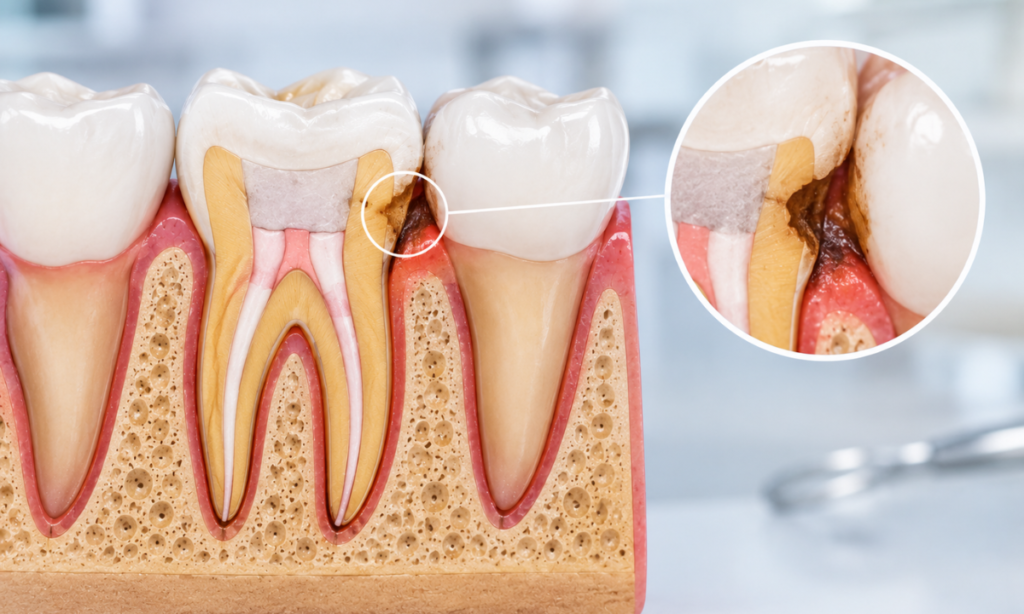
A root canal-treated tooth can still develop decay. New decay at the edge of a crown or filling can expose the root filling to bacteria.
A crack or fracture in the tooth
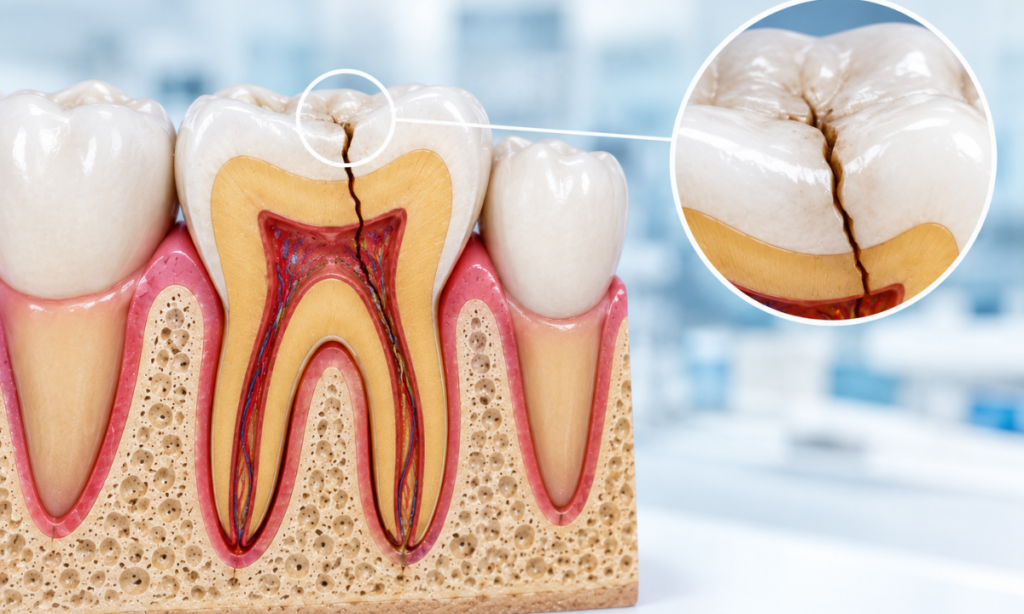
Treated teeth can become brittle, particularly without a crown. A crack can let bacteria in, and depending on its position and depth, may affect whether the tooth can be saved.
How Is Root Canal Retreatment Diagnosed?
Diagnosis always comes before any decision about retreatment. Your dentist will usually:
- Ask about your symptoms, when they started and your previous treatment
- Examine the tooth, gums and existing crown or filling
- Take dental X-rays to look at the root filling and the bone around the root tip
- Recommend a CBCT 3D scan where more detail is needed, for example to look for missed canals, cracks or the extent of infection
DDC Smiles has in-house CBCT imaging, which gives a three-dimensional view of the tooth and surrounding bone. The dentist will also assess whether the tooth has enough healthy structure left to be restored predictably afterwards, because that strongly influences which treatment makes sense.
What Happens During a Root Canal Retreatment Procedure?
The exact steps depend on the tooth, the previous treatment and what the examination shows, but retreatment generally follows this sequence.
Step 1: Removing the existing restoration when necessary
The tooth is numbed with local anaesthetic. The dentist then removes the crown, filling or post where needed to reach the root canals.
Step 2: Accessing and cleaning the root canals
The old root filling material is removed. The dentist then searches for any canals that were missed and cleans the full length of each canal. Many retreatment cases benefit from a dental operating microscope, which magnifies the inside of the tooth and helps locate hidden or calcified canals.
Step 3: Disinfecting and sealing the canals
The canals are disinfected thoroughly. Some cases need a medicated dressing between visits before the canals are filled and sealed with a biocompatible material.
Step 4: Restoring and protecting the tooth
A filling seals the tooth, followed by a new crown in most cases. A well-fitting restoration is essential to stop bacteria re-entering the tooth. If you are unsure which crown to choose, read about choosing a dental crown after RCT.
Retreatment can take one or more visits, and your dentist will explain the plan for your tooth before starting.
Is Root Canal Retreatment Painful?
Retreatment is carried out under local anaesthesia, so most patients feel pressure rather than pain during the procedure. It is common for the tooth to feel tender for a few days afterwards, particularly when biting. Over-the-counter pain relief, as advised by your dentist, usually manages this.
Contact your dentist if pain gets steadily worse rather than better, if swelling develops, or if symptoms have not settled within a few days.
Root Canal Retreatment vs Apical Surgery vs Tooth Extraction
There are three main options for a previously treated tooth with ongoing infection.
Non-surgical retreatment is usually considered first when the canals can be reached through the crown of the tooth and the tooth can be restored well afterwards.
Apical surgery (apicoectomy) may be recommended in selected cases, for example when the canals cannot be accessed from above because of a post that cannot safely be removed, or when infection persists after retreatment. The surgeon reaches the root tip through the gum, removes the infected tissue and the tip of the root, and seals the end of the canal.
Extraction may be the right choice when the tooth has a vertical root fracture, has too little structure left to support a restoration, or has not responded to other treatment. A missing tooth usually needs replacing with an implant, bridge or denture, so this should be part of the discussion. Read more about root canal vs tooth extraction.
The right option depends on the cause of the problem and whether the tooth can be predictably restored, not on a single symptom.
How Long Does Recovery Take After Root Canal Retreatment?
Most people return to normal activities the same day. Tenderness when chewing typically eases over several days. Until the permanent restoration is in place, avoid chewing hard or sticky food on that side so the temporary filling is not damaged.
Follow the instructions your dentist gives you, keep any follow-up appointments, and attend the review X-ray if one is booked to check that the bone around the root is healing. Our guide to root canal aftercare instructions covers what to eat and avoid.
Seek prompt dental review if you notice increasing pain, new swelling, or a bad taste returning.
Can a Retreated Tooth Last for Many Years?
Many retreated teeth function well for many years. How long yours lasts depends on several factors:
- How much healthy tooth structure remains
- The quality and fit of the final crown or filling
- Whether the cause of the original problem, such as a missed canal, was identified and treated
- Your oral hygiene and diet
- Regular dental check-ups that catch new decay or a leaking restoration early
No dentist can guarantee that any treated tooth will last a lifetime, but good restoration and care give it the best chance.
When Should You See a Dentist for a Previously Treated Tooth?
Do not ignore recurring pain, a gum pimple or tenderness in a tooth that has had a root canal. Infection around a root tip can slowly damage the surrounding bone, and earlier assessment usually means more treatment options.
Seek urgent dental or medical attention if you have facial swelling, fever, difficulty swallowing or opening your mouth, or symptoms that are getting worse quickly.
Frequently Asked Questions
Can a root canal be done twice on the same tooth?
Yes. Root canal retreatment is a recognised procedure for a tooth that has already been treated. Whether it is suitable depends on the cause of the problem and the condition of the tooth.
Can a previously treated tooth become infected again?
Yes. Bacteria can re-enter through a leaking or broken restoration, new decay or a crack, or can persist in canals that were difficult to clean.
Does every failed root canal need retreatment?
No. Depending on the findings, your dentist may recommend retreatment, apical surgery or extraction. In some cases, monitoring with follow-up X-rays is appropriate.
Is root canal retreatment more complicated than the first procedure?
Usually, yes. The dentist must remove existing restorations and root filling material and find the reason the first treatment did not heal. This is why magnification and 3D imaging are often used.
How much does root canal retreatment cost?
At DDC Smiles, root canal retreatment costs ₹5,000, and microscopic root canal treatment costs ₹10,000. A new crown is charged separately. See our full guide to root canal procedure and cost for a breakdown.
Can a tooth be saved if root canal retreatment fails?
Sometimes. Apical surgery may be an option for selected teeth. If the tooth cannot be saved, your dentist will discuss extraction and replacement options.
Conclusion
A problem with a previously treated tooth does not always mean losing it. Root canal retreatment is one option that can control infection and preserve your natural tooth, but the right choice depends on a proper diagnosis rather than symptoms alone.
If a tooth that has had a root canal is causing pain, swelling or tenderness, book an assessment at DDC Smiles in HSR Layout or Koramangala. Learn more about our root canal treatment and endodontic care.
Book an Appointment at DDC Smiles
Reference:
1)https://pmc.ncbi.nlm.nih.gov/articles/PMC6461161/
2)https://en.wikipedia.org/wiki/Root_canal_treatment
3)https://pubmed.ncbi.nlm.nih.gov/37315780/
