


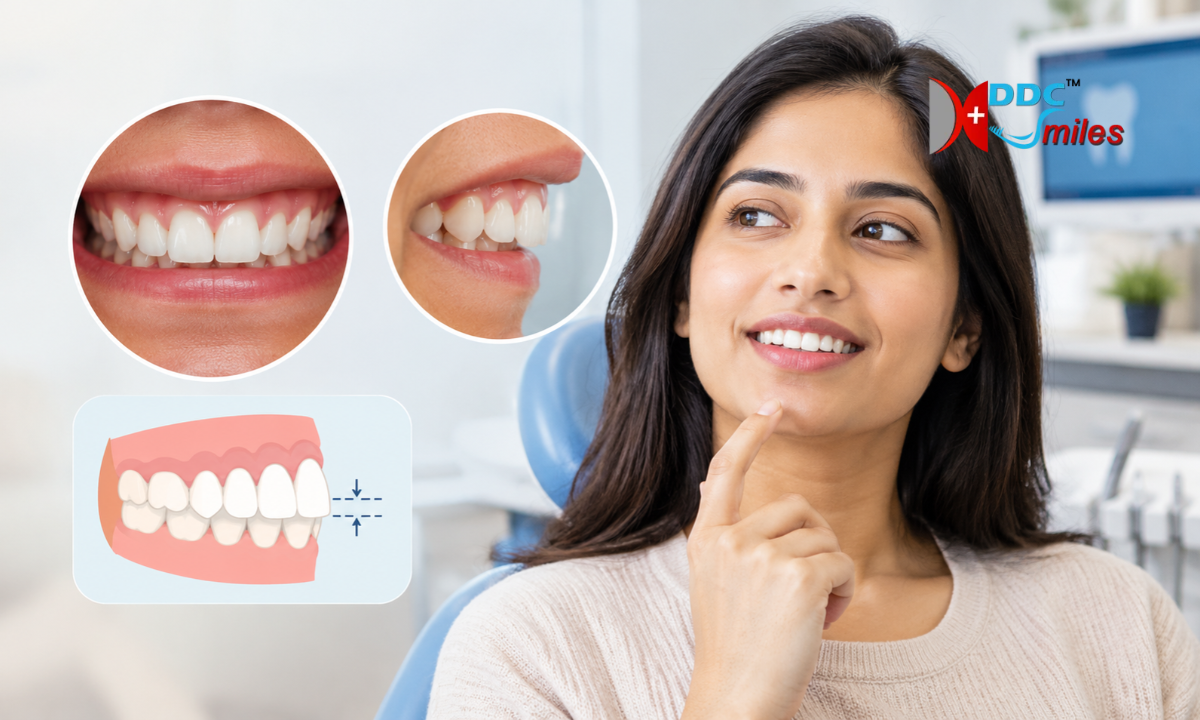
When you bite down, your upper front teeth naturally overlap your lower front teeth slightly. However, in a deep bite, this overlap is much greater than normal, causing the upper front teeth to cover most or even all of the lower front teeth. This condition can affect how your teeth fit together and may lead to discomfort or other dental problems if left untreated.
A deep bite is one of the most common bite problems treated by orthodontists. While some people may not notice any symptoms, others may experience worn or chipped teeth, sore gums behind the upper front teeth, or difficulty with certain dental procedures. In some cases, excessive overlap can cause the upper teeth to put pressure on the lower teeth or the surrounding gum tissue. Identifying the problem early can help prevent further tooth wear and support better long-term oral health. At DDC Smiles, patients can seek professional dental guidance to understand bite-related concerns and explore appropriate treatment options.
What Is a Deep Bite?
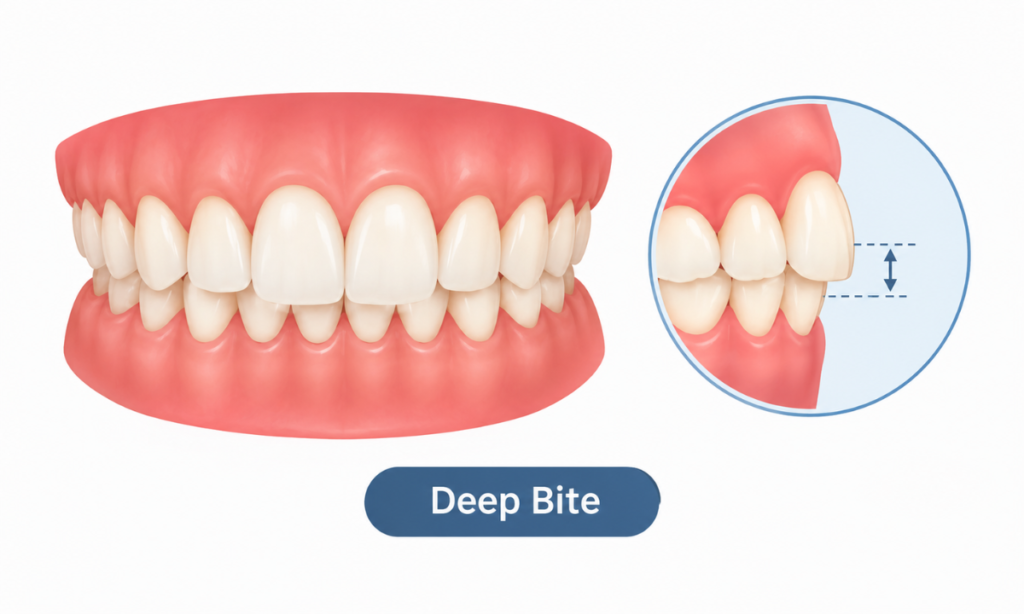
A deep bite, also called a deep overbite, is when the upper front teeth overlap the lower front teeth vertically by more than normal. In a typical bite, the upper teeth cover a small portion of the lower teeth, usually a few millimetres. In a deep bite, the lower front teeth may be largely hidden when you close.
In severe cases, the lower front teeth bite into the gum behind the upper front teeth, or the upper teeth press against the gum in front of the lower teeth. This is known as an impinging deep bite and usually needs treatment.
Deep bite vs overbite vs overjet
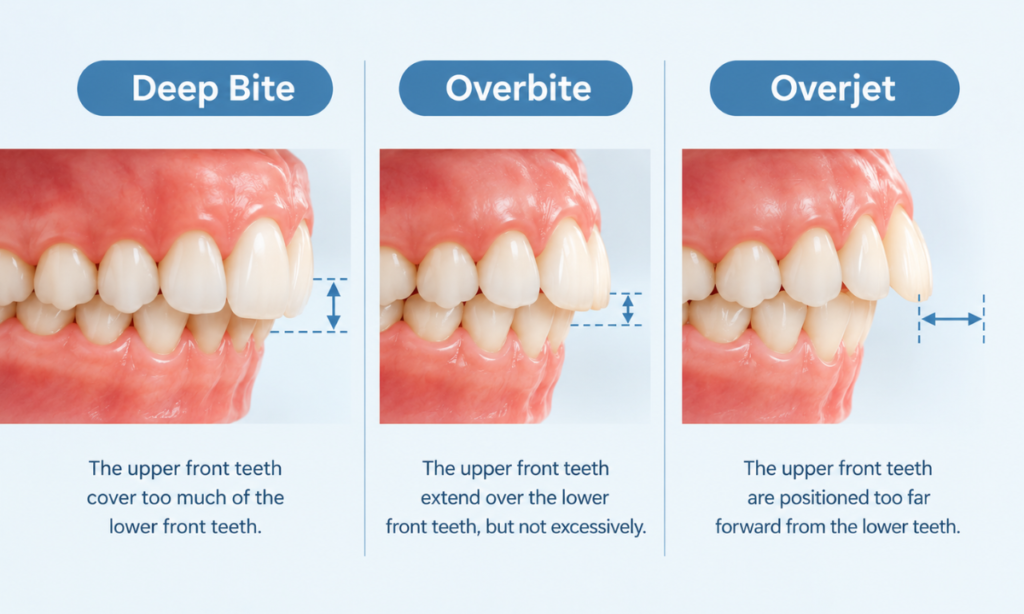
These terms are often confused:
- Overbite is the vertical overlap of the upper front teeth over the lower ones. A deep bite is an excessive overbite.
- Overjet is the horizontal distance between the upper and lower front teeth, so how far the upper teeth stick out. Many people say “overbite” when they actually mean overjet.
A person can have a deep bite with normal overjet, or both together. Your orthodontist will measure each separately.
Dental vs Skeletal Deep Bite

Every deep bite looks similar from the outside, but the cause usually falls into one of two groups, and the difference shapes the whole treatment plan.
Dental deep bite
In a dental deep bite, the jaws are well proportioned but the teeth sit in the wrong vertical positions. The front teeth may have over-erupted, growing further than usual because there was nothing to stop them, or the back teeth may not have grown tall enough, letting the bite close too far. Dental deep bites generally respond well to orthodontic tooth movement.
Skeletal deep bite
In a skeletal deep bite, the cause lies in the jaws themselves. The lower jaw may be set further back, or the face may have a shorter, more horizontal growth pattern that closes the bite. Skeletal deep bites often run in families. In growing children they may be managed by guiding jaw growth, while severe cases in adults may need surgery alongside braces.
Many patients have a combination of both. Your orthodontist distinguishes between them using X-rays, as explained below.
What Causes a Deep Bite?
Jaw growth and skeletal pattern
An inherited jaw growth pattern, with the lower jaw set back or a shorter lower face, makes a deep bite more likely.
Position of the front teeth
Over-erupted front teeth increase the overlap. Upper front teeth that tilt backwards, a pattern orthodontists call Class II Division 2, are also commonly associated with a deep bite.
Worn or missing back teeth
The back teeth support the height of your bite. If back teeth are lost and not replaced, or worn down by grinding, the bite can collapse and the front teeth overlap more deeply. This is a common cause of deep bites that develop or worsen in adulthood.
Crowding and tooth size
Crowding in the lower front teeth, or a mismatch in tooth sizes between the upper and lower jaws, can contribute to excess overlap.
Signs and Symptoms of a Deep Bite
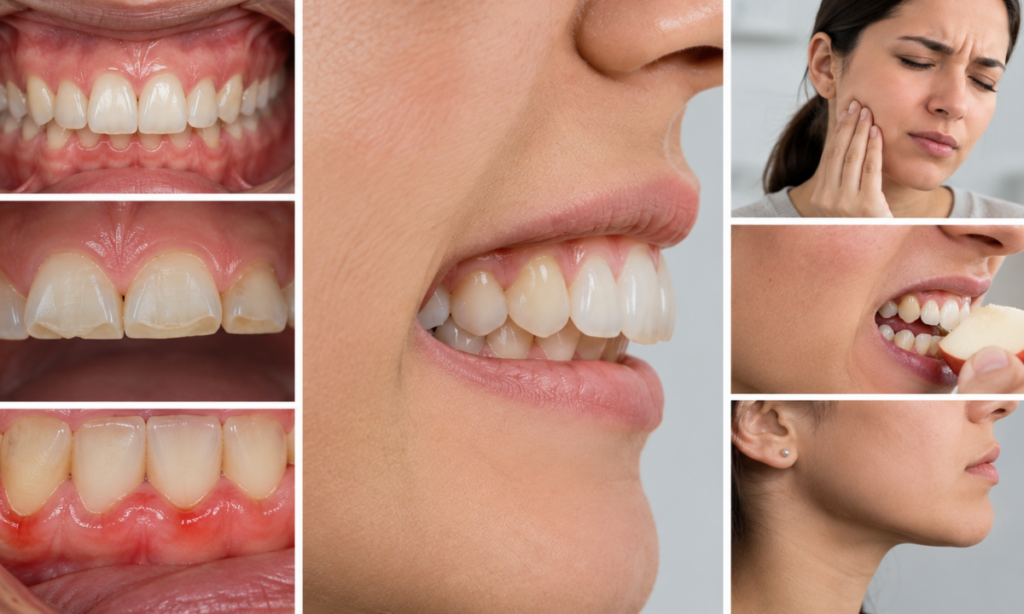
Many people with a mild deep bite have no symptoms. Signs that your bite may be deep include:
- Your lower front teeth are mostly or completely hidden when you bite together
- The lower front teeth touch or dig into the gum behind your upper front teeth
- Wear, flattening or chipping on the front teeth
- Sore or inflamed gums behind the upper front teeth
- A shorter-looking lower face or the chin sitting further back than usual
- Discomfort in the jaw, although this has many possible causes
What Problems Can an Untreated Deep Bite Cause?
Gum damage
In an impinging deep bite, the lower teeth repeatedly bite into the gum behind the upper teeth. Over time this can cause soreness, inflammation and gum recession.
Tooth wear and chipping
When the front teeth meet at the wrong angle, the lower front teeth rub against the backs of the upper front teeth. Their edges can wear down or chip, and the problem tends to worsen over the years.
Difficulty with dental treatment
A deep bite leaves little room to restore the front teeth with crowns or veneers, and can make braces brackets on the lower teeth harder to place.
Jaw discomfort
Some people with a deep bite report jaw joint discomfort. The link between bite type and jaw joint problems is debated, so your dentist will look at all possible causes before attributing symptoms to your bite.
How Is a Deep Bite Diagnosed?
Your orthodontist will examine your teeth and bite, measure the overlap, take photographs and scans, and usually take X-rays. A lateral cephalogram, a side-view X-ray of the skull and jaws, shows whether the deep bite comes mainly from tooth position, jaw structure or both. That distinction decides which treatment will work.
How to Fix a Deep Bite
Treatment depends on age, severity and whether the cause is dental, skeletal or both. Most deep bite correction works by adjusting the vertical position of the teeth: moving the front teeth further into the bone (intrusion), allowing the back teeth to come up slightly (extrusion), or a combination of the two.
Myofunctional and growth-modifying appliances for children
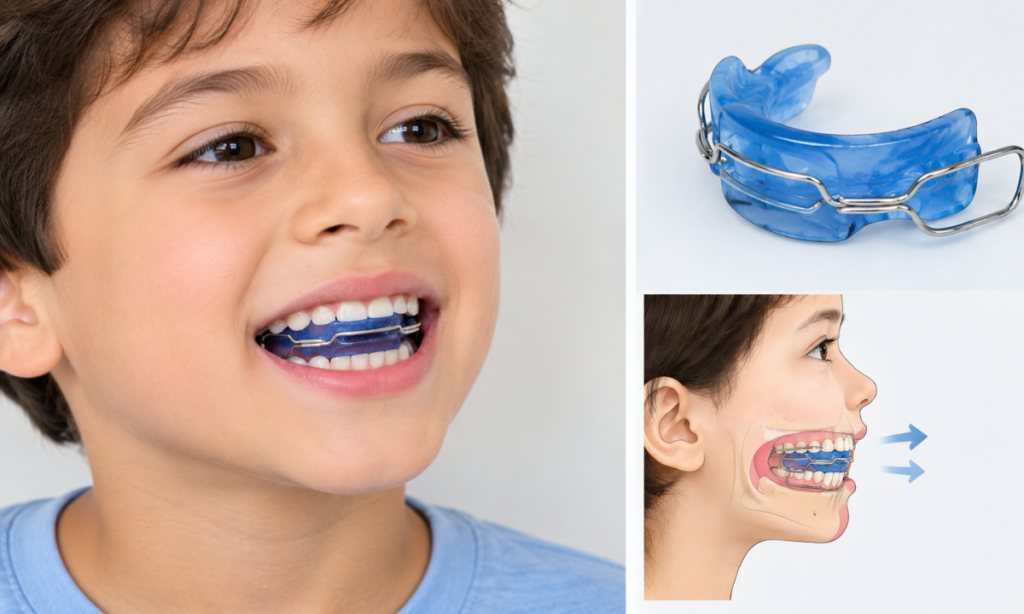
In growing children, removable appliances can guide jaw growth and help the back teeth erupt further, which reduces overlap. Treatment during growth can make later orthodontic work simpler.
Braces
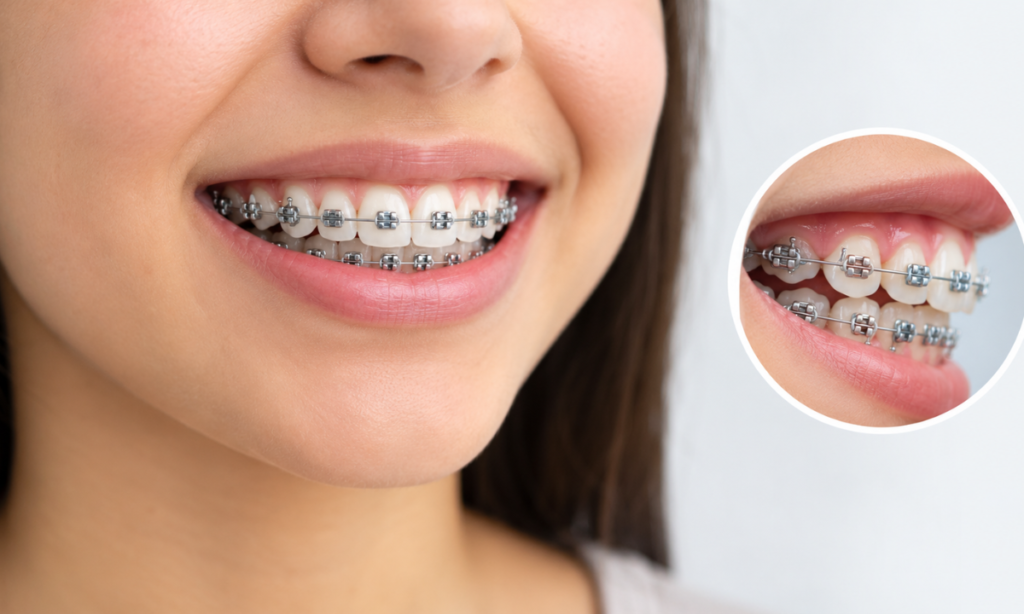
Fixed braces are the most common way to correct a deep bite and remain the most reliable option for severe and skeletal cases. The archwire levels the teeth gradually over months. Small temporary bite blocks may be placed on the back teeth or behind the upper front teeth so brackets on the lower teeth are not damaged during treatment.
Clear aligners
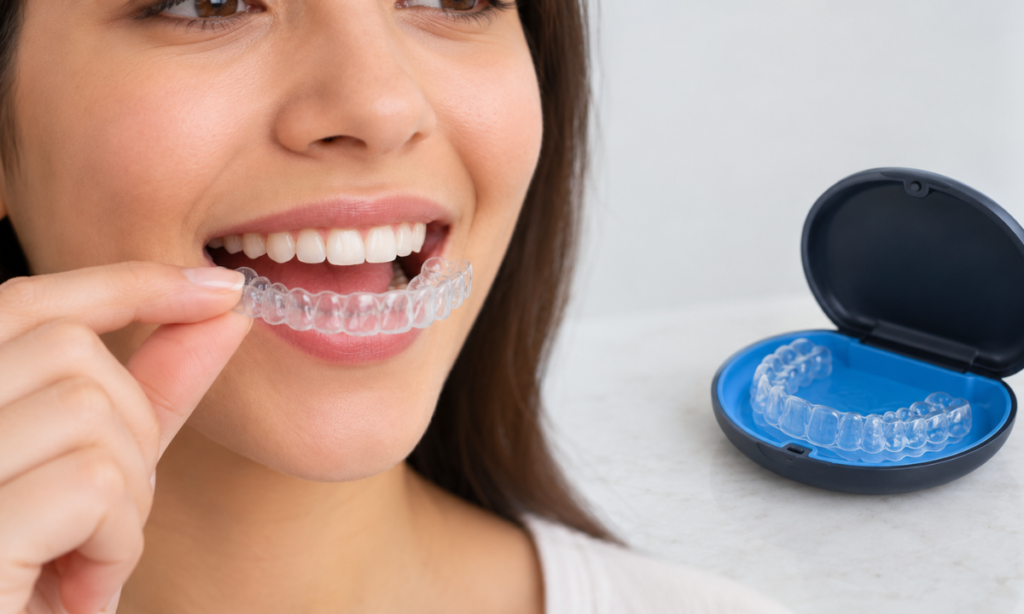
Many mild to moderate deep bites can be corrected with clear aligners. Aligners for deep bite correction often use small tooth-coloured attachments and raised areas called bite ramps, which help open the bite. Severe or skeletal deep bites may respond better to braces, so your orthodontist will advise which system suits your case. Read more about how clear aligners straighten teeth.
Temporary anchorage devices (mini-implants)
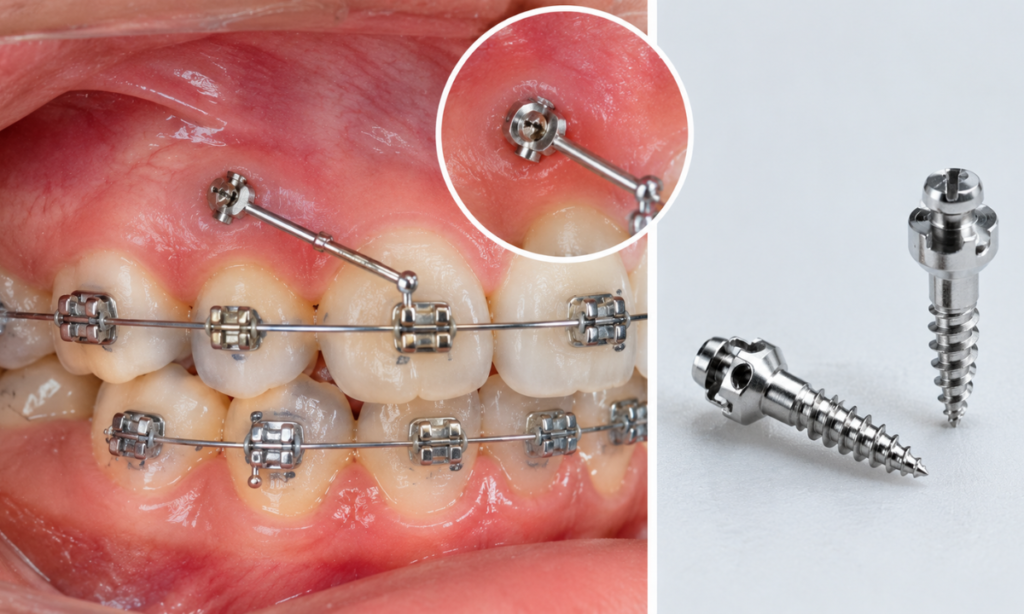
In more complex cases, the orthodontist may place small temporary screws in the jawbone to act as fixed anchor points. These allow the front teeth to be moved precisely without unwanted movement of the back teeth, and are removed once treatment is complete.
Restorative treatment for worn or collapsed bites

When a deep bite is caused or worsened by worn or missing back teeth, moving teeth alone may not be enough. The lost bite height may need rebuilding with crowns, onlays, bridges or implants, often alongside orthodontics. This is usually done in stages: orthodontic alignment first, then a trial period with temporary restorations at the new bite height to check comfort, and finally permanent restorations. Learn more about full-mouth rehabilitation and crowns and bridges.
Jaw surgery for severe skeletal cases
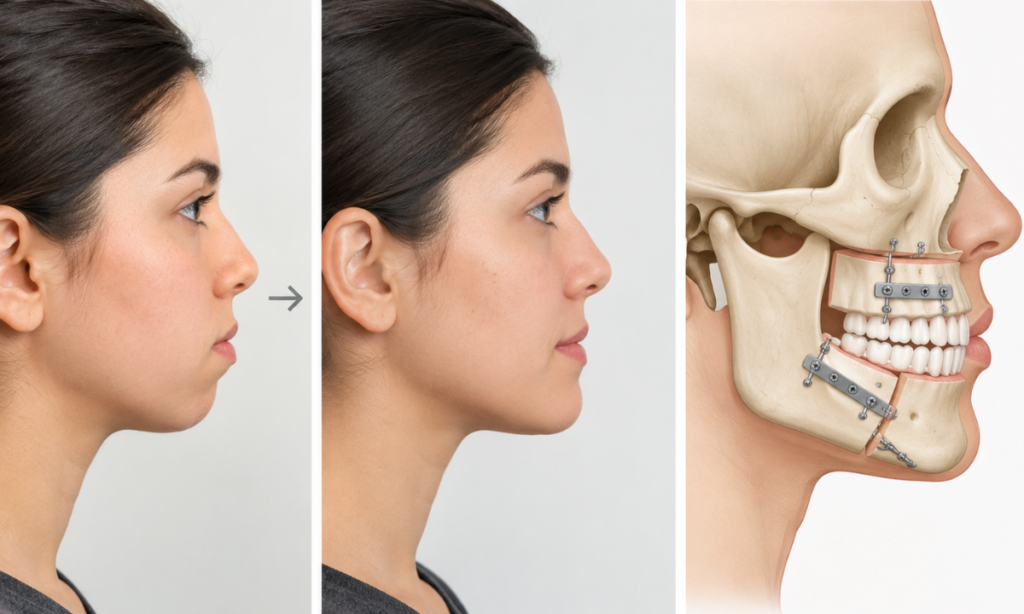
For adults with a severe deep bite caused by jaw structure, orthognathic surgery combined with braces may give the best result. This is reserved for cases where orthodontics alone cannot achieve a stable, healthy bite.
Retainers after treatment
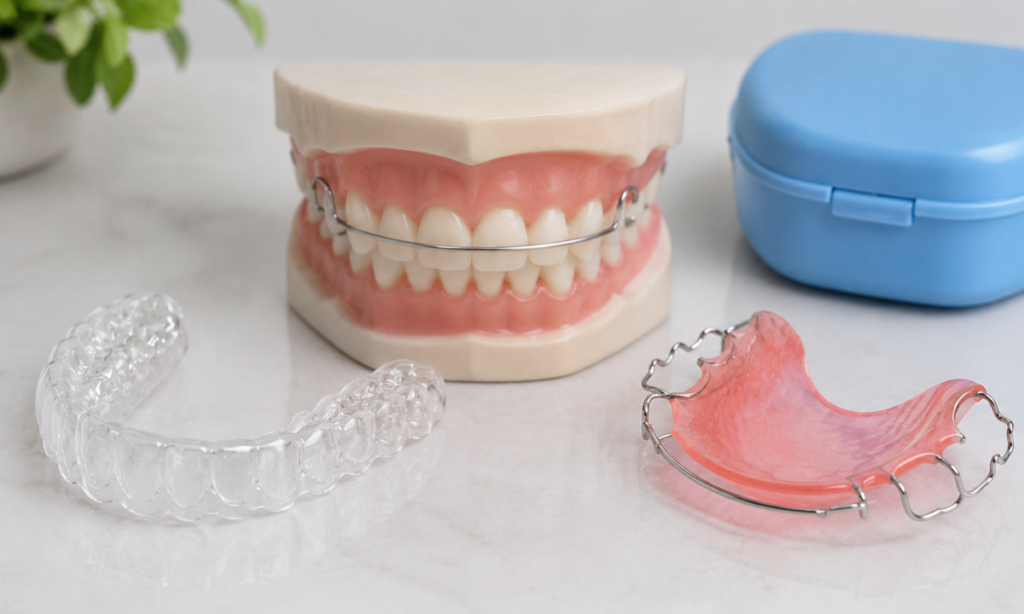
Deep bites have a tendency to relapse. Wearing your retainers as instructed is essential to keep the result.
How Much Does Deep Bite Correction Cost at DDC Smiles?
The cost depends on the appliance used and the complexity of your case. Current fees at DDC Smiles:
| Treatment | Fee |
| Myofunctional appliance (children) | ₹8,000 |
| Metal braces | ₹40,000 to ₹45,000 |
| Ceramic braces | ₹65,000 to ₹70,000 |
| Metal self-ligating braces (Damon) | ₹80,000 to ₹85,000 |
| Ceramic self-ligating braces (Damon) | ₹95,000 to ₹1,00,000 |
| Clear aligners | From ₹1,50,000 |
| Orthodontist consultation | ₹500 |
| Lateral cephalogram | ₹500 |
Restorative treatment, where needed, is quoted separately. Your orthodontist will give you a full estimate after assessing your bite. See our price list for other procedures.
When Should a Deep Bite Be Treated?
Children
An orthodontic check by around seven years of age allows bite problems to be spotted early. Treatment during growth can sometimes guide jaw development and reduce the complexity of later treatment.
Teenagers
The teenage years are a common time for braces or aligners, as most permanent teeth have come through and some growth remains.
Adults
Deep bites can be corrected at any age. Adults often seek treatment when they notice wear on their front teeth, gum soreness or difficulty with planned dental work. Some adult cases need combined orthodontic and restorative care.
See an orthodontist promptly if your lower teeth are biting into your gums, if your front teeth are visibly wearing or chipping, or if you are planning crowns or veneers on your front teeth.
Deep Bite Correction at DDC Smiles
DDC Smiles offers orthodontic consultations at our HSR Layout and Koramangala clinics, with metal, ceramic and self-ligating braces as well as clear aligners. In-house digital OPG and cephalometric X-rays support accurate diagnosis, and orthodontists and prosthodontists work together when a deep bite involves worn or missing teeth.
Learn more about our braces and aligners and clear aligners, or book an orthodontic assessment.
Book an Orthodontic Consultation at DDC Smiles
Frequently Asked Questions
Is a deep bite bad?
A mild deep bite may cause no problems. A moderate to severe deep bite can damage the gums, wear the front teeth and complicate dental treatment, so it is worth having assessed.
Can a deep bite be fixed without braces?
Some mild deep bites can be corrected with clear aligners, and growing children may benefit from removable appliances. Bites caused by worn back teeth may be corrected with restorations. Your orthodontist will advise based on the cause.
How long does deep bite correction take?
Treatment usually takes between one and two and a half years, depending on severity, age and the type of appliance used.
Can aligners fix a deep bite?
Yes, many mild to moderate deep bites can be corrected with clear aligners, often using attachments and bite ramps. Severe or skeletal cases may need braces or combined treatment.
Can adults correct a deep bite?
Yes. Teeth can be moved at any age. Adults with severe skeletal deep bites may need surgery alongside braces for the best result.
Will my deep bite come back after treatment?
Deep bites can relapse, so wearing retainers as instructed is important to keep your result stable.
Reference:1)https://aaoinfo.org/whats-trending/what-is-a-deep-bite/
2)https://www.slideshare.net/slideshow/orthodontic-deep-bite/249532870
3)https://pmc.ncbi.nlm.nih.gov/articles/PMC10608509/
