

The Modern Shift: Who Truly Benefits from Laser Precision?
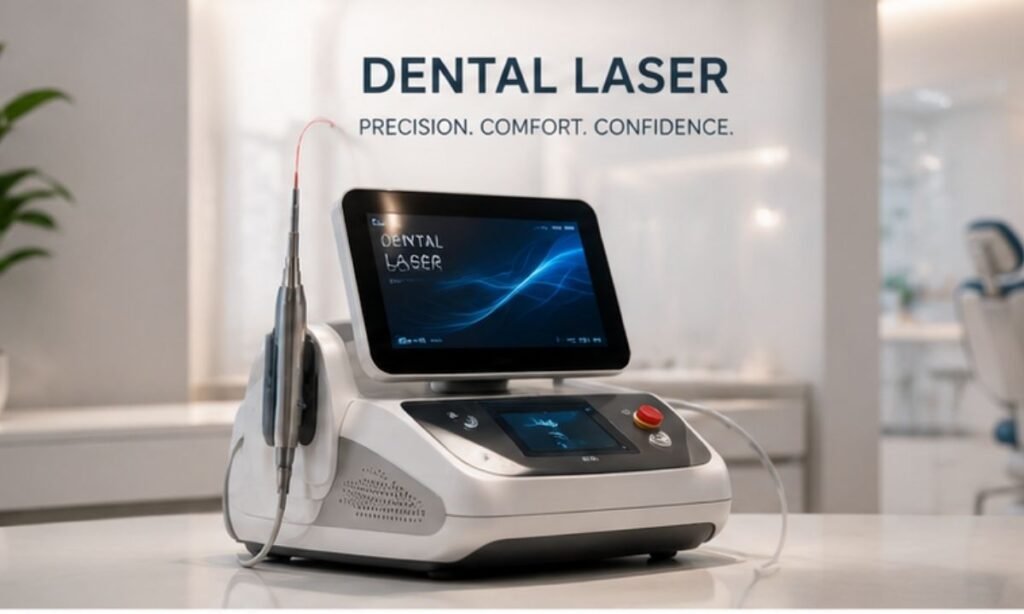
Determining whether you are an ideal candidate for dental laser treatment begins with understanding how focused photonic energy transforms routine oral procedures into gentle, minimally invasive experiences.
For patients searching for a specialized Dental Hospital in HSR Layout and Koramangala, advanced dental lasers provide a comfortable, highly precise alternative to traditional mechanical burs and surgical blades, significantly reducing intraoperative anxiety, bleeding, and tissue healing times across restorative, cosmetic, and periodontal care.
Instead of relying on friction and mechanical cutting forces, dental lasers emit concentrated beams of coherent light energy.
When absorbed by specific biological chromophores such as water, hydroxyapatite, and hemoglobin the laser energy selectively vaporizes decayed tooth structure or sterilizes infected soft tissue with microscopic accuracy.
Primary Clinical Candidate Profiles
- Patients with Severe Dental Anxiety or Needle Phobia: Dental lasers eliminate the high-pitched drilling sound, micro-vibrations, and pressure associated with conventional rotary handpieces. In many superficial hard- and soft-tissue procedures, the natural analgesic effect of laser light eliminates the need for local anesthetic injections.
- Individuals Managing Chronic Gum Disease: Patients suffering from bleeding gums, periodontal pocketing, or persistent halitosis benefit from the bactericidal effects of laser energy, which decontaminates deep subgingival crevices without surgical incisions.
- Patients with Bleeding Tendencies or Coagulation Concerns: Because laser energy instantly cauterizes small blood vessels and stimulates instant thermal coagulation, it is an optimal modality for individuals on anticoagulant medications or those prone to prolonged bleeding.
- Cosmetic & Smile Makeover Seekers: Candidates seeking aesthetic gum reshaping for “gummy smiles,” asymmetrical gingival margins, or melanin hyperpigmentation receive clean, blood-free contouring with immediate recovery and no required sutures.
- Pediatric & Geriatric Patients: Children and seniors who find prolonged chair time and mechanical vibrations difficult experience faster, quieter treatments with substantially reduced post-operative soreness.
What You Will Discover in This Guide
- Hard Tissue Suitability: When laser technology can replace the traditional drill for cavity preparation and enamel restorations.
- Periodontal Candidacy: How laser bacterial eradication resolves deep gum infections without invasive flap surgery.
- Aesthetic & Soft-Tissue Applications: The ideal conditions for laser gingivectomy, crown lengthening, and frenectomy.
- Biophysics & Wavelength Safety: How Diode and Erbium wavelengths target specific oral tissues safely.
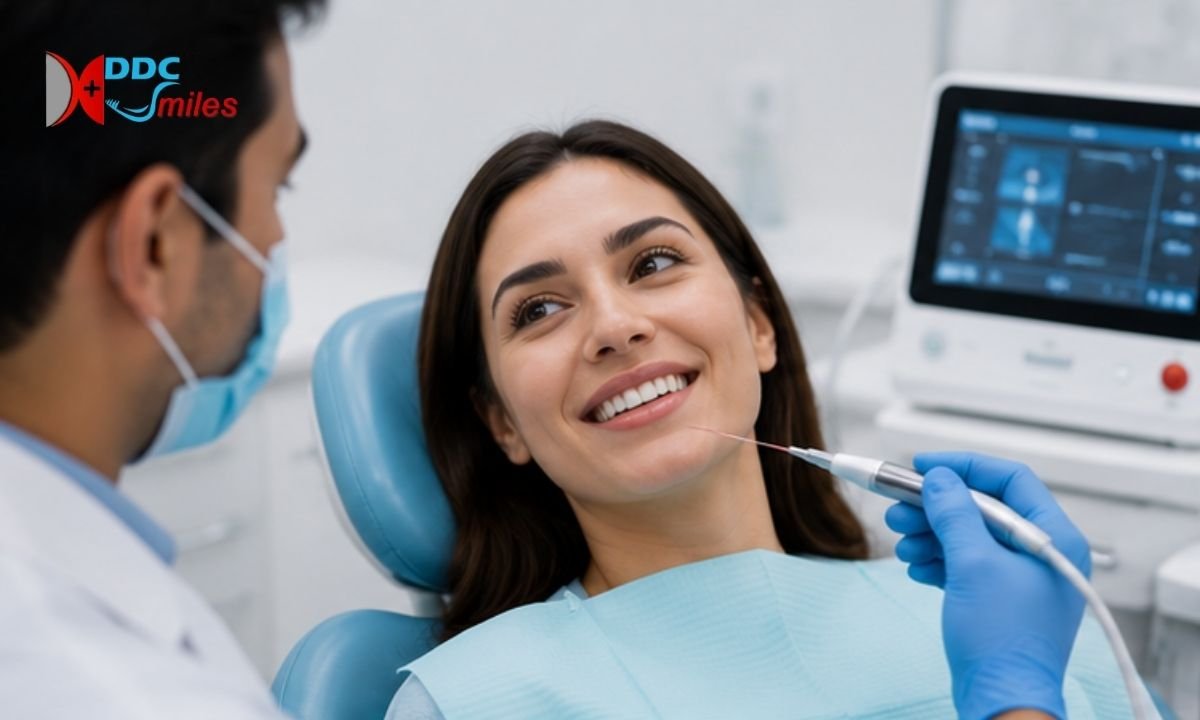
Precision oral care requires cutting-edge dental technology and specialized clinical expertise. At DDC Smiles, our multi-specialty dental team utilizes advanced dental laser systems and 3D digital imaging to deliver virtually painless, preservative treatments tailored to each patient’s unique oral anatomy.
Dental Disclaimer
The descriptions of laser biophysics, procedural indications, and clinical workflows presented in this guide are intended strictly for educational and public health awareness purposes. This content does not constitute formal dental advice, clinical diagnosis, or a personalized dental treatment plan. Determining candidacy for hard- or soft-tissue dental laser procedures requires an in-person clinical examination and diagnostic radiographic evaluation by a licensed dental professional or dental specialist.
Hard Tissue Candidacy: Drill-Free Cavity Preparation & Restorations
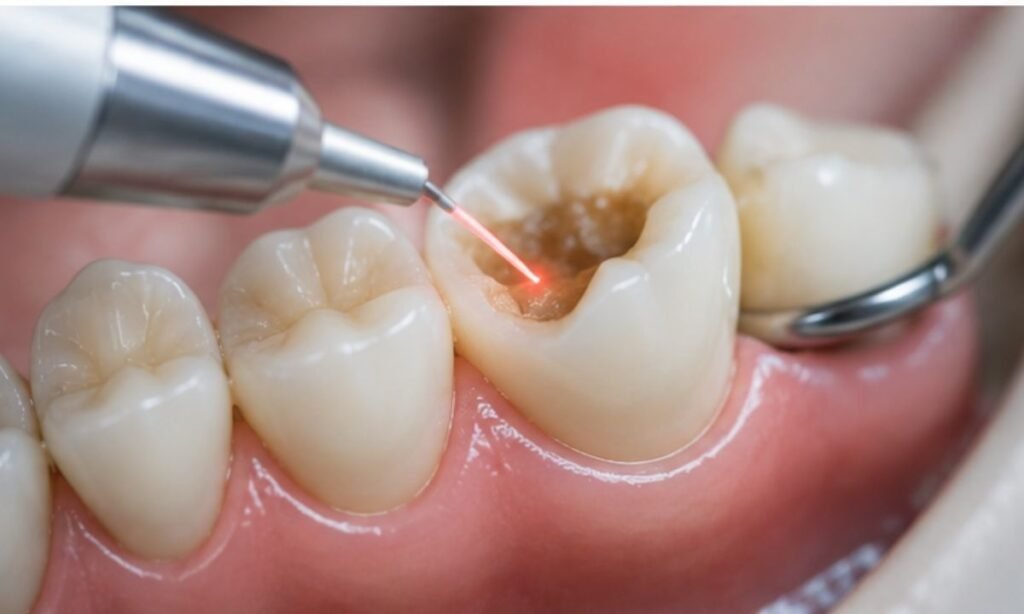
For patients with dental decay, one of the most significant clinical advancements is the hard-tissue laser filling.
Utilizing specialized Erbium lasers (such as Er:YAG or Er,Cr:YSGG), these systems emit wavelengths that are heavily absorbed by the water and hydroxyapatite molecules present in dental enamel and dentin.
The laser energy micro-explodes water droplets within the carious lesion, precisely vaporizing diseased, softened tooth structure while leaving sound, healthy enamel completely untouched.
Who Is an Ideal Candidate for Hard-Tissue Laser Restorations?
- Patients with Early to Moderate Enamel & Dentin Caries: Ideal for treating primary decay on smooth surfaces, interproximal areas, and deep pits or fissures of molars.
- Individuals Needing Composite Bonding Preparation: The photonic ablation process creates a clean, etched, micro-retentive surface without creating a smear layer, providing superior microscopic bond strength for tooth-colored composite restorations.
- Patients Sensitive to Friction, Heat, or Injections: Because laser ablation produces no mechanical vibration, bone conduction noise, or friction-induced thermal pulp irritation, the vast majority of shallow-to-medium cavity preparations can be completed without local anesthesia.
- Children Needing Preventative Pit and Fissure Sealants: Cleans and sterilizes deep grooves prior to sealant placement quickly and without discomfort.
Rotary Mechanical Drill vs. Hard-Tissue Erbium Laser
| Clinical Feature | Conventional High-Speed Rotary Drill | Hard-Tissue Erbium Laser System
|
|---|---|---|
| Tissue Removal Precision | Mechanical cutting may inadvertently remove adjacent healthy enamel; creates micro-fractures in surrounding crystalline tooth structure. | Selective photo-ablation targets solely water-rich, carious tissue, maximizing natural tooth preservation. |
| Need for Anesthesia | Frequently requires local anesthetic nerve blocks due to friction, vibration, and thermal nerve stimulation. | Often eliminates needles or numbing injections in shallow to moderate restorative cavities. |
| Smear Layer & Etching | Leaves behind a compacted “smear layer” of debris that requires acid etching before composite bonding. | Vaporizes debris, sterilizes dentinal tubules, and creates an ideal etched surface without aggressive chemical acids. |
| Noise & Physical Sensation | High-pitched mechanical whine, bone-conducted vibration, and physical pressure against the jawbone. | Gentle popping sound (water spray dissipation) with zero pressure or drill vibrations. |
When Conventional Tools Remain Necessary
While hard-tissue dental lasers excel at precision decay removal, certain clinical scenarios still require traditional rotary handpieces:
- Removal of Existing Silver Amalgam Fillings: Lasers cannot be used to remove mercury-based amalgam fillings, as the thermal energy can heat the metal and release hazardous mercury vapors.
- Full-Coverage Crown and Bridge Preparations: Heavy structural tooth reduction across wide surface areas is performed more efficiently with rotary burs.
- Interdental Polish & Shaping: Final contouring and polishing of composite restorations require fine diamond finishing discs and burs.
The Preservation Rule: An Erbium hard-tissue laser is the most tooth-conserving tool available for treating primary dental decay. By targeting only the damaged portion of the tooth, it protects natural enamel and extends the lifespan of the tooth structure.
Periodontal Candidacy: Deep Pocket Sterilization & Gum Disease
Periodontal disease begins when colonies of pathogenic anaerobic bacteria such as Porphyromonas gingivalis and Tannerella forsythia infiltrate the sulcular epithelium, releasing endotoxins that destroy the supporting periodontal ligament and alveolar bone.
For individuals struggling with chronic gingival inflammation, bad breath, or bleeding during brushing, undergoing a specialized laser dental cleaning and pocket decontamination offers a non-surgical, tissue-preserving alternative to conventional periodontal flap surgery.
Who Is an Ideal Candidate for Periodontal Laser Therapy?
- Patients with Moderate to Deep Periodontal Pockets (4 mm to 7+ mm): Ideal for individuals whose pocket depths are too deep for standard tooth scaling to reach effectively, yet who wish to avoid invasive surgical excision.
- Individuals with Chronic, Bleeding Gums (Gingivitis & Periodontitis): Patients with persistent gingival redness, swelling, and bleeding upon gentle probing.
- Medically Compromised or Diabetic Patients: Individuals who experience delayed tissue healing or have higher infection risks benefit from the sterile, biostimulative nature of dental lasers.
- Patients Experiencing Peri-Implantitis: Individuals with inflammation or bone loss around existing dental implants; the laser decontaminates titanium screw threads without scratching or altering the metal surface.
The 4-Phase Laser Periodontal Workflow
Unlike traditional periodontal surgery which requires cutting the gums with a scalpel, peeling back the tissue, scraping the bone, and placing sutures laser-assisted periodontal decontamination follows a gentle, step-by-step biological sequence:
- Diagnostic Periodontal Probing & Mapping: The clinician measures the sulcular depth around each tooth using a calibrated periodontal probe, identifying infected pockets exceeding the healthy 1 to 3 mm baseline and establishing a baseline for targeted treatment.
- Photothermal Bacterial Decontamination: A flexible, hair-thin optical laser fiber is inserted directly into the subgingival pocket. The targeted wavelength selectively vaporizes diseased, necrotic pocket lining and destroys light-absorbing pigmented anaerobic bacteria without harming healthy connective tissue attachments.
- Subgingival Ultrasonic Calculus Removal: With the microbial biofilm disrupted, fine ultrasonic scalers gently dislodge calcified tartar deposits (calculus) from the root surface, using sterile water irrigation to flush away residual debris.
- Biostimulation & Thermal Fibrin Seal: A secondary pass of low-energy laser light biostimulates the surrounding periodontal stem cells and fibroblasts, accelerating local ATP production. The laser energy creates a natural, sterile fibrin clot at the gingival margin, effectively sealing the pocket against bacterial re-entry without needing surgical sutures.
| The Periodontal Regeneration Cascade with Lasers
|
|---|
| Deep Pocket (>4mm) → Selective Bacterial Ablation → Root Scaling → Fibrin Clot Formation → Connective Tissue Re-attachment & Pocket Reduction |
The Periodontal Benchmark: Laser periodontal therapy is fundamentally regenerative rather than resective. Instead of cutting away damaged gum tissue, it cleanses the infected environment so your gums can naturally re-attach to the tooth root.
Soft Tissue & Cosmetic Candidacy: Gummy Smiles, Contouring & Frenectomies
Soft tissue oral procedures traditionally required scalpels, surgical blades, electrosurgery, and sutures often leading to intraoperative bleeding, localized swelling, and lengthy recovery periods.
Modern soft-tissue dental lasers have revolutionized this domain by utilizing concentrated wavelengths absorbed primarily by hemoglobin and melanin.
When considering a laser treatment of gums, patients benefit from instant thermal coagulation, precise microscopic margins, and a virtually bloodless surgical field that heals without the need for traditional stitches.
Diagnostic Suitability Checklist: Are You a Candidate for Soft-Tissue Laser Therapy?
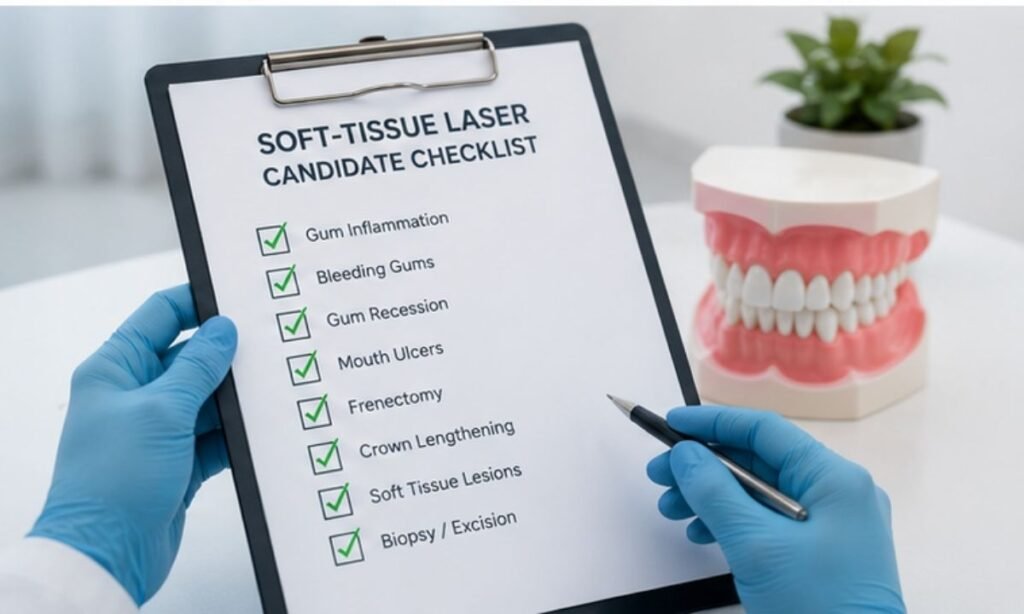
Review the clinical indications below to evaluate whether soft-tissue laser contouring or surgical modification aligns with your smile goals:
- Excessive Gingival Display (“Gummy Smile”)
- Clinical Indicator: More than 3 to 4 mm of gum tissue shows above the upper teeth when smiling, making natural teeth appear disproportionately short or square.
- Laser Advantage: A quick, computer-guided gingivectomy gently vaporizes excess marginal tissue, revealing the natural length of the clinical crowns with immediate cosmetic results.
- Asymmetrical Gingival Margins
- Clinical Indicator: Uneven gum lines across the front aesthetic zone that create an unbalanced or crooked smile appearance, even if the teeth themselves are straight.
- Laser Advantage: Micro-sculpting the gingival architecture creates harmonious, symmetrical gingival zeniths across all visible anterior teeth.
- Aesthetic Crown Lengthening for Restorative Margins
- Clinical Indicator: A fractured tooth, deep subgingival cavity, or insufficient tooth structure required to securely seat a porcelain veneer or crown.
- Laser Advantage: Rapidly re-contours marginal soft tissue to expose sound enamel and dentin without requiring extensive surgical flap elevation.
- Restrictive Labial or Lingual Frenum Attachments (Tongue-Tie & Lip-Tie)
- Clinical Indicator: A tight muscular band of tissue that restricts tongue mobility (ankyloglossia), causes speech difficulties, or creates an aesthetic gap (diastema) between the upper front central incisors.
- Laser Advantage: A laser frenectomy releases the tight fibrous attachment in under five minutes with zero bleeding, eliminating the need for sutures in both pediatric and adult patients.
- Gingival Melanin Hyperpigmentation (Dark or Discolored Gums)
- Clinical Indicator: Benign, genetic, or smoking-induced melanin deposits that cause the gums to appear dark brown, purple, or patchy instead of a healthy coral pink.
- Laser Advantage: Laser depigmentation selectively ablates the melanin-producing melanocytes in the basal epithelial layer, restoring an even, natural coral-pink gum tone with minimal post-procedure sensitivity.
- Painful Aphthous Ulcers & Cold Sores (Canker Sores)
- Clinical Indicator: Painful, recurring mouth ulcers or early-stage herpes labialis lesions that interfere with eating, drinking, and speaking.
- Laser Advantage: Low-level photothermal energy desensitizes exposed nerve endings instantly, providing immediate pain relief and cutting healing time from two weeks down to a few days.
Why Lasers Outperform Surgical Blades in Soft-Tissue Care
- Instant Hemocoagulation: The laser beam seals severed micro-capillaries and lymphatic vessels upon contact, eliminating intraoperative bleeding and providing the clinician with an unobstructed, crystal-clear view of the surgical zone.
- Suture-Free Recovery: Because the treated margins are thermally sealed, incisions do not require placement or subsequent removal of surgical sutures.
- Significantly Reduced Post-Operative Edema: Sealing lymphatic channels prevents excessive interstitial fluid accumulation, dramatically reducing swelling, bruising, and discomfort in the days following the procedure.
- Sterile Surgical Margins: High-temperature light energy instantly vaporizes surface microbes, minimizing the risk of secondary post-procedural bacterial infections.
Precision soft-tissue laser sculpting achieves sub-millimeter aesthetic symmetry. Because the tissue coagulates instantly, patients walk out of the clinic with an immediately visible, transformed smile line and zero downtime.
Biophysics & Safety: Diode vs. Erbium Wavelength Suitability
The clinical versatility of a modern laser in dentistry relies on fundamental principles of optical biophysics.
Laser systems do not cut blindly; instead, they emit specific, monochromatic wavelengths of light designed to be absorbed by target biological pigments known as chromophores primarily water, hydroxyapatite (the mineral matrix of enamel and bone), hemoglobin, and melanin.
Matching the patient’s clinical need with the appropriate laser wavelength ensures maximum clinical efficacy while preventing thermal collateral damage to adjacent healthy tissues.
Technical Wavelength Specification Matrix
| Laser Category | Specific Wavelength (λ) | Primary Target Chromophore | Tissue Applicability | Primary Clinical Indications
|
|---|---|---|---|---|
| Soft-Tissue Diode Laser | 810 nm – 980 nm | Hemoglobin & Melanin | Soft Tissue Only | • Sulcular bacterial debridement • Aesthetic gingivectomy & depigmentation • Frenectomy & ulcer biostimulation |
| Nd:YAG Laser | 1064 nm | Pigmented Pathogens & Hemoglobin | Soft Tissue & Deep Pockets | • LANAP (Laser-Assisted New Attachment Procedure) • Deep subgingival pocket sterilization • Hemostasis in highly vascular tissues |
| Er,Cr:YSGG Laser | 2780 nm | Water & Hydroxyapatite | Hard & Soft Tissue (All-Tissue) | • Enamel caries removal & cavity etching • Minimally invasive osseous crown lengthening • Periodontal degranulation |
| Er:YAG Laser | 2940 nm | Water (Highest Absorption Peak) | Hard & Soft Tissue (All-Tissue) | • Precise drill-free enamel & dentin ablation • Composite restoration removal • Peri-implantitis surface decontamination |
| CO₂ Laser | 9300 nm / 10600 nm | Water & Hydroxyapatite | Soft Tissue & Fast Enamel Ablation | • Rapid, bloodless soft tissue excision • Biopsy harvesting • Frenectomy in pediatric patients |
Biological Mechanisms of Action
Different operating modes dictate how photonic energy interacts with human tissue:
- Photothermal Vaporization: When laser energy matches the resonance frequency of cellular water or hemoglobin, intracellular temperatures rise rapidly, converting cellular fluid to steam. This causes clean, microscopic cell dissociation without the mechanical micro-fracturing seen with physical blades or rotary friction.
- Pulsed Energy & Thermal Relaxation Time (TRT): Advanced clinical lasers operate in microsecond or millisecond pulses rather than a continuous wave. This ensures the tissue cools down between energy pulses (thermal relaxation), preventing heat from transferring to the underlying dental pulp or alveolar bone.
- Low-Level Laser Therapy (Photobiomodulation): At lower, non-thermal power settings, red and near-infrared wavelengths stimulate cytochrome-c oxidase within the mitochondria of human cells. This accelerates adenosine triphosphate (ATP) production, decreases local inflammatory prostaglandins, and stimulates rapid fibroblast proliferation for faster natural healing.
Critical Clinical Safety Protocols
Patient safety is strictly regulated during every laser procedure through standardized clinical protocols:
- Wavelength-Specific Protective Eyewear: Both the patient and the dental team wear specialized optical safety glasses designed to filter out the exact nanometer wavelength of the laser system, shielding retinas and corneas from stray light reflections.
- Continuous Water-Air Coaxial Spray: Hard-tissue Erbium systems use an integrated fine water spray that simultaneously hydrates the enamel, prevents thermal pulp heating, and flushes vaporized debris instantly.
- High-Volume Evacuation (HVE): Specialized suction filtration systems capture and neutralize microscopic bio-aerosols and vapor plumes at the exact point of laser contact, maintaining a sterile operative environment.
Laser dentistry is an exact science of tissue-specific absorption. By selecting the precise wavelength for the target tissue whether water in decayed dentin or hemoglobin in inflamed gums treatments achieve surgical precision with zero collateral heat damage to surrounding healthy structures.
Why Choose DDC Smiles for Advanced Painless Laser Care?
Selecting the right dental center for advanced laser care ensures your treatment is precise, tissue-preserving, and comfortable. For patients seeking premier Laser Dentistry in HSR Layout and Koramangala, DDC Smiles combines cutting-edge photonic dental equipment with a multi-specialty clinical team dedicated to delivering anxiety-free, minimally invasive oral healthcare in South Bengaluru.
Key Clinical Pillars at DDC Smiles
- Dual-Wavelength Laser Technology: Our operatory suites are equipped with both specialized hard-tissue Erbium lasers and soft-tissue Diode systems. This dual-wavelength capability allows our clinicians to selectively target diseased enamel, decontaminate deep periodontal pockets, or sculpt gingival margins with micro-level accuracy while protecting healthy adjacent structures.
- Multi-Specialty Collaborative Care: Every complex restorative, aesthetic, or periodontal case is managed by specialists across periodontics, conservative dentistry, endodontics, and prosthodontics. Our collaborative treatment planning ensures your laser care seamlessly integrates with any required dental crowns, composite restorations, or orthodontic alignment.
- Integrated 3D Digital Diagnostic Ecosystem: We pair precision laser protocols with advanced high-resolution CBCT 3D imaging and digital intraoral CAD/CAM scanners. By visualizing your root morphology, bone levels, and soft-tissue contours in 3D prior to treatment, we map out exact laser pathways for predictable, efficient clinical results.
- Anxiety-Free, Needle-Free Patient Comfort: We prioritize a calm, gentle clinical environment designed specifically for individuals who experience dental fear or needle phobia. By replacing high-speed mechanical drills with quiet, vibration-free laser energy, we eliminate the physical friction, bone vibration, and sensory stress of traditional dental visits.
- Strict Hospital-Grade Sterilization Protocols: Beyond the natural sterile decontamination provided by our laser systems, our clinic adheres to multi-tier autoclave sterilization, high-efficiency aerosol evacuation, and strict infection-control standards to guarantee absolute patient safety.
The DDC Smiles Patient Journey
- Comprehensive Digital Evaluation: Thorough examination utilizing high-definition intraoral cameras and 3D digital imaging to assess your exact tissue health and laser candidacy.
- Transparent Treatment Planning: Clear, visual explanations of your treatment options, expected appointment timelines, and exact cost breakdowns with no hidden fees.
- Rapid, Suture-Free Recovery: Walk out of your appointment with minimal to zero post-treatment downtime, ready to return to your normal daily routine immediately.
The DDC Smiles Promise: Advanced dentistry should protect your natural tooth structure and eliminate procedural fear. Our investment in world-class laser technology ensures you receive gentle, long-lasting dental treatments designed around your comfort and health.
Conclusion
Determining whether you are an ideal candidate for advanced dental laser therapy begins with a comprehensive, technology-driven clinical evaluation. Whether you are seeking drill-free cavity restorations, non-surgical gum disease treatment, aesthetic gum contouring, or simply a stress-free dental experience free from needle phobia and high-speed drills, laser dentistry provides a tissue-sparing, virtually painless path toward optimal oral health.
During your initial consultation, our dental specialists utilize high-definition intraoral cameras and 3D digital imaging to evaluate your enamel integrity, periodontal pocket depths, and soft-tissue architecture to determine the exact laser protocols best suited for your smile.
Comprehensive Consultation & Clinic Details
To schedule your clinical evaluation or discuss your suitability for laser-assisted dental care, contact our multi-specialty dental team at DDC Smiles:
- Clinic Address: DDC Smiles Dental Clinic & Implant Centre, HSR Layout / Koramangala Sector, Bengaluru, Karnataka
- Consultation Helpline: Contact via ddcsmiles.in for direct appointments and inquiries.
- Website: ddcsmiles.in
Specialized Dental Services Available: Laser Dentistry (Hard & Soft Tissue), Dental Implantology (All-on-4 / All-on-6, Basal Implants), Cosmetic Smile Design (Porcelain Veneers & Depigmentation), Microscopic & Rotary Endodontics (Painless RCT), Clear Aligners, and Full Mouth Rehabilitation.
Reference:
https://my.clevelandclinic.org/health/treatments/laser-dentistry
