


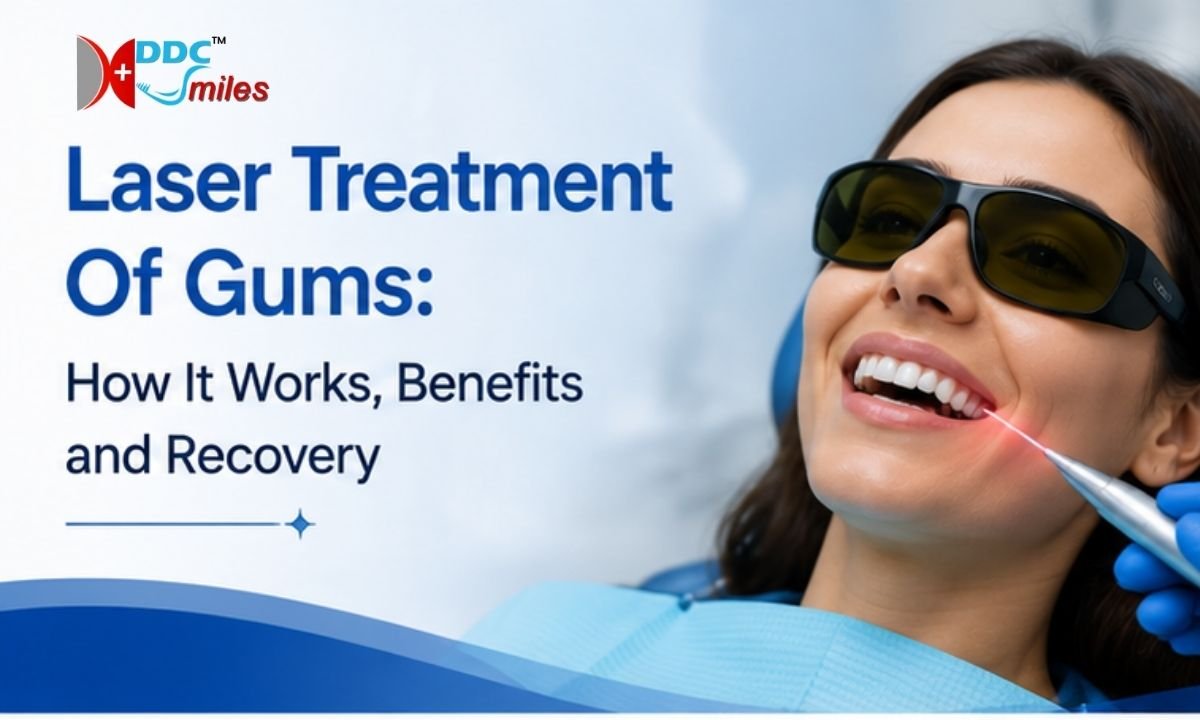
Undergoing advanced laser treatment of gums offers a modern, minimally invasive solution for managing chronic periodontal inflammation, bleeding, and deep pocket infections without the discomfort of conventional scalpels and sutures. Patients seeking a premier Dental Hospital in HSR Layout and Koramangala, periodontal laser therapy utilizes targeted light energy to selectively vaporize diseased bacteria, eliminate infected tissue, and stimulate natural bone and ligament regeneration around natural teeth and dental implants.
Traditional periodontal surgery historically involved mechanical incisions, surgical flap elevation, aggressive root scraping, and painful suture lines that often caused post-operative gum recession and heightened tooth sensitivity.
In contrast, laser periodontal therapy introduces a gentle, bio-compatible approach centered on photothermal disinfection and cellular biostimulation.
By emitting calibrated wavelengths of light that are absorbed specifically by water, hemoglobin, and melanin pigments within anaerobic bacteria, dental lasers target only diseased, inflamed sulcular tissue while leaving healthy connective tissue attachments completely undisturbed.
Dental Disclaimer
The biophysical mechanisms, procedural comparisons, and clinical recovery timelines presented in this article are provided strictly for educational and public health awareness purposes. This content does not constitute formal dental advice, clinical diagnosis, or a personalized periodontal treatment plan. Diagnosing the severity of periodontal disease and determining candidacy for laser-assisted gum procedures requires an in-person clinical examination, periodontal probing, and radiographic evaluation by a qualified periodontist, dental surgeon, or licensed dental professional.
What You Will Discover in This Guide
- The Biophysical Mechanism: How targeted photonic wavelengths eliminate subgingival infections at a cellular level.
- Clinical Applications: When laser therapy is used for deep pocket decontamination, gum recession management, and cosmetic reshaping.
- The Day-by-Day Recovery Timeline: What to expect during post-procedure healing and how to maintain optimal results.
- Financial & Investment Factors: Understanding the variables that influence periodontal laser treatment costs.
Preserving your natural dentition requires precision technology and specialized periodontal expertise. At DDC Smiles, our multi-specialty dental team pairs advanced soft-tissue laser systems with high-resolution 3D digital diagnostics to deliver virtually painless, tissue-preserving treatments customized to your oral health needs.
Core Clinical Advantages of Periodontal Laser Therapy
- Microbial Biofilm Eradication: Laser light penetrates deep into microscopic periodontal pockets and dentinal tubules, destroying aggressive pathogens (Porphyromonas gingivalis, Treponema denticola) that traditional mechanical scalers cannot reach.
- Instant Hemostasis & Micro-Vascular Sealing: The thermal energy coagulates capillary vessels upon contact, producing a bloodless surgical field during treatment and eliminating post-operative bleeding concerns.
- Needle-Free Comfort: As the laser creates minimal friction and bone-conducted vibration, many mild-to-moderate gum treatments require little to no local anesthetic injections.
- Natural Fibrin Clot Formation: Instead of using foreign suture materials, laser energy stimulates a stable, natural fibrin seal at the gum line that protects the healing pocket from food debris and oral bacteria.
- Preserved Tissue Architecture: Eliminates the risk of long-term gum shrinkage (recession) and root exposure commonly seen after traditional surgical flap procedures.
How Targeted Light Eradicates Infection?
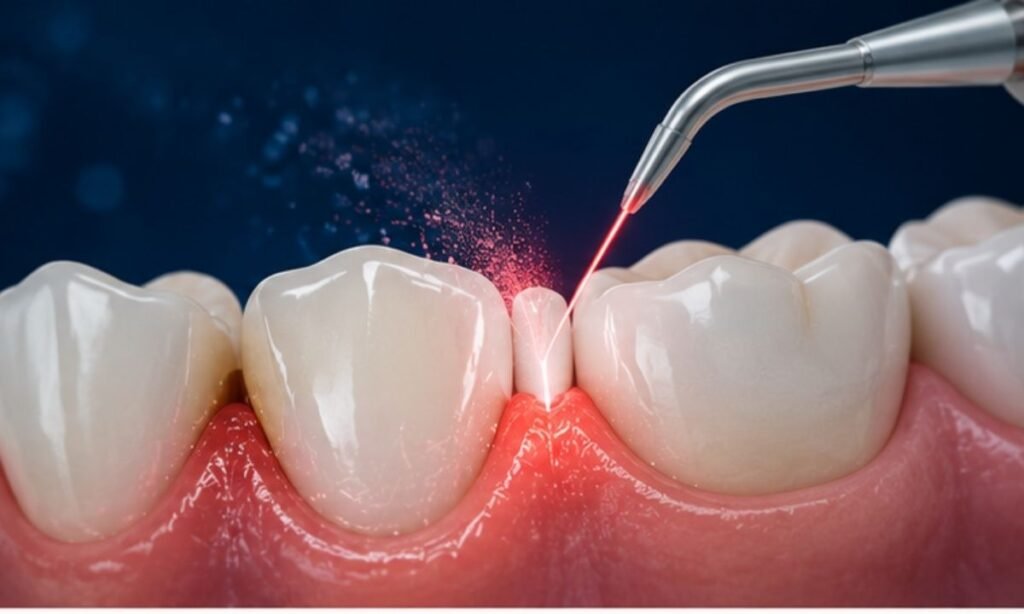
The clinical success of laser periodontal therapy lies in optical physics and selective photothermal targeting.
In an infected periodontal pocket, anaerobic bacteria and chronically inflamed sulcular tissue are rich in dark, light-absorbing pigments such as porphyrins and melanin, while healthy connective tissue and alveolar bone remain unpigmented.
When dental lasers operate at near-infrared wavelengths (810 nm to 1064 nm), the light energy passes harmlessly through healthy tissue and is selectively absorbed by the pigmented bacterial colonies and infected micro-lining of the pocket.
Integrating modern laser treatment for teeth and their supporting periodontal foundations eliminates active infection at the microscopic level without altering tooth root morphology.
Key Biophysical Actions Inside the Periodontal Pocket
- Selective Photo-Vaporization: Intracellular water within pigmented bacteria quickly reaches vaporization temperatures, disrupting bacterial cell membranes (bacteriolysis) and neutralizing tissue-destructive endotoxins (lipopolysaccharides).
- Micro-Vascular Hemostasis: Laser energy seals severed capillaries, venules, and lymphatic vessels upon contact through thermal protein denaturation, maintaining a completely dry, clear operatory field.
- Sterile Fibrin Seal: The low-energy thermal pass denatures blood proteins to form a stable, biological fibrin barrier at the gingival crest. This seal prevents oral saliva, food particles, and plaque bacteria from re-entering the healing pocket.
- Photobiomodulation (PBM): Lower photonic energy levels stimulate cytochrome-c oxidase in human fibroblasts and osteoblasts, accelerating local ATP synthesis, reducing inflammatory cytokines, and triggering natural collagen re-attachment.
Conventional Flap Surgery vs. Periodontal Laser Decontamination
| Clinical Parameter | Conventional Open-Flap Periodontal Surgery | Advanced Periodontal Laser Decontamination
|
|---|---|---|
| Surgical Technique | Mechanical scalpel incisions; gums are cut and peeled back to expose alveolar bone. | Hair-thin, flexible optical fiber inserted directly into the pocket; no scalpel incisions or tissue reflection. |
| Sutures & Bleeding | Requires multiple surgical sutures; significant intraoperative and post-operative bleeding. | Instant thermal coagulation produces zero bleeding; completely suture-free. |
| Healthy Tissue Impact | Non-selective; healthy tissue and periosteum are frequently removed or traumatized during scraping. | Highly selective; vaporizes only diseased, necrotic epithelium while preserving healthy connective tissue fibers. |
| Post-Operative Discomfort | Moderate to severe throbbing pain, facial swelling, bruising, and high dependence on NSAIDs/analgesics. | Minimal to no post-operative pain; mild tenderness managed easily with routine oral hygiene care. |
| Long-Term Gum Recession | Causes significant gingival shrinkage (2 to 4 mm of root exposure), leading to aesthetic defects and cold sensitivity. | Preserves natural gingival margin height; virtually zero post-treatment gum recession or root exposure. |
| Recovery & Downtime | 2 to 4 weeks of restricted chewing, dietary limitations, and suture removal visits. | Patients resume normal daily routines within 24 to 48 hours. |
Traditional periodontal surgery is resective; it cuts away diseased tissue along with healthy architecture. Laser therapy is regenerative; it decontaminates the microscopic sulcus to allow the periodontal ligament and alveolar bone to naturally heal and re-anchor against the tooth root.
Deep Pockets, Peri-Implantitis & Recession Management
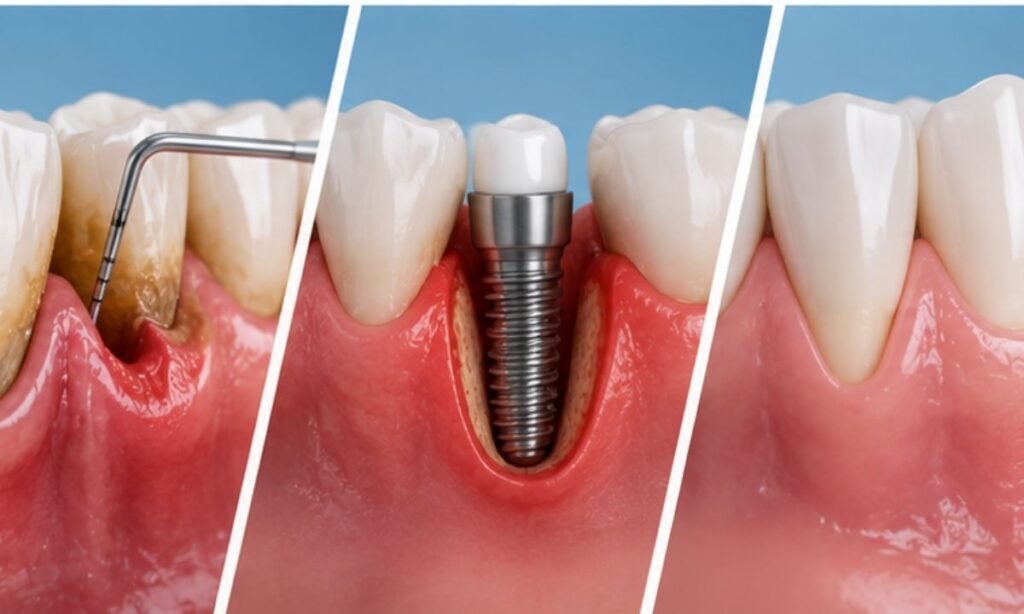
Periodontal conditions range from localized marginal inflammation to advanced bone loss and root exposure.
As dental lasers can be fine-tuned for tissue ablation, subgingival bacterial sterilization, or cellular biostimulation, they provide targeted interventions across diverse restorative and periodontal needs.
Diagnostic Suitability & Periodontal Indicator Checklist
Review the clinical indications below to understand where laser-assisted therapy delivers the greatest clinical benefit:
- Moderate to Severe Chronic Periodontitis (Pocket Depths 4 mm to 7+ mm)
- Clinical Presentation: Deep periodontal pockets harboring anaerobic biofilms that cannot be reached with standard floss or superficial scaling.
- Laser Role: The optical fiber navigates deep into the subgingival sulcus, eliminating bacterial colonies and vaporizing necrotic lining while maintaining the structural integrity of the alveolar bone.
- Gingival Recession & Exposed Root Surfaces
- Clinical Presentation: Loss of marginal gum tissue leading to root exposure, heightened thermal sensitivity, and cosmetic elongation of teeth.
- Laser Role: As an advanced modality, laser surgery for gum recession utilizes low-level photonic energy (photobiomodulation) to decontaminate delicate root surfaces without stripping essential root cementum. When paired with minimally invasive tunneling techniques or micro-grafts, laser biostimulation accelerates fibroblast attachment, boosts collagen synthesis, and improves soft-tissue coverage over exposed roots with minimal surgical trauma.
- Peri-Implant Mucositis & Peri-Implantitis
- Clinical Presentation: Bleeding, inflammation, or progressive marginal bone loss occurring around an existing dental implant.
- Laser Role: Er:YAG and Diode lasers sterilize the micro-threaded titanium implant collar, destroying bio-films without overheating the metal or damaging the implant surface, halting bone loss and encouraging re-osseointegration.
- Drug-Induced or Orthodontic Gingival Hyperplasia
- Clinical Presentation: Overgrown, swollen, or fibrous gum tissue caused by medications (such as calcium channel blockers or anticonvulsants) or plaque accumulation around orthodontic brackets.
- Laser Role: Precision contouring removes excess fibrous tissue smoothly, instantly coagulating blood vessels and restoring a clean anatomical margin around orthodontic appliances.
- Gingival Melanin Hyperpigmentation
- Clinical Presentation: Natural, dark-brown or patchy melanin deposits along the attached gingiva in the visible smile zone.
- Laser Role: Selective photo-ablation targets melanocytes in the basal epithelial layer, removing discoloration and revealing an even, natural coral-pink gum tone in a single session.
Periodontal Depth & Treatment Strategy Matrix
- 1 to 3 mm (Healthy Sulcus): Routine maintenance cleaning; laser application not indicated.
- 4 to 5 mm (Early-to-Moderate Pocketing): Subgingival laser decontamination combined with ultrasonic scaling to resolve inflammation and reverse pocket progression.
- 6 mm+ (Severe Pocketing / Chronic Bone Loss): Full-quadrant laser pocket therapy and biostimulation to trigger deep tissue re-attachment and halt progressive tooth mobility.
The Preservation Insight: Managing periodontal pockets or marginal recession early with laser-assisted biostimulation stops structural breakdown before bone loss becomes irreversible, helping patients avoid complex bone grafting or premature tooth extractions.
The Healing Timeline and Day-by-Day Post-Procedure Recovery Stages
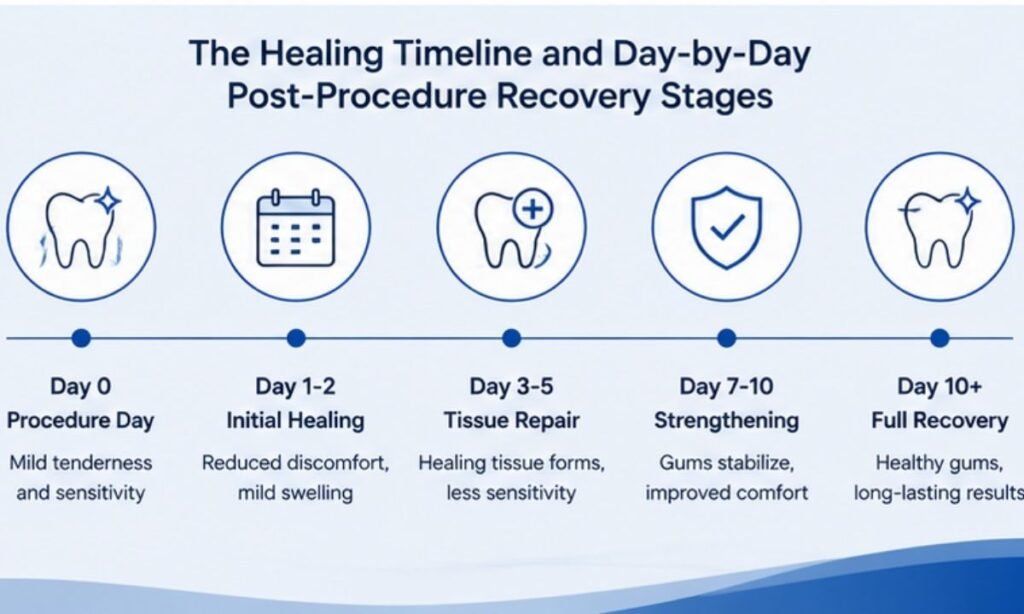
As laser therapy does not involve cutting or suturing delicate gum tissue, the post-operative biological healing cascade begins immediately.
The localized thermal energy leaves a natural, protective fibrin seal over the pocket margin, eliminating open wounds and dramatically shortening the recovery window compared to conventional periodontal surgery.
Understanding the phased healing timeline helps patients protect the treated area, support cellular re-attachment, and maintain optimal recovery results.
Phased Post-Procedure Recovery Timeline
| The Periodontal Healing Journey
|
|---|
| Day 1: Clot Stabilization ➔ Days 2–5: Cellular Proliferation ➔ Days 6–14: Collagen Re-attachment ➔ Weeks 3–6+: Tissue Maturation |
Phase 1: Day 1 (The First 24 Hours) Fibrin Clot Formation & Hemostasis
- Biological Activity: Capillaries remain thermally sealed, preventing active bleeding. A microscopic, gel-like fibrin clot forms at the neck of the tooth, acting as a natural bandage that shields the deep pocket from saliva and oral bacteria.
- Physical Sensation: Minimal to mild tenderness; slight warmth or tingling along the gumline. Most patients require only over-the-counter paracetamol rather than strong narcotic analgesics.
- Homecare & Dietary Protocol:
- Consume cool or lukewarm soft foods (smoothies, yogurt, pureed soups, mashed potatoes).
- Do not use straws: Suction creates negative pressure inside the mouth that can dislodge the stabilizing fibrin clot.
- Avoid vigorous rinsing, spitting, or poking the gum margin with toothpicks or fingers.
Phase 2: Days 2 to 5 Fibroblast Migration & Tissue Quiescence
- Biological Activity: Stimulated by the laser’s photobiomodulation effect, local fibroblasts migrate into the sulcular space, initiating new extracellular matrix and collagen production. Inflammatory swelling drops significantly.
- Physical Sensation: Discomfort subsides almost completely. The gum tissue may appear slightly pale, pinkish-white, or cloudy along the treated margin this is normal fibrin tissue, not an infection.
- Homecare & Dietary Protocol:
- Begin gentle, warm saline rinses (half a teaspoon of salt in warm water) after meals, or use a prescribed non-staining antimicrobial mouth rinse.
- Brush non-treated areas normally; gently wipe or lightly brush teeth adjacent to the treated gums without forcing bristles deep into the gumline.
- Avoid crunchy, hard, spicy, or acidic foods that could mechanically scratch the delicate tissue.
Phase 3: Days 6 to 14 Collagen Synthesis & Initial Re-Attachment
- Biological Activity: The initial fibrin mesh transforms into organized collagen fibers. The junctional epithelium begins re-adhering to the clean tooth root, effectively shrinking pocket depth and firming the gingival margin.
- Physical Sensation: Gums regain a healthy, firm, stippled coral-pink appearance. Bleeding during gentle brushing ceases.
- Homecare & Dietary Protocol:
- Gradually re-introduce regular textured foods, while still avoiding hard items like popcorn kernels, seeds, or crispy chips that can lodge in the sulcus.
- Resume regular soft-bristled toothbrushing along the gumline using a gentle circular or rolling motion.
- Do not floss aggressively into the depth of the treated pocket until cleared by your periodontist.
Phase 4: Weeks 3 to 6 and Beyond Deep Periodontal Maturation & Bone Remodeling
- Biological Activity: Deep periodontal ligament fibers achieve mature, stable mechanical attachment to the cementum. In cases of bone-defect biostimulation, early osteoblast activation promotes long-term alveolar bone stabilization.
- Clinical Evaluation: A comprehensive follow-up visit is conducted to measure pocket reduction, assess tissue tone, and establish a personalized 3-to-6-month preventive periodontal maintenance schedule.
Why Laser Recovery Is Significantly Faster Than Traditional Surgery?
- No Stitches to Remove: Eliminates the physical tension, plaque accumulation, and discomfort associated with surgical suture lines.
- Zero Tissue Loss: As gums are not surgically trimmed away, patients do not experience the elongated tooth appearance, aesthetic defects, or cold sensitivity common after scalpel surgery.
- Immediate Return to Routine: The vast majority of patients return to work and light daily activities the very next day.
The first 48 hours are critical for protecting the natural fibrin seal. Keeping your diet soft and avoiding mechanical disruption allows the deep connective tissue to re-attach securely to the tooth root.
Investment & Value: Understanding Procedure Cost Drivers
When considering advanced periodontal care, understanding the overall laser treatment for teeth gums cost involves evaluating several clinical, anatomical, and technological factors rather than looking at a single fixed fee.
As gum conditions range from isolated mild pocketing around a single tooth to widespread, chronic periodontitis across all four quadrants, treatment plans are customized to the exact severity of infection and the degree of tissue regeneration required.
Factors Influencing Periodontal Laser Treatment Pricing
| Clinical Cost Factor | Low-to-Moderate Complexity | Advanced / Full-Arch Complexity
|
|---|---|---|
| Extent of Treatment Area | Localized therapy focusing on 1 to 3 isolated teeth or a single quadrant. | Full-mouth periodontal decontamination spanning all four quadrants (28–32 teeth). |
| Severity of Pocketing & Bone Loss | Moderate pocket depths (4 to 5 mm) requiring standard sulcular decontamination. | Severe pocket depths (6 mm+), advanced bone loss, or active peri-implantitis requiring extensive multi-pass biostimulation. |
| Laser Wavelength & Technology | Standard soft-tissue Diode laser (810–980 nm) for sulcular debridement. | Dual-wavelength therapy (combining hard-tissue Erbium and soft-tissue Diode) for simultaneous calculus ablation and biostimulative pocket sealing. |
| Adjunctive Clinical Procedures | Basic ultrasonic subgingival debridement and non-staining antimicrobial irrigation. | Regenerative biologics (enamel matrix derivatives, bone grafting materials, or membrane placement for vertical defects). |
| Maintenance & Monitoring | Standard 6-month preventive periodontal maintenance follow-ups. | Specialized 3-month supportive periodontal therapy (SPT) sessions to track bone remodeling and stability. |
The Long-Term Return on Investment (ROI)
- Preserving Natural Dentition: Investing in early-to-moderate laser pocket decontamination stops progressive bone resorption, directly preventing premature tooth mobility and tooth loss.
- Avoiding Expensive Replacements: Halting periodontal disease in its tracks eliminates the future need for complex surgical extractions, sinus lifts, extensive bone grafting, and multi-unit dental implants interventions that carry significantly higher cumulative costs.
- Reduced Ancillary Costs: As laser therapy eliminates scalpel incisions and sutures, patients save on prescription analgesics, antibiotic regimens, repeated suture-removal appointments, and lost work time.
- Guarding Systemic Health: Resolving chronic oral bacteremia reduces systemic inflammatory burdens associated with cardiovascular strain, uncontrolled diabetic spikes, and systemic chronic inflammation.
Periodontal laser therapy is a conservative, preventive investment in the biological foundation of your smile. Treating diseased pockets early protects your natural teeth, eliminating the substantial physical and financial costs of tooth loss and full-arch restorative replacements.
Why Choose DDC Smiles for Advanced Periodontal Care?
Treating complex periodontal infections and restoring compromised gum foundations requires specialized clinical training, high-precision equipment, and a patient-first approach.
For individuals seeking expert Laser Dentistry in HSR Layout and Koramangala, DDC Smiles combines cutting-edge photonic technology with experienced periodontal specialists to deliver conservative, tissue-preserving, and virtually painless periodontal therapy across South Bengaluru.
Core Clinical Pillars at DDC Smiles
- Dedicated Periodontal & Restorative Expertise: Our periodontal treatments are led by specialists who focus on biological tissue preservation and regenerative pocket therapy. Every case is evaluated with an emphasis on saving natural teeth and restoring compromised bone architecture rather than resorting to invasive surgical resection.
- Dual-Wavelength Laser Technology: Our clinical suites feature advanced soft-tissue Diode lasers alongside hard-tissue Erbium systems. This dual-wavelength capability allows our dental team to eliminate subgingival microbial biofilms, degranulate inflamed pocket linings, and biostimulate periodontal ligaments with exact micro-meter control while leaving healthy tissue untouched.
- High-Resolution 3D Diagnostic Integration: We pair laser therapy with low-dose Cone Beam Computed Tomography (CBCT) and digital intraoral scanning. By visualizing 3D alveolar bone density, vertical defect patterns, and subgingival root topography prior to treatment, we map precise laser delivery paths for predictable clinical outcomes.
- Anxiety-Free, Minimally Invasive Environment: We understand that dental anxiety and fear of needles often cause patients to delay necessary gum care. By replacing surgical scalpels, loud scraping tools, and painful sutures with quiet, vibration-free laser energy, we provide a relaxing clinical experience with little to no need for local anesthetic injections.
- Comprehensive Long-Term Maintenance Framework: Periodontal health requires sustained monitoring. Following your laser treatment, our team designs a personalized supportive periodontal therapy (SPT) schedule, tracking pocket depth reduction and gum tissue stability to prevent disease recurrence.
The DDC Smiles Patient Journey
- Comprehensive Digital Periodontal Charting: Precise mapping of pocket depths, gingival margins, and mobility across all teeth using high-resolution diagnostics.
- Targeted Photonic Decontamination: Gentle, bloodless decontamination and pocket biostimulation performed in comfortable, efficient clinical sessions.
- Rapid Recovery with Zero Sutures: Walk out of your appointment with immediate comfort and return to work or daily activities within 24 to 48 hours.
The DDC Smiles Commitment: Periodontal disease should never cost you your natural teeth or require painful surgery. Our investment in advanced laser technology ensures your gum care is comfortable, precise, and focused on lasting oral health.
Conclusion
Healthy gums provide the vital foundation for your natural teeth, smile aesthetics, and long-term oral well-being. Chronic periodontal disease and persistent bleeding are progressive conditions that should never be left untreated. By replacing invasive scalpels and sutures with precision photonic technology, laser periodontal therapy halts progressive bone loss, eliminates harmful subgingival bacteria, and promotes natural tissue re-attachment with minimal downtime and unmatched patient comfort.
An early clinical assessment allows our periodontists to measure pocket depths, evaluate alveolar bone density with 3D digital imaging, and design a customized, tissue-preserving treatment plan tailored to your smile.
Schedule Your Clinical Consultation at DDC Smiles
If you are experiencing bleeding gums, persistent bad breath, loose teeth, or gum recession, contact our specialized dental team in South Bengaluru to explore your treatment options:
- Clinic Address: DDC Smiles Dental Clinic & Implant Centre, HSR Layout / Koramangala Sector, Bengaluru, Karnataka
- Appointment Booking & Inquiries: Connect directly through ddcsmiles.in
- Website: ddcsmiles.in
Comprehensive Dental Specialities: Laser Periodontics & Gum Care, Dental Implantology (All-on-4 / All-on-6, Basal Implants), Aesthetic Smile Makeovers (Veneers & Laser Depigmentation), Microscopic Endodontics (Painless RCT), Clear Aligners, and Full Mouth Rehabilitation.
Reference:
https://pmc.ncbi.nlm.nih.gov/articles/PMC11943112/
