

Most patients have naturally assumed that the moment a third molar causes any trouble, it must immediately be pulled. While extraction is certainly the standard protocol for teeth that are severely impacted or trapped completely beneath the gums, a completely different approach is available for teeth that have erupted properly.
If your third molar is fully functional and aligned correctly with your natural bite, saving it through a specialized wisdom tooth root canal is actually the most beneficial choice for your long-term oral health. Keeping this natural pillar at the very back of your mouth helps preserve your essential jawbone structure and maintains the proper balance of your daily chewing forces.
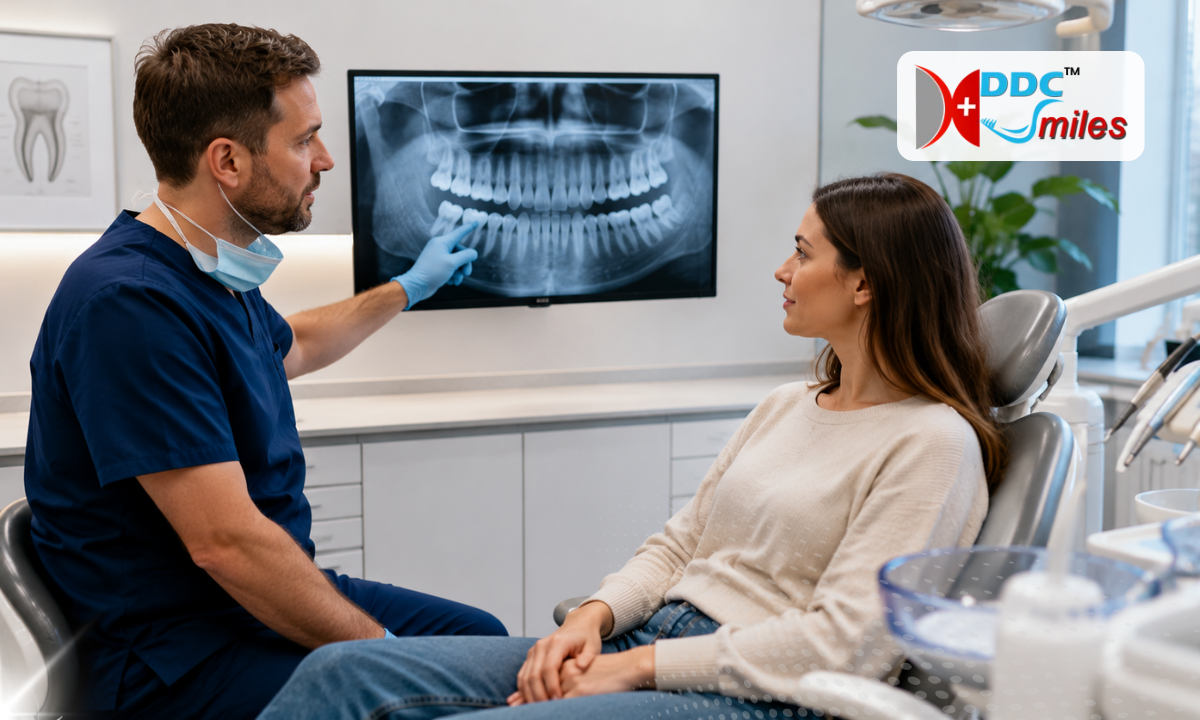
Deciding whether to save or remove this specific tooth requires absolute clinical precision and advanced diagnostic clarity. As a premier Dental Hospital in Koramangala and HSR Layout, we utilize advanced 3D CBCT imaging to map out the exact hidden structure of your deep tooth roots.
This highly detailed technology completely removes the guesswork from your personal treatment plan. By offering incredibly precise Root Canal Treatment in Koramangala and HSR Layout, our dedicated team of specialized endodontists can comfortably save your natural tooth and permanently eliminate your pain without ever resorting to an unnecessary extraction.
Medical Disclaimer
The information provided in this article is strictly for educational purposes and does not replace professional medical advice, formal diagnosis, or personalized clinical treatment. Always consult directly with a qualified endodontist or dentist regarding your specific physical symptoms, health concerns, and suitability for complex root canal therapy. Never ignore medical warnings or delay seeking professional care based on the contents of this guide.
Key Points at a Glance
1. A wisdom tooth should be saved via a root canal if it is fully erupted, upright, and actively contributes to your daily chewing power.
2. Root canal therapy permanently cleans the inner infection while preserving your jawbone, whereas extraction leaves a space and can cause other teeth to shift.
3. Advanced tools, like 3D CBCT scans and Dental Operating Microscopes, make the modern root canal procedure highly precise, completely predictable, and virtually pain-free.
4. Recovery is fast, typically involving only a few days of easily managed, mild soreness.
5. The investment in a specialized root canal protects you from the future costs of bone loss and expensive tooth replacement surgeries.
When Is a Wisdom Tooth Root Canal Necessary?
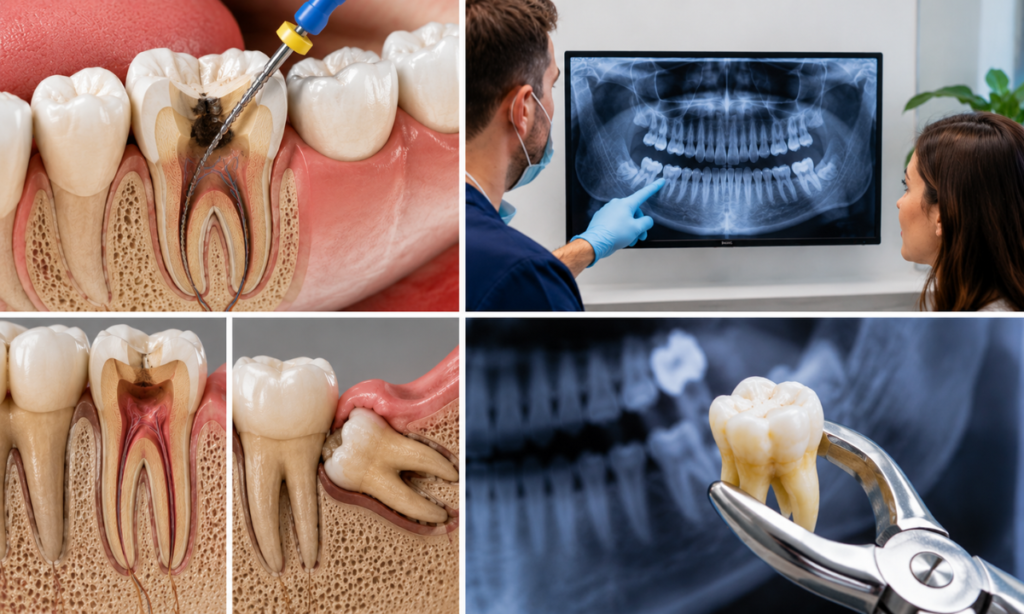
Determining if you need a wisdom tooth root canal treatment depends entirely on the physical position and structural value of the tooth itself.
Not every third molar is a good candidate for preservation. Dentists only recommend saving this tooth when it plays a highly functional and active role in your daily chewing process. If the tooth has grown in straight, aligns perfectly with your opposing teeth, and has healthy surrounding bone, pulling it out would unnecessarily disrupt your natural bite.
To help you understand exactly why a dentist might choose to save your third molar, we have outlined the specific clinical scenarios that make this treatment highly beneficial.
1. Strategic Chewing Anchor
If your third molar has fully erupted and successfully meets the opposing tooth when you bite down, it provides massive chewing power.
Saving this functional tooth prevents your other molars from shifting backwards and changing your overall facial structure.
2. Severe Pulp Infection
Dealing with an infected wisdom tooth root canal becomes necessary when deep cavity decay finally penetrates the inner nerve chamber of an otherwise healthy tooth.
Instead of pulling a perfectly aligned tooth, we simply clean out the painful infection and seal the root so you can keep your natural chewing surface.
3. Upper Versus Lower Anatomy
The physical location of the tooth heavily influences the procedure. Performing an upper wisdom teeth root canal treatment often involves navigating three or four distinct roots that fuse much differently than lower molars.
As upper molars generally have softer surrounding bone and more predictable root shapes, saving them is highly successful when they have fully descended.
4. The Impacted Exception
Patients frequently ask if an impacted wisdom tooth root canal is possible.
This specialized preservation treatment is strictly reserved for teeth that have successfully broken through the gums and sit upright.
If your tooth remains completely trapped sideways beneath your jawbone, extraction remains the safest and most effective medical option.
Understanding these specific structural requirements helps you and your dentist make the absolute best decision for your long-term oral health.
Once your dentist physically confirms that your tooth has erupted properly and provides structural value to your bite, the next critical step is looking beneath the surface. To ensure the procedure will be a complete success, we must use highly advanced diagnostic imaging to map out the exact shape of your hidden roots.
Wisdom Tooth Root Canal vs. Extraction
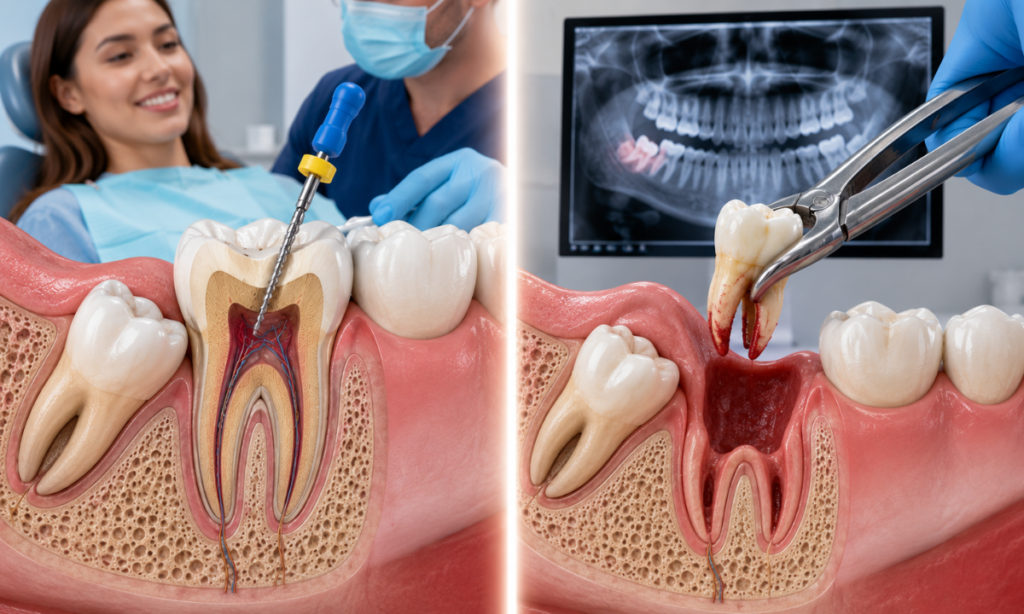
When patients experience severe discomfort in the back of their mouth, they need to know their exact options. Looking at a simple wisdom tooth root canal vs extraction comparison helps clarify which medical path is best for your specific smile.
While pulling the tooth is the standard and necessary response for poorly positioned molars, saving the tooth is the vastly superior choice when it adds actual physical value to your bite. The ultimate goal of our clinical team is to permanently eliminate your pain while aggressively protecting your long-term facial structure.
To help you understand the core differences, we have compared both procedures across the most critical long-term health factors.
| Clinical Factor | Root Canal Therapy | Surgical Extraction |
| Primary Medical Intent | Cleans the internal infection and permanently saves the natural tooth structure. | Completely removes the problematic tooth and its roots from your jawbone. |
| Bone Preservation | Keeps the healthy roots firmly in place to actively stimulate and preserve the surrounding jawbone. | Leaves an empty physical socket, which naturally leads to minor bone loss over time. |
| Bite Alignment Impact | Maintains perfect natural balance and actively prevents your other teeth from shifting backwards. | Removes a major chewing surface, which forces your remaining teeth to adapt to the sudden change. |
| Ideal Patient Scenario | The tooth is fully erupted, perfectly upright, and actively used for daily chewing. | The tooth is severely impacted, growing completely sideways, or causing dangerous crowding. |
Choosing to preserve your natural tooth through advanced endodontics provides several distinct daily advantages that last a lifetime.
1. Maintaining Natural Chewing Power
Keeping your third molar provides a massive and highly durable surface area for easily breaking down tough foods.
2. Preventing Structural Shifting
When a large tooth is permanently removed, the neighboring teeth naturally try to drift into the space, which can quickly ruin your perfect alignment.
3. Avoiding Surgical Trauma
A specialized microscopic cleaning procedure is often much gentler on your surrounding gum tissues than completely pulling a deeply rooted tooth out of your jaw.
Carefully evaluating your exact dental anatomy with advanced 3D imaging, our specialists ensure you receive the exact treatment required to keep your smile completely healthy and perfectly aligned.
Micro Endodontics Procedure
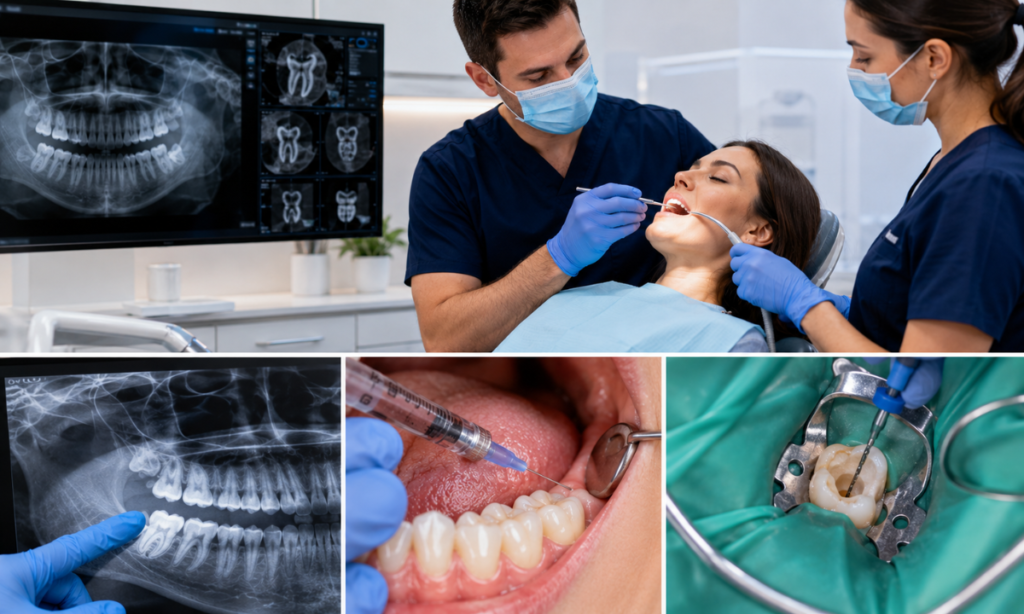
When patients hear they need a root canal, they often worry about potential pain and complex medical work. The modern wisdom tooth root canal procedure is actually incredibly gentle and highly calculated. Because third molars are located at the very back of the mouth, they require a specialized approach. Our team breaks this advanced treatment down into highly controlled phases to ensure your absolute comfort and clinical safety.
The first phase focuses entirely on perfect preparation and complete pain management.
1. Advanced 3D CBCT Mapping
We take a specialized three dimensional scan to reveal the exact number of hidden roots and their specific curved shapes before the procedure even starts.
2. Comprehensive Local Anesthesia
Our doctors administer a highly effective local anesthetic to completely numb the tooth and the surrounding gum tissue, ensuring you feel absolutely zero pain.
3. Clinical Isolation
A small protective barrier known as a dental dam is carefully placed around the tooth to keep it completely dry and prevent any saliva or bacteria from entering the sterile workspace.
By taking these exact preparatory steps, our clinical team ensures that your physical comfort is completely secured before the actual healing process begins.
The Power of Microscopic Precision
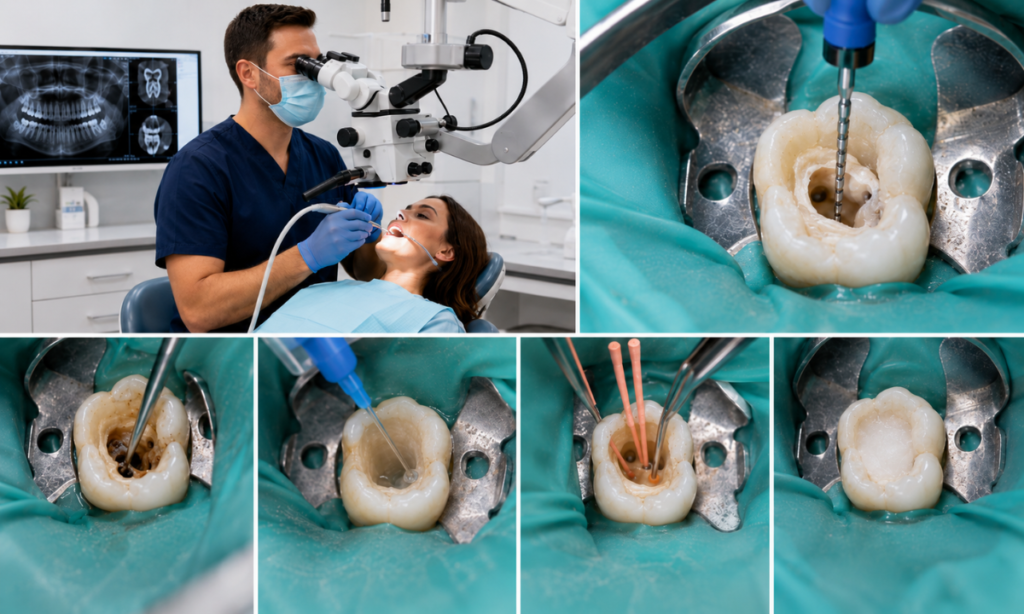
Working on a third molar requires incredible skill because the roots are notoriously complex and highly unpredictable. This is exactly where our advanced Micro Endodontics Treatment makes a massive difference.
Standard root canals often rely heavily on the physical feel of the dental instruments. At our specialized clinic, our endodontists use high-powered Dental Operating Microscopes to physically see deep inside the narrow root canals of your wisdom tooth.
This advanced visual technology allows us to perform the delicate cleaning phase with unmatched accuracy.
1. Microscopic Tissue Removal
Using the advanced microscope, our specialists carefully remove the infected nerve tissue from every single tiny canal without damaging any of the surrounding healthy tooth structure.
2. Deep Antibacterial Cleaning
The internal chambers of the tooth are thoroughly washed with highly specialized antibacterial solutions to guarantee no hidden microscopic infection is left behind.
3. Biocompatible Root Sealing
Once the roots are completely clean and dry, they are tightly packed with a safe rubber material called gutta-percha to permanently seal the tooth and block any future decay.
4. Final Structural Restoration
The opening at the top of the tooth is carefully sealed with a highly durable dental filling and prepared for a custom crown to fully restore its original chewing strength.
Utilizing microscopic technology completely transforms a traditionally complex medical procedure into a highly predictable and totally flawless clinical success.
Recovery After Treatment

After undergoing a specialized microscopic procedure, many patients are pleasantly surprised by how smooth and manageable the healing process actually is.
A successful wisdom tooth root canal recovery is completely different from the intense healing required after a surgical extraction. Because your natural tooth remains securely anchored in your jawbone, you never have to worry about severe complications like painful dry sockets or deep tissue bleeding.
To help you plan your schedule, we have outlined the standard healing timeline alongside the specific factors that influence the overall price of your care.
Your Healing Timeline
1. The First 24 Hours – You can expect some mild localized soreness and minor gum swelling as the local anesthesia completely wears off, which is easily managed with standard over-the-counter pain medication.
2. Days Two and Three – The surrounding soft tissues will quickly begin to settle down, allowing you to return to your normal daily routine and work schedule without any major interruptions.
3. One Week Post Procedure – Your treated tooth will feel completely stable and totally pain-free, meaning it is finally ready for its custom protective crown to restore its full chewing strength permanently.
By strictly following these simple postoperative steps, your newly restored tooth will quickly settle back into its permanent and highly functional state.
Understanding Your Investment
When planning for advanced endodontic care, it is completely natural to ask about the overall wisdom tooth root canal cost. As your third molar is located at the absolute back of your mouth and frequently features highly unpredictable root shapes, saving it requires significantly more clinical expertise than treating a standard front tooth.
The final financial investment directly reflects the advanced hospital-grade technology and specialized surgical skills required to ensure your treatment is a complete success on the very first try.
| Primary Cost Influencing Factor | How It Adds Immediate Clinical Value |
| Microscopic Technology Integration | Using a high-powered Dental Operating Microscope ensures every single hidden microscopic canal is found and perfectly cleaned, completely preventing any painful future re-infections. |
| Advanced 3D CBCT Imaging | Mapping your deeply hidden roots in three dimensions eliminates surgical guesswork and guarantees a much faster, safer, and highly predictable procedure. |
| MDS Specialist Expertise | Your treatment is exclusively performed by a highly certified endodontist who has years of specific medical training in navigating incredibly complex and curved root structures. |
Investing in this highly advanced level of personalized care guarantees that your natural tooth is permanently saved, effectively protecting you from the heavy physical toll and high future costs of surgical extractions and expensive artificial implants.
Why Choose DDC Smiles?
When dealing with complex dental pain, you deserve a clinical partner who prioritizes precision, comfort, and long-term structural health. DDC Smiles has spent over two decades building a reputation as a trusted, hospital-grade dental center. We do not just treat teeth; we restore complete oral function.
Here is why patients choose our advanced clinics for specialized endodontic care.
1. In-House 3D Diagnostics: We never guess about your root structure. Our clinics are equipped with advanced CBCT scanners, allowing us to map your teeth perfectly before treatment begins, ensuring a faster and safer procedure.
2. Micro-Endodontic Expertise: Our MDS-certified specialists utilize high-powered Dental Operating Microscopes. This technology allows us to successfully treat highly complex third molars that other clinics might automatically extract.
3. Hospital-Grade Safety: Operating as a comprehensive Dental Hospital, we adhere to the strictest, multi-step sterilization protocols (Class B Autoclaves), ensuring a completely safe and sterile environment for every procedure.
4. Complete Care Locations: With state-of-the-art facilities in both Koramangala and HSR Layout, accessing premium, emergency dental care is incredibly convenient for residents across Bangalore.
By choosing DDC Smiles, you are investing in a pain-free experience that permanently protects your natural bite.
Conclusion
Choosing to save a fully functional third molar through advanced endodontic treatment is a powerful investment in the long-term strength and alignment of your smile. Rather than rushing into a surgical extraction that removes a vital chewing asset, a specialized root canal preserves your natural jawbone and keeps your bite perfectly balanced.
With the incredible accuracy of modern diagnostic tools and microscopic technology, the entire process is smooth, predictable, and designed to permanently eliminate your discomfort. By choosing a specialized path to care, you can transition from dental pain to a completely restored, healthy smile with absolute confidence.
Reference:
1. https://www.aae.org/patients/root-canal-treatment/
2. https://my.clevelandclinic.org/health/treatments/21759-root-canal
