

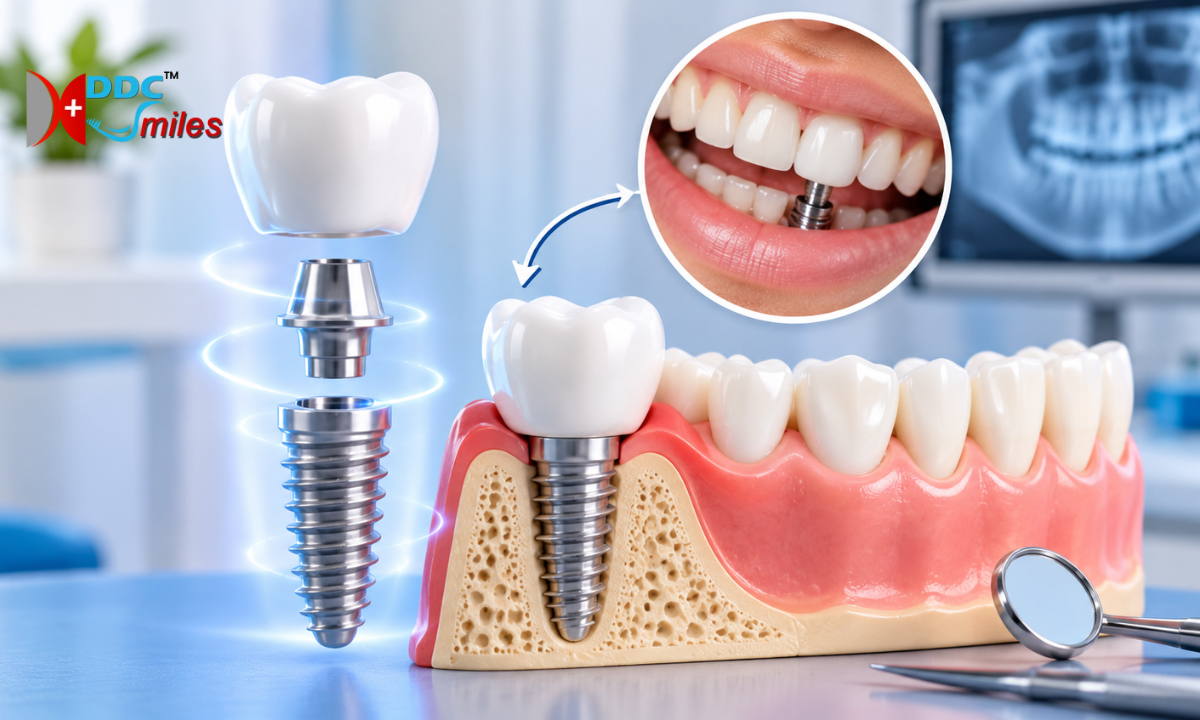
Missing teeth can affect your ability to chew comfortably, speak clearly, and smile with confidence. Dental implants offer a way to replace missing teeth by providing an artificial root that supports a replacement tooth.
But what are dental implants, and how do they work? Understanding the components, treatment process, benefits, risks, and aftercare can help you make an informed decision about replacing missing teeth.
Patients considering treatment can explore the services available at DDC Smiles, a dental clinic in Koramangala and HSR Layout, Bangalore.
What Are Dental Implants?
Dental implants are artificial tooth roots, usually made from titanium or another suitable biocompatible material. A dentist places the implant into the jawbone to create a stable foundation for a replacement tooth.
Depending on your needs, an implant can support an individual crown, a bridge, or a denture.
Unlike a conventional dental bridge, a single implant-supported crown generally does not require the adjacent teeth to be prepared for support. However, implant treatment requires appropriate planning, healthy surrounding tissues, and ongoing maintenance.
Learn more about the available options on the DDC Smiles dental implants page.
How Do Dental Implants Work?
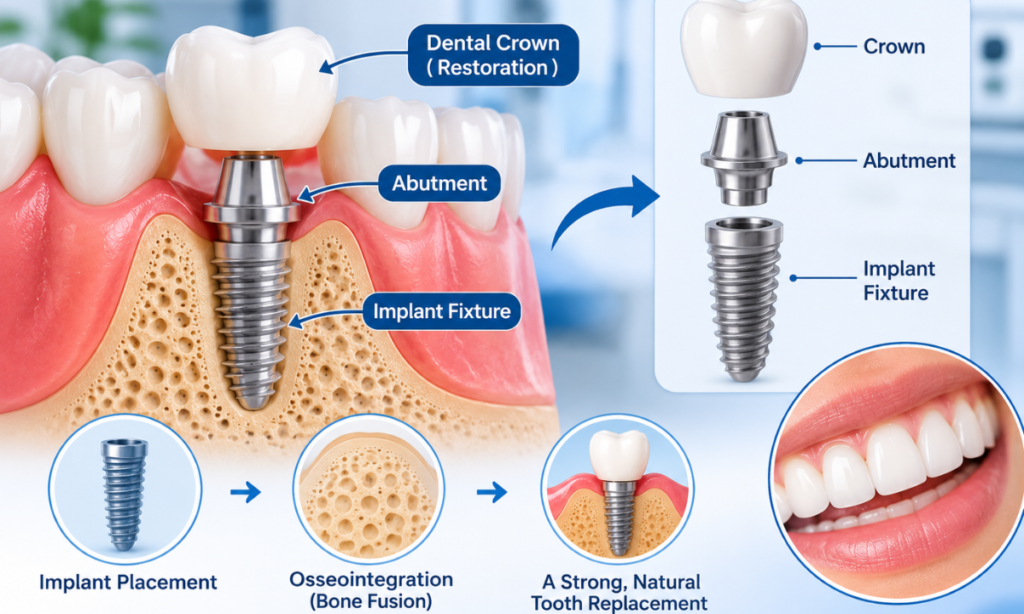
Dental implants work by creating a stable connection between the implant and the jawbone. After the implant is placed, the surrounding bone gradually integrates with its surface through a biological process called osseointegration.
This integration helps anchor the implant and allows it to support a replacement tooth.
A completed dental implant restoration generally has three main components.
1. Implant Fixture
The implant fixture is the portion placed inside the jawbone. It acts as an artificial tooth root and provides the foundation for the restoration.
Titanium is commonly used because of its biocompatibility and established use in implant dentistry.
2. Abutment
The abutment connects the implant fixture to the replacement tooth. It provides the connection between the implant inside the jawbone and the visible restoration.
3. Dental Crown or Restoration
The crown is the visible replacement for an individual missing tooth. It is designed to complement the surrounding teeth in shape, size, and colour.
Depending on the treatment plan, implants may also support bridges or removable dentures.
Together, these components help restore the appearance and function of a missing tooth.
When Might You Need Dental Implants?
Dental implants may be considered when one or more teeth are missing because of tooth decay, injury, gum disease, or other dental problems.
A dentist may discuss implant treatment if you experience:
- Difficulty chewing because of missing teeth.
- Gaps that affect your smile or confidence.
- Problems with loose or uncomfortable dentures.
- The loss of one or more teeth that need replacement.
- A need for a stable foundation for a dental restoration.
Not everyone is automatically suitable for implants. Your dentist must assess your oral health, jawbone condition, medical history, and treatment goals before recommending the procedure.
What Is the Dental Implant Procedure?
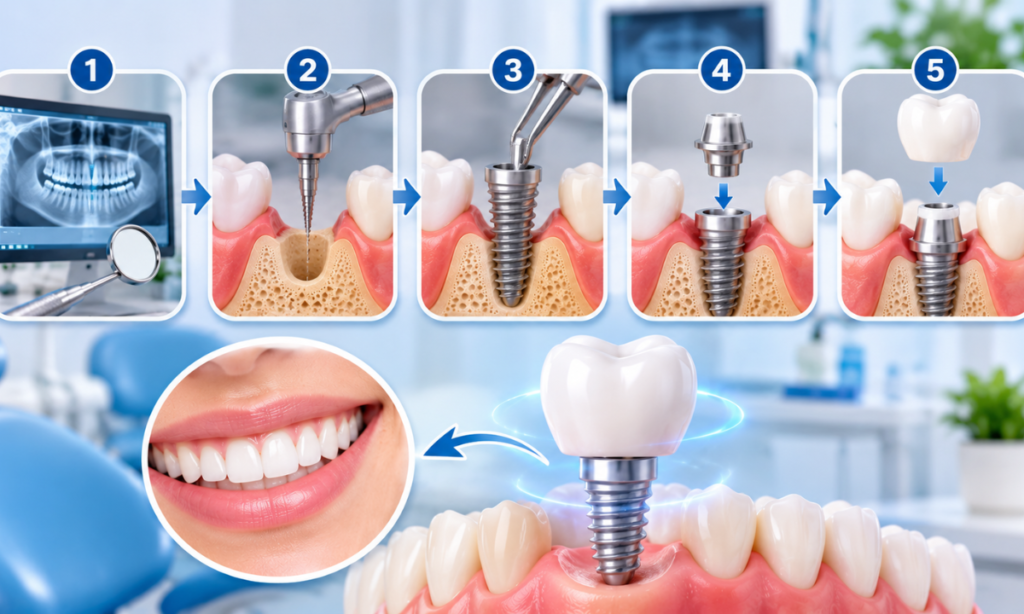
Dental implant treatment involves several stages. The exact process depends on the number of teeth being replaced, the condition of the jawbone, gum health, and whether additional procedures are necessary.
For a more detailed explanation, read the dental implant process guide for Bangalore patients.
Step 1: Initial Consultation and Assessment
The dentist examines your teeth and gums, reviews your medical history, and assesses the area where the implant may be placed.
Dental X-rays or other appropriate imaging may be needed to evaluate the jawbone and plan implant placement.
The dentist will also discuss alternative treatments, potential risks, estimated costs, and the expected treatment timeline.
Step 2: Implant Placement
If implant treatment is suitable, the implant fixture is surgically placed into the jawbone. Local anaesthesia is commonly used to manage pain during the procedure.
The dentist then provides instructions for looking after the surgical site during the initial healing period.
Step 3: Healing and Osseointegration
After placement, the implant needs time to integrate with the surrounding bone. This process is called osseointegration.
The healing period varies between patients. Bone quality, implant location, general health, smoking, and additional procedures can affect how long healing takes.
In some cases, a temporary replacement tooth may be provided while the implant heals. Immediate or early restoration is appropriate only when the clinical conditions support it.
Step 4: Abutment Placement
Once the implant has healed sufficiently, the dentist connects the abutment if it was not placed earlier as part of the treatment.
The abutment provides the connection between the implant and the final restoration.
Step 5: Placement of the Final Crown or Restoration
The dentist attaches the final crown, bridge, or denture according to the treatment plan.
The restoration is checked for fit, bite, comfort, and appearance. Follow-up appointments help the dental team assess healing and the function of the completed restoration.
For additional information, read about dental implant and crown surgery.
What Are the Benefits of Dental Implants?
Dental implants can provide several benefits when appropriately planned, placed, and maintained.
Improved Chewing Function
Implants provide a stable foundation for replacement teeth. This can make chewing more comfortable than using an unstable or poorly fitting replacement.
Natural-Looking Appearance
The crown or restoration can be designed to complement the surrounding teeth. Its final appearance depends on factors such as the restoration material, gum condition, and individual anatomy.
Support for Jawbone Health
After a tooth is lost, the jawbone in that area may gradually shrink. An implant can help preserve bone at the implant site by transmitting functional forces to the surrounding bone.
However, implants cannot guarantee that bone loss will never occur.
No Need to Prepare Adjacent Teeth for a Single Implant Crown
A single implant-supported crown generally does not require neighbouring teeth to be cut down for support, unlike many conventional dental bridges.
Support for Different Tooth Replacement Options
Implants may be used to replace one tooth, several teeth, or support certain full-arch restorations. The appropriate approach depends on the patient’s oral condition and treatment needs.
What Are the Possible Risks and Complications of Dental Implants?
Dental implant surgery is a commonly performed treatment, but it is not free from risks. Potential complications include:
- Infection: Infection may develop around the surgical site or implant.
- Injury to nearby structures: The procedure can affect adjacent teeth, blood vessels, or nerves.
- Nerve-related symptoms: Nerve irritation or injury may cause pain, numbness, or tingling.
- Sinus complications: Implants placed in the upper back jaw may affect the sinus area in some circumstances.
- Failure of osseointegration: The implant may not integrate adequately with the jawbone.
- Inflammation around the implant: Inadequate plaque control can contribute to inflammation and, in more advanced cases, loss of supporting bone.
The likelihood of complications depends on individual circumstances and the complexity of treatment.
Smoking, untreated gum disease, poor oral hygiene, uncontrolled diabetes, and inadequate maintenance can increase the risk of problems. These factors do not automatically rule out implant treatment, but they should be assessed before surgery.
Careful planning, appropriate surgical techniques, good oral hygiene, and regular follow-up can help reduce risks.
Who Is Suitable for Dental Implants?
Dental implants may be suitable for adults who have missing teeth and want a fixed or implant-supported replacement. However, suitability depends on more than the presence of a gap.
Your dentist will assess several factors.
Jawbone Quantity and Quality
The jawbone must provide adequate support for the planned implant. If there is insufficient bone, a bone graft or another treatment may sometimes be considered.
Gum Health
Active gum disease should be assessed and treated before implant placement. Healthy gums and good plaque control are important for long-term maintenance.
General Health
Certain medical conditions and medications can affect healing or surgical planning. Discuss your medical history and current medicines with your dentist.
Smoking
Smoking can impair healing and is associated with a higher risk of dental implant complications, including greater bone loss around implants and lower implant survival.
If you smoke or vape, discuss cessation support and the timing of treatment with your dentist.
Oral Hygiene and Follow-Up
Implants require ongoing cleaning and professional monitoring. Being able to maintain oral hygiene and attend follow-up appointments is an important part of treatment planning.
How Long Does Dental Implant Treatment Take?
Dental implant treatment often takes several months from the initial assessment to the placement of the final restoration.
The overall timeline depends on factors such as:
- The number and location of implants.
- The amount and quality of available jawbone.
- Whether a tooth needs to be extracted first.
- Whether bone grafting or gum treatment is required.
- How the implant heals and integrates with the bone.
- Whether a temporary restoration can be used during healing.
Some patients may qualify for immediate or early restoration, while others need a longer healing period before the final crown can be fitted.
Your dentist will provide a personalised timeline after examining your mouth and reviewing any necessary scans.
Are Dental Implants Painful?
The implant placement procedure is usually performed under local anaesthesia, which helps manage pain during surgery.
After the procedure, some patients experience soreness, swelling, bruising, or mild discomfort. The intensity and duration vary according to the procedure and individual healing response.
Your dentist may recommend appropriate pain relief and provide instructions about food, oral hygiene, and activity during recovery.
Contact your dentist if pain becomes severe, swelling increases rather than improves, bleeding persists, or you develop a fever or other concerning symptoms.
Dental Implants vs Bridges vs Dentures
Dental implants, bridges, and dentures can all replace missing teeth, but they work differently.
| Feature | Dental Implants | Conventional Dental Bridges | Removable Dentures |
| Support | Anchored in the jawbone | Usually supported by prepared adjacent teeth | Rest on the gums and may use other forms of retention |
| Removable by the patient | Usually no, for fixed restorations | Usually no | Yes |
| Effect on adjacent teeth | A single implant crown generally avoids preparing neighbouring teeth | Adjacent teeth commonly need preparation | Depends on the denture design |
| Bone considerations | Can help preserve bone at the implant site | Does not directly replace the missing tooth root | Does not directly replace the missing tooth root |
| Maintenance | Daily cleaning and professional reviews | Cleaning around the bridge and regular reviews | Daily cleaning and periodic assessment |
| Suitability | Depends on bone, gum health, medical history, and other factors | Depends on the condition of supporting teeth | Depends on oral anatomy, needs, and patient preference |
There is no single option that is best for everyone. Your dentist can explain the advantages, limitations, costs, and expected maintenance of each approach.
How Should You Care for Dental Implants?
Dental implants need regular care even though the implant itself cannot develop tooth decay.
Good maintenance helps protect the surrounding gums and bone and can reduce the risk of inflammation.
Follow these practices:
- Brush twice daily with a soft-bristled toothbrush.
- Clean between your teeth and around the implant using suitable interdental brushes or other recommended aids.
- Follow your dentist’s instructions for cleaning around the restoration.
- Attend regular dental examinations and professional cleaning when advised.
- Avoid smoking and seek help to stop if needed.
- Contact your dentist if the implant-supported crown becomes loose or the surrounding gums become swollen, tender, or prone to bleeding.
Long-term success depends on consistent home care, professional maintenance, and management of individual risk factors.
You can explore the dental treatments offered by DDC Smiles to learn more about available services.
What Factors Affect the Cost of Dental Implants?
The cost of dental implant treatment varies depending on the complexity of the case and the type of restoration required.
Factors that may influence the total cost include:
- The number of implants required.
- The implant system and components used.
- Diagnostic imaging and treatment planning.
- Bone grafting or other additional procedures.
- The type and material of the crown or bridge.
- Temporary teeth, if required.
- Follow-up visits and maintenance needs.
When comparing estimates, ask for an itemised treatment plan. Check whether the quoted amount includes the implant fixture, abutment, final crown, scans, additional procedures, and follow-up care.
For an individual estimate, a clinical examination is necessary because treatment requirements differ between patients.
Frequently Asked Questions About Dental Implants
1. How Do You Know If You Need a Dental Implant?
A dental implant may be an option if you have one or more missing teeth and want a stable replacement. However, a dentist must assess your oral health, bone condition, and treatment goals before recommending an implant.
2. What Is the 3/2 Rule for Dental Implants?
The 3/2 rule is a general spacing guideline often described in implant dentistry: approximately 3 mm between an implant and a natural tooth and 2 mm between adjacent implants.
These figures are not universal placement instructions. Appropriate spacing depends on the anatomy, implant dimensions, restorative plan, and clinical circumstances.
3. How Long Does Dental Implant Treatment Take?
Treatment often takes several months, particularly when the implant needs time to integrate with the jawbone. Some cases may be completed more quickly, while bone grafting, extraction, or other complications can extend the timeline.
4. How Long Can Dental Implants Last?
Dental implants can remain functional for many years, but their longevity varies. Oral hygiene, gum health, smoking, general health, the condition of the restoration, and ongoing professional maintenance all affect long-term outcomes.
The crown may need repair or replacement even if the implant itself remains stable.
5. Can Smokers Get Dental Implants?
Smoking does not automatically rule out implant treatment, but it increases the risk of healing problems and implant complications. Discuss your smoking history and options for cessation with your dentist before treatment.
6. Are Dental Implants Better Than Dentures?
Neither option is best for everyone. Implants may offer greater stability and can support fixed restorations, while dentures are removable and may be suitable for patients who prefer them or are not candidates for surgery.
Your dentist can help you compare both options based on your oral health, preferences, and budget.
7. Can Dental Implants Be Placed If There Is Bone Loss?
Possibly. Some patients with insufficient bone may be candidates for bone grafting or other procedures before implant placement. The appropriate approach depends on the location and extent of bone loss and the overall treatment plan.
8. What Should You Do If an Implant Crown Becomes Loose?
Contact your dentist for an assessment. A loose crown or other restoration should not be ignored, because the cause needs to be identified and treated appropriately.
Avoid trying to tighten or repair the restoration yourself.
When Should You Contact Your Dentist?
Arrange a dental assessment if you experience persistent pain, increasing swelling, ongoing bleeding, fever, new numbness or tingling, or a loose implant-supported restoration.
Prompt assessment is important because these symptoms may indicate a complication that requires treatment.
Conclusion
Dental implants provide a way to replace missing teeth by placing an artificial root in the jawbone and attaching a crown, bridge, or denture. The process involves careful assessment, implant placement, healing, restoration, and ongoing maintenance.
Although implants offer benefits such as improved chewing function, stability, and support for bone at the implant site, they are not suitable for every patient and carry potential risks.
If you are considering treatment, consult a qualified dental professional to discuss your oral health, available alternatives, expected timeline, costs, and possible complications.
Patients looking for a dental clinic in Koramangala, Bangalore or a dental clinic in HSR Layout, Bangalore can visit the DDC Smiles website to explore its dental services and contact the clinic for appointment information.
References:
1)https://www.ncbi.nlm.nih.gov/books/NBK470448/
2)https://www.fda.gov/medical-devices/dental-devices/dental-implants-what-you-should-know
