


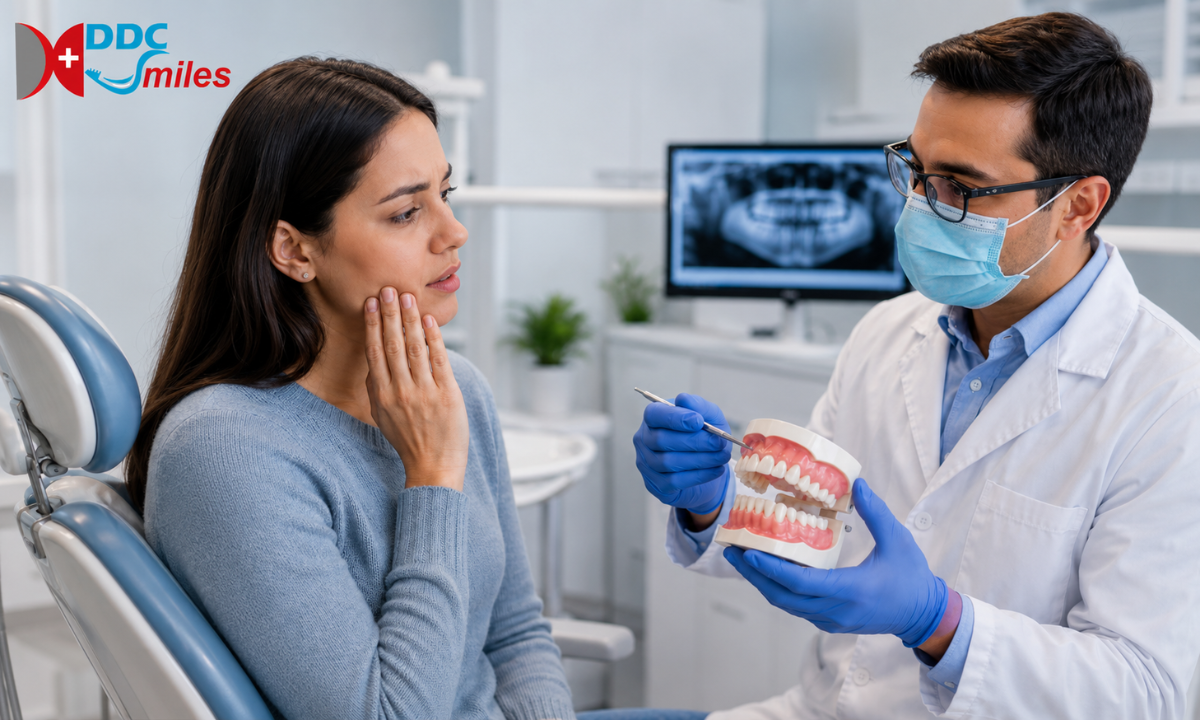
Teeth grinding, known medically as bruxism, is a surprisingly common condition where you clench or grind your teeth, often without even realising it. Many people do it in their sleep and only discover the problem when a partner hears it, or a dentist spots the tell-tale signs of worn enamel. Left unchecked, bruxism can damage your teeth, strain your jaw, and trigger persistent headaches.
The good news is that it is very treatable once the cause is understood. At DDC Smiles, our team helps patients identify and manage bruxism every day, and this guide explains why teeth grinding happens, the symptoms to look out for, and the treatment options that actually work.
What Is Bruxism?
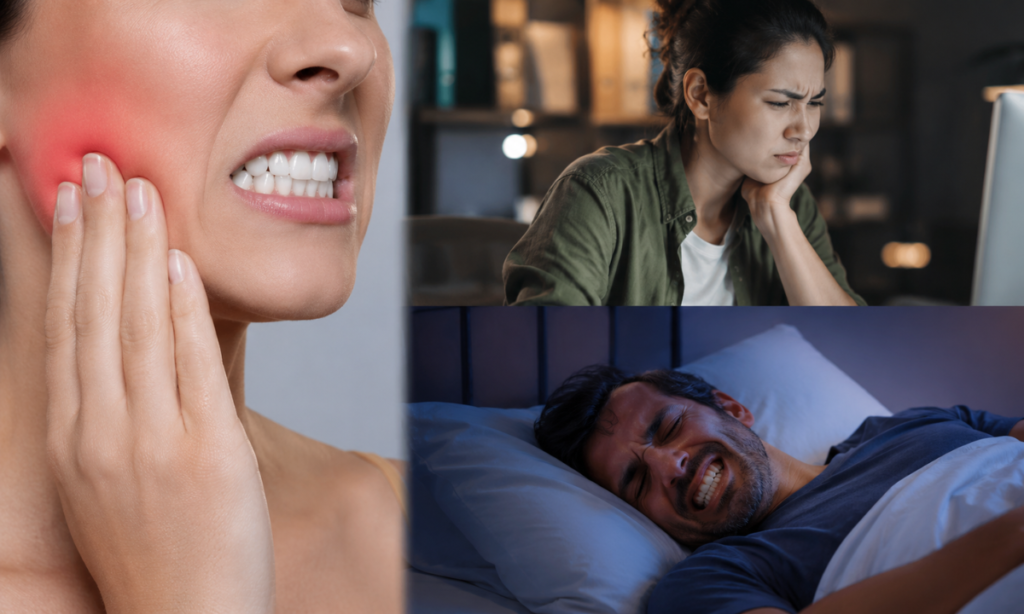
Bruxism is the involuntary grinding, gnashing, or clenching of teeth. It falls into two broad types depending on when it happens. Awake bruxism tends to involve clenching the jaw during the day, often linked to concentration, stress, or tension, and usually without any grinding sound.
Sleep bruxism happens during sleep and frequently involves rhythmic grinding that can be loud enough to disturb others. Sleep bruxism is considered a sleep-related movement disorder, and people who grind their teeth in their sleep are more likely to have other sleep conditions such as snoring or sleep apnoea.
Because so much of it happens unconsciously, many people are unaware they grind their teeth at all. That is why recognising the signs and seeking an assessment early matters so much.
Common Signs and Symptoms
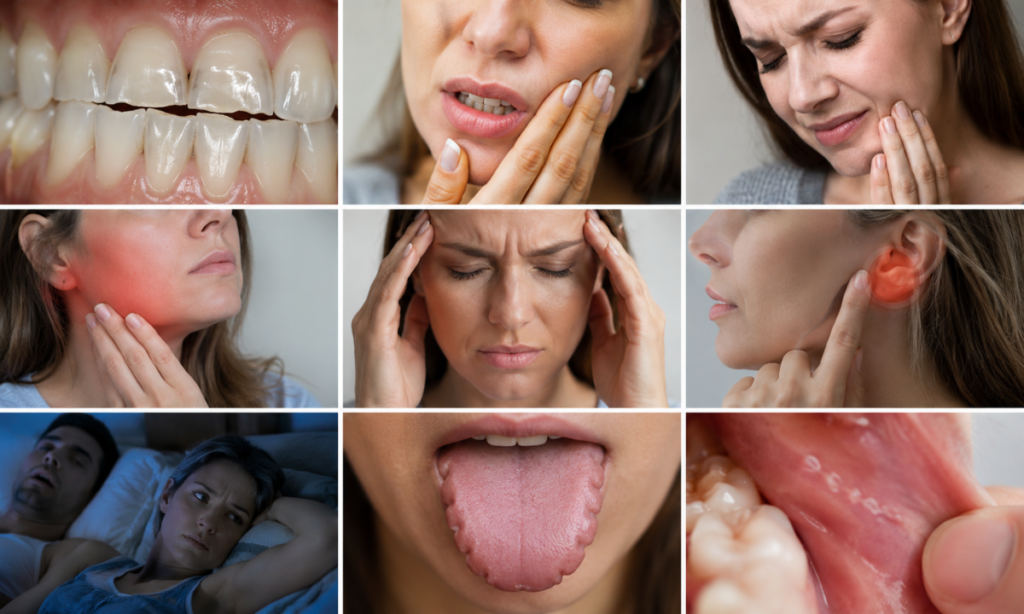
Bruxism often reveals itself through the damage and discomfort it causes rather than through the grinding itself, mainly because most of it happens during sleep. Here are the most common signs to watch for.
Worn or Chipped Teeth
The repeated grinding slowly wears down the biting surfaces of the teeth, leaving them flattened, chipped, or shorter than before. Over time, this can wear through the enamel and expose the softer, more sensitive layer underneath.
Tooth Sensitivity
As the protective enamel thins from constant grinding, the nerve inside the tooth becomes more exposed. This often leads to sharp sensitivity when eating or drinking anything hot, cold, or sweet.
Jaw and Facial Pain
The muscles that close the jaw are worked hard during a night of clenching. This frequently causes soreness or aching in the jaw, neck, and face, which tends to feel worse in the morning.
Jaw Stiffness
Repeated clenching fatigues the jaw muscles, leaving the jaw feeling tight or tired. Some people find it difficult to open their mouths fully, much as the stiffness felt in any overused muscle.
Headaches
The muscles used for chewing run up into the temples, so sustained tension in them often refers pain outward. This produces the dull, tension-type headaches that many grinders wake up with.
Clicking or Aching Jaw Joint
The joint that connects the jaw to the skull absorbs the force of grinding. Excessive strain on it can cause aching, clicking, or popping when chewing or yawning.
Disrupted Sleep
Sleep bruxism involves brief bursts of muscle activity that can interrupt restful sleep, both for the person grinding and for anyone sharing the room with them.
Tongue and Cheek Marks
During clenching, the tongue and inner cheeks are pressed against the teeth. This can leave scalloped indentations along the edge of the tongue or a raised line on the inside of the cheek.
The symptoms can range from mild and occasional to more severe and persistent, and they often worsen during stressful periods. Because tooth damage builds up slowly and cannot reverse itself, it is worth having a dentist take a look if you notice several of these. Early action helps prevent more serious harm to your teeth and jaw.
What Causes Teeth Grinding?
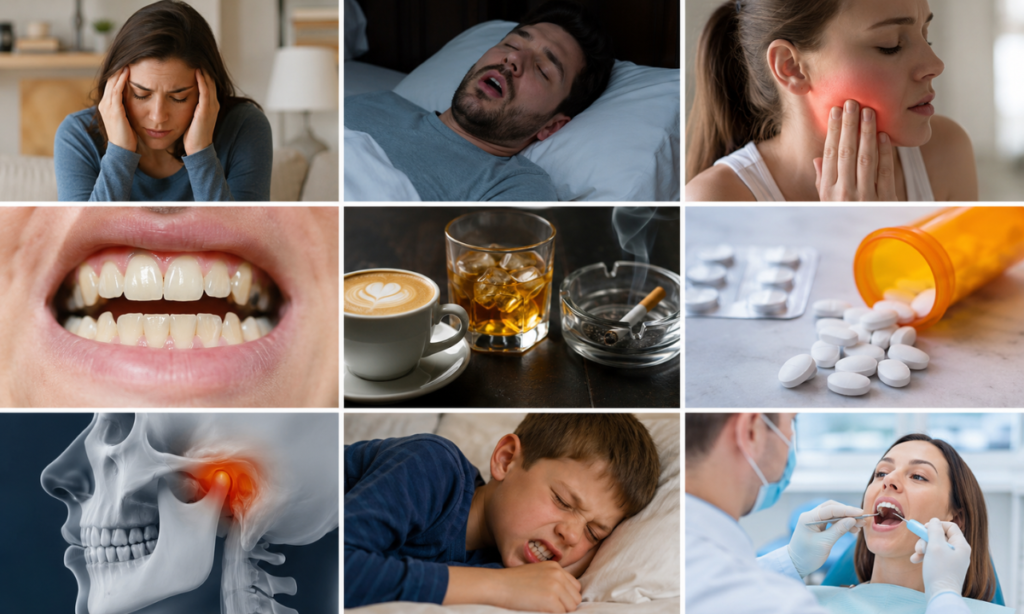
Bruxism rarely has a single cause. It usually results from a combination of physical, psychological, and lifestyle factors, which is why understanding the triggers is the first step towards treating it effectively.
Stress and Anxiety
This is one of the most common causes, especially for awake bruxism. When you are anxious, tense, or under pressure, you may clench your jaw without noticing, both during the day and while asleep. Periods of heightened stress often coincide with a flare-up in grinding.
Sleep Disorders
Sleep bruxism is closely linked to other sleep problems. People who snore heavily or have obstructive sleep apnoea are significantly more likely to grind their teeth at night. Disrupted sleep cycles and frequent micro-awakenings appear to play a role in triggering the grinding.
Bite and Alignment Issues
A bite that does not meet evenly, or teeth that are crooked or misaligned, can contribute to grinding. When the upper and lower teeth do not fit together comfortably, the jaw may shift and grind in an attempt to find a natural resting position.
Lifestyle Factors
Certain habits raise the risk of bruxism. Excessive caffeine, alcohol, and smoking are all associated with more frequent and more intense grinding. Caffeine and alcohol in particular can disrupt sleep quality, which feeds directly into night-time grinding.
Medications and Medical Conditions
Some medications, particularly certain antidepressants, list teeth grinding as a side effect. Bruxism can also be associated with neurological conditions and is sometimes seen alongside disorders such as Parkinson’s disease. In children, grinding is common and often linked to growth, new teeth coming through, or mild discomfort, and most outgrow it.
Why Treating Bruxism Matters
It is tempting to dismiss teeth grinding as a harmless habit, but over time it can cause real and costly damage. The table below shows what untreated bruxism can lead to and why early treatment is worthwhile.
| Effect of Untreated Bruxism | What Happens |
| Worn enamel | The protective outer layer grinds away, exposing sensitive dentin beneath |
| Cracked or chipped teeth | Constant pressure fractures teeth, sometimes requiring crowns or extraction |
| Tooth sensitivity and pain | Worn enamel and exposed nerves cause ongoing discomfort |
| Jaw joint problems | Strain on the jaw joint can lead to TMJ disorders and chronic pain |
| Headaches and facial pain | Persistent muscle tension triggers recurring headaches |
| Damage to dental work | Fillings, crowns, and veneers wear down or break under the pressure |
Catching and managing bruxism early protects not only your natural teeth but also any restorative work you have had done, saving you discomfort and expense later.
Treatment Options for Bruxism
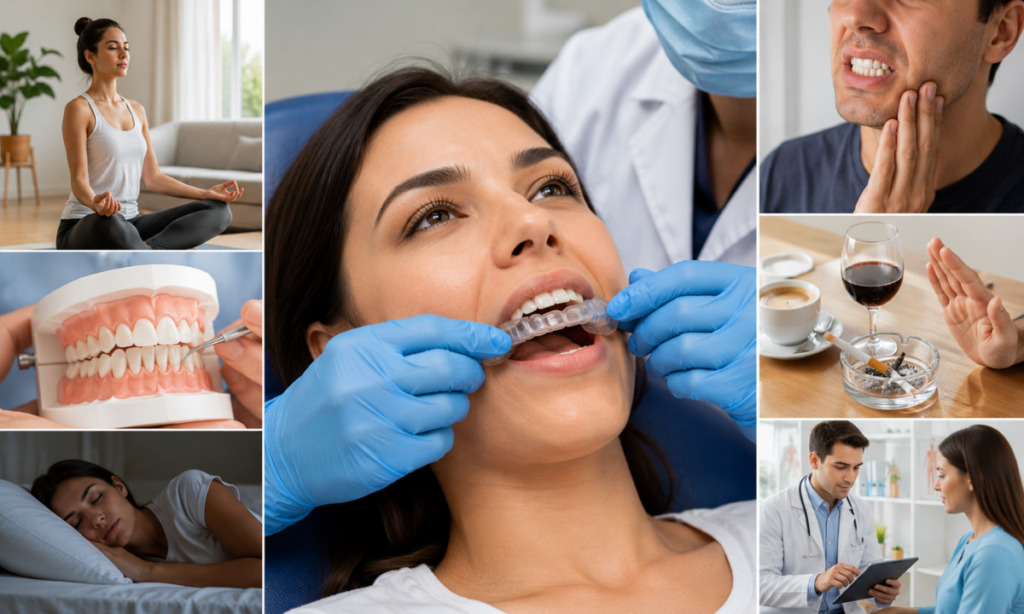
There is no single cure for bruxism, but a combination of approaches can protect your teeth and reduce grinding significantly. Treatment usually focuses on two goals: shielding the teeth from damage and addressing the underlying cause.
Night Guards and Splints
The most common and effective protection against sleep bruxism is a custom-made night guard. This is a thin, durable appliance worn over the teeth at night that cushions them and prevents the grinding surfaces from wearing each other down. Unlike shop-bought versions, a dentist-made guard is fitted precisely to your mouth for comfort and proper protection. At DDC Smiles, a custom night guard is a straightforward, non-invasive option that many patients find brings quick relief from morning jaw pain and headaches.
Managing Stress
Because stress is such a frequent trigger, managing it can make a real difference. Relaxation techniques such as deep breathing, meditation, regular exercise, and good sleep habits all help lower the tension that feeds grinding. For some people, addressing anxiety with the help of a professional reduces bruxism as a welcome side effect. Simple changes like winding down before bed and limiting screen time at night can also improve sleep quality.
Treating Bite and Alignment Problems
Where an uneven bite or misaligned teeth are contributing to grinding, correcting the alignment can ease the problem. This might involve orthodontic treatment to straighten the teeth, or adjustments to reshape surfaces that are not meeting properly. A dental clinic in HSR Layout and Koramangala can assess whether your bite is part of the cause and recommend the right approach.
Lifestyle Adjustments
Cutting back on caffeine and alcohol, particularly in the evening, often reduces night-time grinding. Stopping smoking and avoiding recreational drugs help too. Being more aware of daytime clenching is also valuable, as simply noticing the habit allows you to consciously relax the jaw and keep the teeth slightly apart during the day.
Treating Underlying Conditions
If a sleep disorder such as sleep apnoea is driving the grinding, treating that condition often resolves the bruxism as well. Similarly, if a medication is the cause, your doctor may be able to review the prescription. This is why a proper diagnosis matters, as treating the root cause is far more effective than managing symptoms alone.
When to See a Dentist
If you notice worn or sensitive teeth, wake with jaw pain or headaches, or are told you grind in your sleep, it is worth getting checked. A dentist can examine your teeth for the characteristic signs of grinding, assess your bite, and rule out other causes of your symptoms. Early intervention is always better, as it stops the damage before it becomes severe and expensive to repair. A visit also gives you the chance to discuss protection, like a night guard and to identify any underlying triggers that need addressing.
If you are experiencing any of these symptoms, the team at DDC Smiles can assess the cause and recommend a treatment plan suited to you.
Frequently Asked Questions
How do I know if I grind my teeth in my sleep?
Many people are unaware they grind at night, so the signs often show up as worn or sensitive teeth, morning jaw pain, or headaches around the temples. A partner may also hear the grinding. If you notice any of these, a dentist can confirm bruxism by examining the wear patterns on your teeth.
Can stress really cause teeth grinding?
Yes. Stress and anxiety are among the most common triggers for both daytime clenching and night-time grinding. When you are tense, you may clench your jaw without realising it. Managing stress through relaxation, exercise, and good sleep habits often reduces grinding noticeably.
Will a night guard stop me from grinding my teeth?
A night guard does not stop the grinding itself, but it protects your teeth from the damage it causes by cushioning them and preventing wear. A custom-made guard from DDC Smiles is fitted precisely to your mouth, making it far more comfortable and effective than a generic shop-bought version, and it often eases morning jaw pain too.
Is teeth grinding harmful if left untreated?
It can be. Over time, untreated bruxism wears down enamel, cracks or chips teeth, causes sensitivity, and can lead to jaw joint problems and recurring headaches. It can also damage existing dental work. Treating it early protects both your natural teeth and any restorations.
Can children grind their teeth?
Yes, grinding is common in children and is often linked to new teeth coming through or mild discomfort. Most children outgrow it without any lasting harm. If the grinding is severe, persistent, or causing damage, it is worth having a dentist check it.
Sources: https://en.wikipedia.org/wiki/Malocclusion
