



Blog Content
“Is root canal painful?” is one of the most searched dental questions for a reason — the procedure’s reputation has outlived the outdated techniques that earned it. The honest, evidence-based answer is that a modern root canal, performed with proper anesthesia and the right instruments, is not the painful ordeal most people picture. What actually causes pain is usually the infection itself, before treatment even begins.
This isn’t a reassurance without substance — it’s a matter of pain science and technique. Understanding exactly how root canal anesthesia works, what you can expect to feel at each stage, and how modern tools like laser-assisted treatment reduce discomfort further can replace vague anxiety with an accurate picture of the procedure. For the full clinical details of treatment, visit our RCT service page.
What Actually Causes the Pain — Before Treatment Even Starts
The pain people associate with root canals almost always comes from the problem, not the solution. An infected or severely inflamed pulp — the soft tissue inside a tooth containing nerves and blood vessels — can cause intense, throbbing pain, sensitivity to hot and cold, and swelling. This is the pain that brings most patients into the clinic in the first place.
A root canal is a treatment that removes the source of pain, not the cause of the discomfort itself. Once the infected tissue is cleaned out and the tooth is properly numbed, the pain that brought you in typically starts easing. At DDC Smiles, the focus is on making the procedure as comfortable as possible while treating the infection effectively. So, when asking, “Is root canal painful?” the answer is more reassuring than you might expect: the infection is often what causes the pain, while a properly performed root canal is designed to relieve it, not make it worse.
Root Canal Anesthesia: How Numbing During RCT Actually Works
Modern root canal anesthesia is far more refined than what many patients remember from older experiences or family stories. Here’s what typically happens:
- Topical anesthetic first. A numbing gel is applied to the gum before the injection itself, so the initial needle prick is barely noticeable.
- Local anesthetic injection. A local anesthetic is injected near the tooth, numbing the nerve endings in that specific area. Dentists wait for it to take full effect before starting — rushing this step is one of the few things that can cause unnecessary discomfort.
- Confirming numbness. Before beginning any drilling or cleaning, your dentist checks that the area is completely numb, sometimes testing with a gentle touch first.
- Additional anesthesia if needed. If you still feel more than pressure once treatment begins, dentists can administer additional anesthetic — numbing during RCT isn’t a one-shot, fixed dose; it’s adjusted to the patient.
Because the entire treatment area is numbed before any instrument touches the tooth, most patients feel pressure and vibration during the procedure, but not sharp pain. This is the mechanism behind painless root canal treatment — not a marketing phrase, but a direct result of proper anesthetic technique.
When Does It Hurt? Pain Before, During, and After Treatment
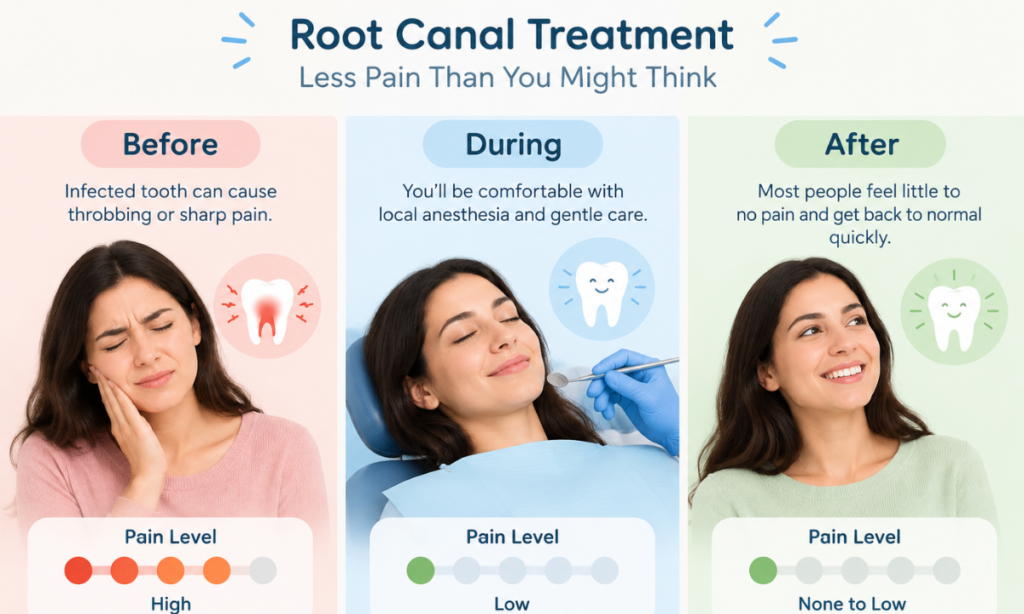
Root canal pain levels before, during, and after treatment.
Breaking pain expectations into three distinct phases makes the overall experience easier to anticipate:
- Before treatment. This is usually when discomfort is at its highest — throbbing pain, sensitivity, or swelling from the untreated infection. This is also the strongest reason to seek treatment promptly rather than waiting for it to “pass.”
- During treatment. With effective root canal anesthesia, most patients feel pressure, vibration, or mild tugging sensations, but not pain. If you do feel discomfort partway through, telling your dentist immediately allows them to add more anesthetic right away.
- After treatment. Mild soreness or tenderness around the tooth and gum is common for one to three days as tissues settle, and is manageable with over-the-counter pain relief. This is a normal part of root canal pain relief and recovery, not a sign that something went wrong.
Seen this way, the discomfort curve for a root canal actually slopes downward from where most patients start — the worst part is usually the untreated infection itself, not the procedure that resolves it.
Where Laser-Assisted Treatment Reduces Discomfort Further
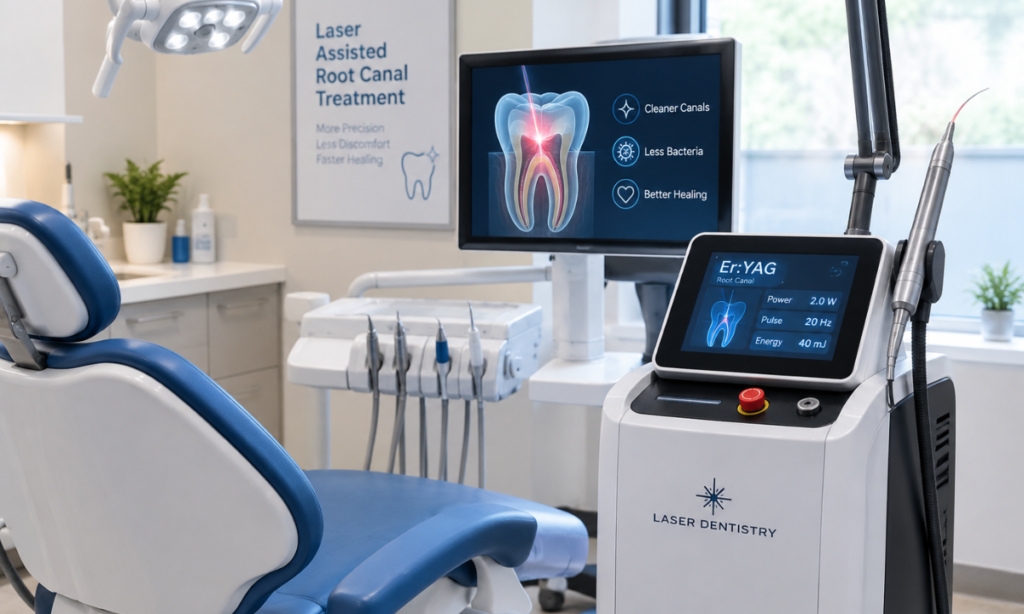
Laser-assisted root canal treatment equipment for precise and comfortable dental care in HSR Layout.
For patients specifically looking to minimize discomfort, laser-assisted root canal treatment adds another layer of comfort on top of standard anesthesia. Dental lasers can be used to disinfect the canal more thoroughly, reduce bacteria more effectively than rinsing solutions alone, and, in some cases, reduce inflammation and post-treatment sensitivity.
- Deeper, gentler disinfection. Laser disinfection reaches into microscopic spaces within the canal that instruments and irrigation alone may miss, lowering the chance of residual infection.
- Potentially reduced post-treatment sensitivity. Some studies and clinical observations associate laser-assisted procedures with less post-operative discomfort, supporting the case for laser assisted root canal as a comfort-focused option.
- Precise, minimally invasive tissue handling. Lasers can also be used to manage soft tissue around the tooth with minimal bleeding, adding to a calmer overall experience.
Not every case requires laser assistance, and a good dentist will explain when it genuinely adds value versus when standard instrumentation is equally effective. To see how this technology is used more broadly, visit our Laser Dentistry service page.
How Painless Root Canal Treatment Works, Step by Step
Putting the anesthesia, the procedure, and the technology together, here’s the sequence that defines painless root canal treatment in practice:
- Numbing. Topical gel and local anesthetic fully numb the tooth and surrounding tissue before any instrument is used.
- Treatment. The infected pulp is removed and the canal is cleaned and shaped, with laser assistance used where it adds disinfection benefit. Patients typically feel pressure, not pain, throughout this stage.
- Pain-free result. The canal is sealed, a crown or filling restores the tooth, and the pain that brought you in — not the treatment itself — is what’s finally resolved.
This three-part sequence is the practical answer to “is root canal painful”: numbing removes sensation during treatment, careful technique keeps the procedure itself gentle, and the outcome eliminates the pain that started it all.
Root Canal Pain Relief After Treatment
A small amount of soreness after the anesthesia wears off is normal and typically fades within a few days. For managing it comfortably:
- Take recommended pain relief as advised. Follow your dentist’s specific recommendation, but standard over-the-counter pain relievers are usually enough to manage mild post-treatment soreness.
- Avoid chewing on the treated side. Avoid chewing on the treated tooth until any temporary filling or the final crown is placed, to prevent unnecessary pressure on a tooth that’s still settling.
- Watch for signs that need follow-up. Persistent swelling, worsening pain after the first couple of days, or a fever are not typical and should prompt a call to your dentist rather than waiting it out.
For most patients, this is a minor, short-lived phase — far removed from the dramatic pain the procedure is often assumed to involve.
Frequently Asked Questions
Is laser-assisted root canal treatment actually different from a standard one?
Both aim for the same result — removing infected pulp and disinfecting the canal — but laser assisted root canal treatment can reach bacteria in microscopic spaces more effectively and is associated with less post-treatment sensitivity for some patients. It’s an enhancement to the standard process, not a replacement for anesthesia or careful technique.
How long does numbing during RCT actually last afterward?
Numbness typically lasts two to four hours after treatment, depending on the type and amount of anesthetic used. Avoid chewing or drinking hot beverages until sensation fully returns, to prevent accidentally biting or burning a numb area.
What if the anesthesia doesn’t fully work for me? I
t’s uncommon with modern anesthesia, but not impossible — some patients metabolize anesthetic faster or have anatomy that makes full numbness harder to achieve initially. If this happens, tell your dentist immediately; additional anesthetic can be given at any point during treatment.
Will the pain actually be gone right after treatment?
Yes, for most patients. The procedure specifically targets and removes the source of the pain, so many people find meaningful relief within a day of treatment, with any residual soreness fading over the following few days.
The Bottom Line on Root Canal Pain
The evidence, the technique, and the technology all point to the same conclusion: modern root canal treatment, backed by proper anesthesia and — where appropriate — laser assistance, is designed to be comfortable, not painful. The discomfort most people fear is usually the infection they came in with, not the procedure that treats it.
If you’re dealing with tooth pain and weighing whether to delay treatment out of fear, the most useful next step is an honest conversation with your dentist about what your specific case will involve. Learn more on our RCT service page, or explore our Laser Dentistry service page to see how that technology fits into a more comfortable treatment experience.
Reference:
https://pmc.ncbi.nlm.nih.gov/articles/PMC3697825/
