



Choosing between braces and Invisalign aligners depends on your tooth alignment, bite, lifestyle, budget, and treatment goals. Both options can straighten teeth and improve how the upper and lower teeth meet, but they work differently and offer distinct advantages.
Traditional braces use brackets and wires attached to the teeth to guide them into position. Invisalign uses a series of custom-made, transparent aligners that gradually move teeth. Unlike braces, aligners can be removed for eating, drinking beverages other than water, and cleaning your teeth.
So, which is better: braces or Invisalign? Braces may offer more direct control for some complex tooth movements and bite corrections. Clear aligners provide a discreet, removable option for suitable cases. Neither treatment is universally better for everyone.
If you are considering orthodontic treatment in Bangalore, contact DDC Smiles to enquire about an assessment and discuss suitable treatment options.
Braces vs Invisalign: Quick Comparison
| Feature | Traditional Braces | Invisalign Aligners |
| Appearance | Metal brackets and wires are visible; ceramic options are less noticeable | Transparent trays are generally less noticeable |
| Removability | Fixed to the teeth | Removable |
| Eating | Certain hard and sticky foods should be avoided | Remove aligners before eating |
| Oral hygiene | Requires extra care around brackets and wires | Easier to brush and floss when aligners are removed |
| Daily commitment | Remain attached to the teeth | Commonly worn around 20–22 hours daily, according to the treatment plan |
| Complex tooth movements | Suitable for a broad range of orthodontic problems | Can treat many problems, but suitability depends on the specific case |
| Appointments | Regular adjustments and monitoring | Progress checks and aligner changes according to the treatment plan |
| Comfort | Brackets and wires may irritate the cheeks and lips | May cause pressure or temporary irritation |
| Cost | Conventional metal braces are often less expensive than premium clear-aligner systems | Cost depends on the aligner brand, case complexity, and treatment package |
| Best suited for | Patients who need fixed appliances or specific tooth movements | Patients who prefer a removable, discreet option and can follow the wear schedule |
Both treatments require professional supervision. An orthodontist can recommend the most appropriate option after examining your teeth, bite, and jaw alignment.
What Are Traditional Dental Braces?
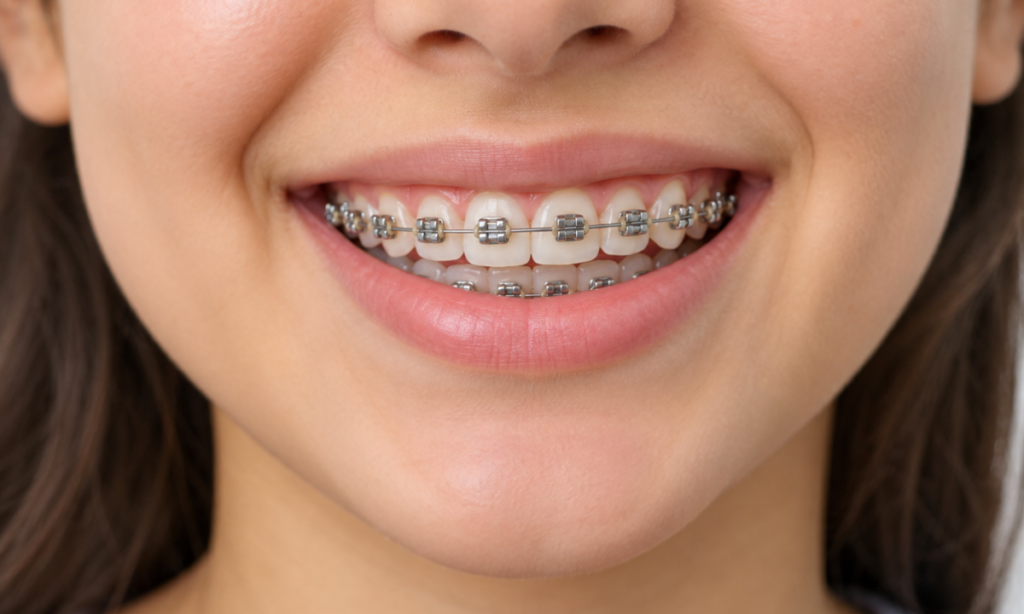
Traditional braces are orthodontic appliances that gradually move teeth into more suitable positions. They typically consist of brackets attached to the teeth and an archwire that applies controlled forces. Other components, such as elastic bands, may be used when necessary.
Braces remain fixed in place, so patients do not need to remember to insert them after meals. The orthodontist monitors progress and adjusts the appliance throughout treatment.
Types of Braces
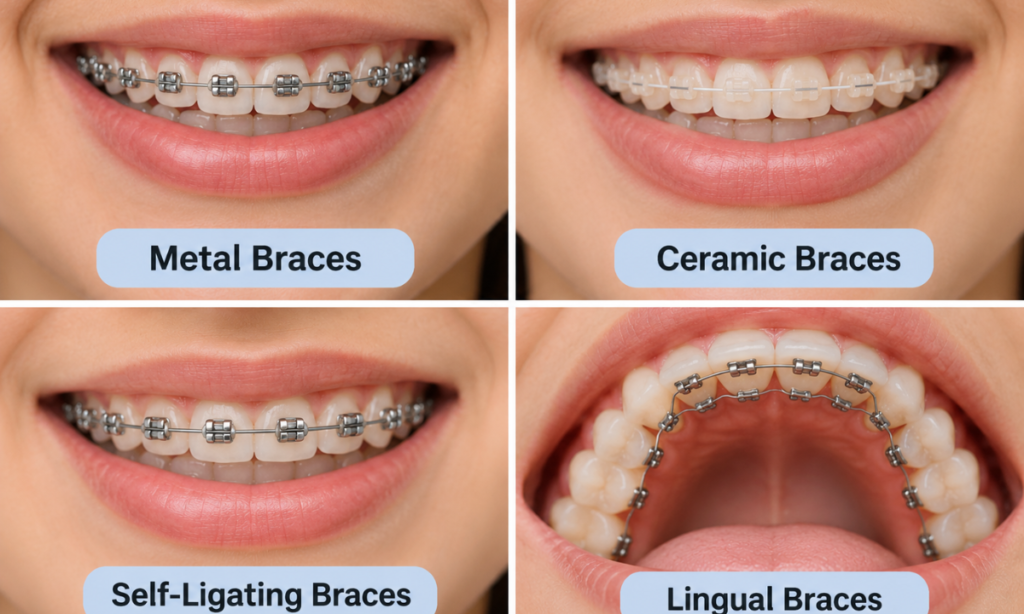
Metal braces
Metal braces use stainless-steel brackets and wires. They are a common orthodontic option and are often less expensive than premium clear-aligner systems.
Ceramic braces
Ceramic braces use tooth-coloured or less noticeable brackets. They may suit patients who prefer fixed braces with a more discreet appearance.
Self-ligating braces
Self-ligating braces use a built-in mechanism to hold the archwire. They differ in how the wire is secured, but they are not guaranteed to produce faster treatment or better results for every patient.
Lingual braces
Lingual braces are attached to the inner surfaces of the teeth, making them less visible from the front. They may require specialised treatment planning and can cost more than conventional braces.
The availability and suitability of each option depend on the clinic and the patient’s orthodontic needs.
What Are Invisalign Aligners?
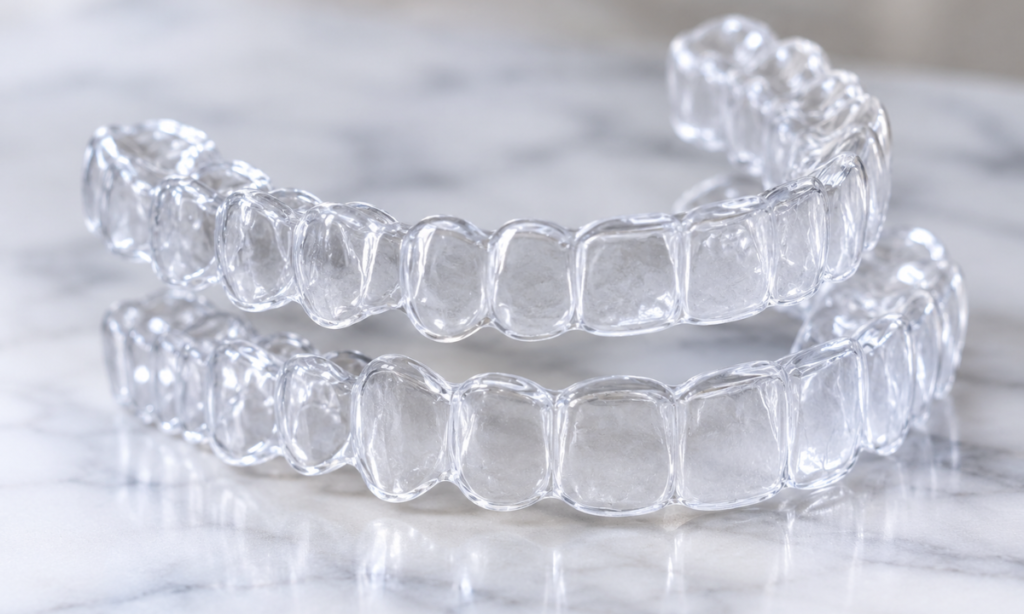
Invisalign is a branded clear-aligner system that uses a series of custom-made, transparent trays to move teeth gradually.
Each aligner is designed to produce specific tooth movements. Patients progress through the series according to their orthodontist’s instructions, with regular reviews to check whether the teeth are moving as planned.
Clear aligners are removable, making eating and cleaning your teeth more convenient than with fixed braces. However, successful treatment depends heavily on wearing them for the prescribed number of hours every day.
Invisalign is one clear-aligner brand, not a general term for all aligners. Other manufacturers offer their own systems with different treatment-planning processes, features, and pricing.
How Many Hours a Day Should You Wear Invisalign?
Wear clear aligners for the duration prescribed by your orthodontist—commonly around 20–22 hours per day, and in some treatment plans at least 22 hours per day.
Remove them for eating, drinking beverages other than water, and oral hygiene unless your clinician advises otherwise. Clean your teeth before reinserting the aligners.
Inconsistent wear can delay progress or affect how well your teeth follow the treatment plan. Your orthodontist will explain when to change aligners and what to do if a tray does not fit properly.
Pros and Cons of Traditional Braces
Braces remain an important orthodontic treatment because they can provide controlled tooth movement across a broad range of cases.
Advantages of Braces
Suitable for many complex cases
Braces may offer more direct control for some complex tooth movements and bite corrections. They can be particularly useful when the treatment requires detailed control of tooth position or the relationship between the upper and lower teeth.
No need to remember to wear them
Because braces remain attached to the teeth, patients do not need to remember to put them back after meals.
Different types are available
Patients can discuss metal, ceramic, self-ligating, and lingual braces with their dentist or orthodontist.
Often less expensive than premium aligners
Conventional metal braces are often less expensive than premium clear-aligner systems. However, the final cost depends on case complexity, appliance type, treatment duration, and what the package includes.
Disadvantages of Braces
More noticeable appearance
Metal brackets and wires are visible when smiling or speaking. Ceramic and lingual braces offer alternatives, but they may involve additional costs or other trade-offs.
Food restrictions
Hard, sticky, and chewy foods can damage brackets or wires. Patients need to follow dietary instructions during treatment.
More demanding oral hygiene
Food and plaque can accumulate around brackets and wires. Careful brushing and cleaning between the teeth are essential to help reduce the risk of decay, gum inflammation, and white-spot lesions.
Temporary discomfort
Teeth may feel sore after braces are fitted or adjusted. Brackets and wires can also irritate the cheeks and lips, particularly during the early stages of treatment.
Pros and Cons of Invisalign Aligners
Clear aligners offer a more discreet approach to straightening teeth. Their removable design can make daily activities easier, but they require consistent patient cooperation.
Advantages of Invisalign
Discreet appearance
Transparent aligners are generally less noticeable than metal braces. This can appeal to adults and teenagers who prefer a less visible orthodontic appliance.
Removable for meals
Patients remove aligners before eating, so there are fewer food restrictions related to the appliance itself.
Convenient oral hygiene
Aligners can be removed for brushing and flossing, allowing patients to clean their teeth without working around brackets and wires.
No conventional metal brackets or wires
Clear aligners avoid the brackets and wires used in traditional braces. However, the edges of an aligner can still irritate the mouth.
Digital treatment planning
Digital scans and planning software may be used to map intended tooth movements. Simulations can help explain the proposed treatment, but they are not a guarantee of the final result.
Disadvantages of Invisalign
Requires consistent wear
Aligners generally need to be worn for around 20–22 hours daily, or as directed by the treating clinician. Removing them too frequently can delay progress or affect the treatment outcome.
Not suitable for every case
Clear aligners can treat many orthodontic problems, including selected complex cases. Suitability depends on the specific tooth movements required, the bite relationship, and patient cooperation.
May cost more
The price depends on the aligner system, case complexity, treatment duration, and what the treatment package includes.
Must be removed for meals
Patients need to remove their aligners before eating and before drinking beverages other than water. Teeth should be cleaned before the aligners are reinserted.
May be lost or damaged
Because aligners are removable, they can be misplaced or damaged. Replacement trays may involve additional costs or affect the treatment schedule.
Braces vs Invisalign Cost in Bangalore
Cost is an important factor when comparing orthodontic treatments. The total fee depends on the type of appliance, the complexity of tooth movement, the expected treatment duration, and the services included in the treatment plan.
The following figures are based on prices previously listed by DDC Smiles. Confirm the current fees and inclusions with the clinic before starting treatment.
| Orthodontic treatment | Published price to verify |
| Metal braces | ₹40,000–₹45,000 |
| Ceramic braces | ₹65,000–₹70,000 |
| Metal self-ligating braces | ₹80,000–₹85,000 |
| Ceramic self-ligating braces | ₹95,000–₹1,00,000 |
| Clear aligners | ₹1,50,000 onwards |
These figures are not a guarantee of the total cost for every case. The listed starting price for clear aligners should not be interpreted as a confirmed price for every Invisalign treatment package.
Check the DDC Smiles price list and ask the clinic for a written estimate.
What Affects the Cost of Braces or Invisalign?
Several factors can influence the final treatment fee.
Complexity of the case: Crowding, spacing, rotations, and bite problems vary in difficulty. More involved cases may require additional planning or treatment.
Type of appliance: Metal braces, ceramic braces, self-ligating braces, and branded clear-aligner systems have different costs.
Treatment duration: The number of appointments, refinements, and additional procedures required can affect the overall expense.
Diagnostic records: Dental examinations, X-rays, photographs, and digital scans may be needed to assess the teeth and plan treatment.
Retainers after treatment: Retainers are generally needed to maintain the final tooth positions. Ask whether they are included in the quoted fee.
Additional treatment: Some patients need other dental care before orthodontic treatment can begin.
Before choosing a treatment, ask for a written estimate explaining whether the fee includes diagnostic records, follow-up visits, replacement appliances or aligners, refinements, and retainers.
Are Braces Faster Than Invisalign?
Neither braces nor Invisalign is universally faster. Treatment duration depends on the type and severity of the orthodontic problem, the tooth movements required, the patient’s response to treatment, and adherence to instructions.
Some cases may be completed more quickly with one option than another. However, it is inaccurate to assume that all clear-aligner treatments are faster than braces or that braces always produce quicker results.
Patients using aligners must wear them consistently. Patients with braces must attend scheduled appointments and follow instructions regarding elastic bands and appliance care.
Your orthodontist can estimate the likely treatment duration after evaluating your teeth and bite. The estimate may change if the teeth move differently than expected or the treatment plan needs adjustment.
Which Is More Comfortable: Braces or Invisalign?
Both treatments can cause temporary discomfort because they move teeth by applying controlled forces.
With braces, soreness may occur after placement or adjustments. Brackets and wires can also irritate the inside of the cheeks and lips.
With Invisalign, patients may feel pressure when starting a new set of aligners. The trays may also cause temporary irritation around the gums or inside the mouth.
Comfort varies from person to person. Neither option is completely pain-free, and severe or persistent pain should be discussed with the treating clinician.
Possible Risks and Limitations
Both braces and clear aligners can cause temporary tooth soreness, pressure, and soft-tissue irritation. With braces, brackets and wires may irritate the cheeks or lips. With aligners, tray edges or pressure from a new aligner may cause discomfort.
Poor oral hygiene during orthodontic treatment can increase the risk of tooth decay, gum inflammation, and white-spot lesions around brackets. Inconsistent aligner wear can delay progress or affect the final result.
Other limitations include:
- Tooth decay and gum problems: Plaque can accumulate around orthodontic appliances if cleaning is inadequate.
- Treatment delays: Missed appointments, damaged appliances, or inconsistent aligner wear can extend treatment.
- Unexpected tooth movement: Teeth may not move exactly as planned, sometimes requiring adjustments or additional treatment.
- Relapse after treatment: Teeth can gradually shift if retainers are not worn as directed.
Retainers are an essential part of orthodontic treatment. Without them, teeth can gradually move back towards their previous positions.
Contact your orthodontist if you experience severe pain, a damaged appliance, persistent irritation, or aligners that do not fit as expected.
Can Invisalign Fix Crooked Teeth and Bite Problems?
Clear aligners can correct many orthodontic issues, but suitability depends on the severity and type of tooth movement required.
They may be used to treat selected cases involving:
- Crowded teeth.
- Gaps between teeth.
- Mild to moderate alignment problems.
- Certain overbites and underbites.
- Selected crossbites and other bite problems.
More complex cases may require fixed braces, attachments, elastics, other orthodontic appliances, or a combination of approaches.
An orthodontist must evaluate the teeth, gums, bite, and jaw relationship before deciding whether aligners can achieve the desired result.
Braces vs Invisalign: Which Is Better for Adults?
Adults can benefit from either braces or clear aligners. The right option depends on the dental problem, lifestyle, budget, and willingness to follow the treatment plan.
Braces may suit adults who:
- Need fixed orthodontic treatment.
- Have complex tooth movements requiring detailed control.
- Prefer not to remove and reinsert an appliance.
- Want to consider a conventional metal-braces option.
Invisalign may suit adults who:
- Prefer a discreet appliance.
- Want to remove their appliance during meals.
- Value the convenience of brushing and flossing without brackets.
- Can commit to the prescribed daily wear schedule.
Adults should also have healthy teeth and gums before starting orthodontic treatment. Existing cavities or gum disease may need to be treated first.
Braces vs Invisalign for Teenagers
Both treatments may be suitable for teenagers, depending on their dental development and orthodontic needs.
Braces may be a practical option for teenagers who are unlikely to wear removable aligners consistently. Clear aligners may suit teenagers who can follow the wear instructions and attend regular reviews.
Some clear-aligner systems offer features designed for younger patients. However, suitability still depends on dental development, the type of bite problem, and the teenager’s ability to follow the treatment plan.
The orthodontist will consider:
- Whether the permanent teeth have erupted sufficiently.
- The type of bite problem.
- The complexity of the required movements.
- The teenager’s ability to follow instructions.
- Oral hygiene and gum health.
A consultation can help determine which appliance is appropriate for the teenager’s stage of dental development.
How to Maintain Oral Hygiene During Treatment
Good oral hygiene is essential with both braces and aligners.
Oral Hygiene With Braces
- Brush carefully around every bracket and along the gumline.
- Use interdental brushes or other cleaning aids recommended by your dentist.
- Clean between your teeth daily.
- Limit frequent sugary snacks and drinks.
- Attend regular dental check-ups and orthodontic appointments.
Oral Hygiene With Invisalign
- Remove aligners before eating and before drinking beverages other than water.
- Brush your teeth and clean between them before reinserting the trays.
- Clean aligners according to the manufacturer’s instructions.
- Avoid hot water, which may distort the trays.
- Store aligners in their case when they are not being worn.
With either treatment, follow the instructions provided by your dentist or orthodontist.
What Happens After Braces or Invisalign Treatment?
Orthodontic treatment does not end when the teeth reach their planned positions. Teeth can gradually move back towards their previous positions, a process known as relapse.
Retainers help maintain the alignment achieved during treatment. Depending on the case, your orthodontist may recommend a removable retainer, a fixed retainer, or a combination.
Some patients are initially advised to wear removable retainers full-time before transitioning to night-time wear. Others may receive different instructions depending on their treatment and clinical needs.
Follow your orthodontist’s specific wearing schedule and attend reviews when advised. Ask whether retainers and any replacement retainers are included in your original treatment fee.
How to Choose Between Braces and Invisalign at DDC Smiles
The best way to choose between braces and Invisalign is to begin with an orthodontic assessment.
A dental professional can examine your teeth and bite, review necessary X-rays or digital scans, and explain which options are appropriate for your case.
During your consultation, ask about:
- Which treatment can achieve your required tooth movements.
- The estimated treatment duration.
- The total cost and what it includes.
- Whether additional appliances or procedures may be required.
- How often you will need appointments.
- What happens if aligners do not fit or a bracket breaks.
- Whether retainers and follow-up care are included in the treatment fee.
You can explore orthodontic technologies at DDC Smiles, learn about clear and invisible teeth aligners, or contact the clinic to enquire about an appointment.
Braces and Aligners in Koramangala
If you are considering braces or clear aligners in Koramangala, a clinical examination can help determine the appropriate treatment based on your alignment, bite, and oral health.
The decision should be based on your orthodontic needs rather than appearance or cost alone.
Braces and Aligners in HSR Layout
Patients considering orthodontic treatment in HSR Layout can compare fixed braces and clear aligners after an assessment. Ask the treating clinician to explain the available options, expected duration, costs, and retention plan.
Visit the DDC Smiles website for clinic information and appointment enquiries.
Frequently Asked Questions
1. Which is better: braces or Invisalign?
Neither is universally better. Braces may offer more direct control for certain complex tooth movements, while Invisalign provides a discreet, removable option for suitable cases. The best choice depends on your bite, tooth alignment, treatment goals, and ability to follow the treatment plan.
2. Is Invisalign more expensive than braces?
Clear-aligner treatment often costs more than conventional metal braces, although the difference depends on the brand, case complexity, and treatment package. DDC Smiles has previously published metal braces prices of ₹40,000–₹45,000 and clear aligners from ₹1,50,000 onwards. Confirm current prices and inclusions with the clinic.
3. How many hours a day should Invisalign be worn?
Wear clear aligners for the duration prescribed by your orthodontist, commonly around 20–22 hours daily and, in some treatment plans, at least 22 hours. Remove them for meals, beverages other than water, and oral hygiene unless your clinician advises otherwise.
4. Do braces work better than Invisalign?
Braces can provide direct control for certain complex tooth movements and bite corrections. Clear aligners can also treat a wide range of orthodontic problems. The best option depends on the specific movements required, the bite relationship, and the orthodontist’s assessment.
5. Which treatment is faster?
Neither option is consistently faster for every patient. Treatment duration depends on the complexity of the case, the movements required, and patient cooperation. Your orthodontist can estimate the likely duration after an examination.
6. Are Invisalign aligners painful?
Aligners can cause pressure or temporary discomfort, particularly when starting a new tray. This often settles as the teeth adjust. Contact your dentist if the pain is severe or persistent.
7. Can I eat normally with Invisalign?
You generally remove aligners before meals, so you can eat without the food restrictions associated with fixed braces. Clean your teeth before reinserting the aligners, and follow your clinician’s instructions about beverages and aligner care.
8. Can adults get braces or Invisalign?
Yes. Adults can receive orthodontic treatment with either braces or aligners if their teeth and gums are suitable. A dentist or orthodontist will assess oral health and determine the appropriate option.
9. Do I need retainers after braces or Invisalign?
Retainers are generally recommended after orthodontic treatment to help maintain the results. Your orthodontist will advise which type of retainer to use and how often to wear it.
10. How do I choose between braces and Invisalign in Bangalore?
Start with an orthodontic consultation. Discuss your alignment concerns, bite, budget, lifestyle, treatment duration, and retention plan. The clinician can explain suitable options and provide a treatment estimate.
Conclusion
The choice between braces and Invisalign depends on your orthodontic needs, lifestyle, budget, and ability to follow treatment instructions.
Traditional braces offer fixed treatment and can be suitable for a broad range of alignment problems. Invisalign provides a discreet, removable option for patients whose cases are suitable for clear aligners and who can wear them consistently.
Before making a decision, compare the treatment options, understand the full cost, and ask about retainers and follow-up care.
To explore orthodontic treatment options, contact DDC Smiles and enquire about an appointment.
Reference:https://pmc.ncbi.nlm.nih.gov/articles/PMC11426652/
Last updated, 4 Nov 2026
