



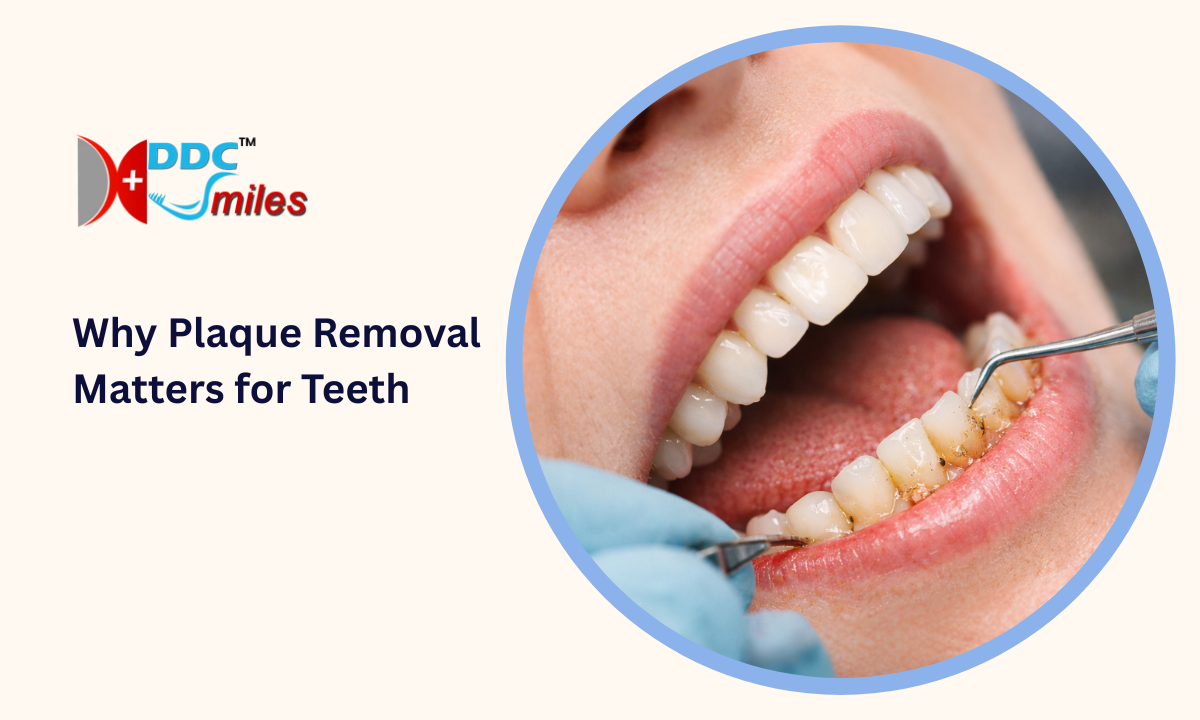
Maintaining a healthy smile requires more than just a quick brush in the morning. Even with a disciplined home routine, a sticky, colorless film of bacteria constantly forms on the surface of your teeth.
This is known as dental plaque, and its regular removal is the single most important factor in preventing gum disease and tooth loss.
If you are looking for expert plaque removal from teeth, visiting a specialist is essential to reach the areas that a toothbrush cannot. At DDC Smiles, a leading Dental Hospital in Koramangala and HSR Layout, we focus on identifying and eliminating this biological film before it mineralizes into permanent damage.
According to the National Institute of Dental and Craniofacial Research (NIDCR), plaque is a “biofilm” that uses sugars from your food to produce acids. These acids do not just cause cavities; they trigger a chronic inflammatory response in your gums.
If plaque is not removed within 24 to 48 hours, it reacts with the minerals in your saliva and hardens into tartar, also known as calculus.
Once this transition happens, no amount of scrubbing at home can remove it. Professional clinical intervention becomes the only way to safeguard your oral health and prevent the systemic spread of bacteria to the rest of your body.
What is Plaque Exactly?
To understand why professional cleaning is necessary, we must first look at the biological composition of plaque. It is not merely food residue: it is a complex, living ecosystem known as a biofilm.
According to the National Institutes of Health (NIH), this biofilm begins forming within minutes after you brush. It starts as a thin, protein-rich layer called a pellicle, which acts as a “glue” for various types of bacteria to attach to the tooth surface.
The real danger begins when these bacteria colonize and multiply. As they feed on carbohydrates and sugars, they produce extracellular polymeric substances (EPS).
This substance creates a protective shield around the bacteria, making them resistant to your body’s natural immune response and even some mouthwashes.
The Mineralization Timeline: From Soft Film to Hard Stone
1. 0 to 4 Hours: The acquired pellicle forms on the tooth surface, allowing the first pioneer bacteria to attach.
2. 4 to 24 Hours: Bacteria multiply and form a cohesive colony. At this stage, the plaque is still soft and can be disrupted by effective flossing and brushing.
3. 24 to 72 Hours: If left undisturbed, the plaque begins to undergo a chemical change. It starts to absorb calcium and phosphate minerals from your saliva.
4. 72 Hours and Beyond: The soft biofilm mineralizes into a rock-hard substance called tartar or calculus.
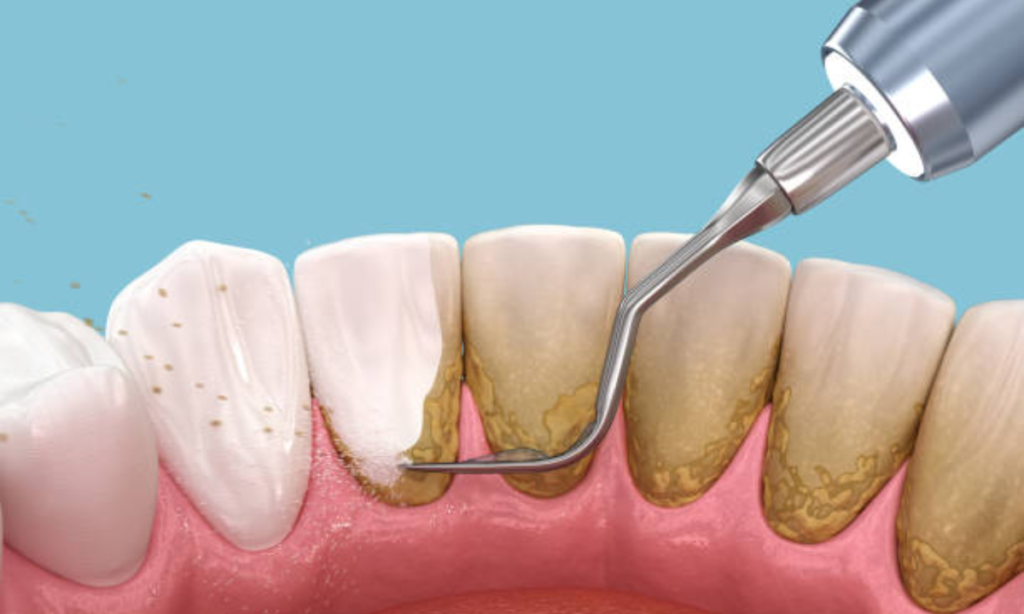
Image Credits: iStock Images
Once tartar has formed, it creates a rough, porous surface that attracts even more plaque, creating a localized cycle of inflammation. Because tartar is chemically bonded to the tooth enamel, it acts like a “coral reef” for bacteria, protecting them from your toothbrush.
This is why clinical intervention at DDC Smiles is required to break the cycle and prevent permanent damage to the supporting bone.
How to Remove Plaque and Tartar: Professional V/S. Home Care
While your daily routine is the first line of defense, it is important to understand the biological limits of a toothbrush. Daily brushing and flossing are designed to disrupt the soft, sticky biofilm before it has a chance to mature.
However, even the most diligent home care cannot reach every microscopic crevice, especially the deep pockets between the teeth and the gum line.
Once plaque has absorbed minerals from your saliva and transformed into tartar, it becomes physically impossible to remove at home without damaging your enamel. Attempting to scrape off hardened tartar with household tools or “DIY dental kits” can lead to permanent tooth sensitivity and gum recession.
At DDC Smiles, we utilize professional-grade technology to safely detach these mineralized deposits without harming the underlying tooth structure.
This distinction is the reason why a professional dental plaque treatment is recommended every six months, regardless of how well you brush.
Table: Soft Plaque (Home Care) vs. Calculus/Tartar (Professional Care)
| Feature | Soft Dental Plaque | Calculus (Tartar) |
| Consistency | Sticky, colorless, and soft. | Hard, porous, and stone-like. |
| Removal Method | Regular brushing and interdental flossing. | Professional scaling and root planing. |
| Time to Form | Re-forms within minutes of brushing. | Can begin to mineralize in as little as 24 to 72 hours. |
| Primary Danger | Causes cavities and mild gum irritation (gingivitis). | Destroys the bone and fibers that hold teeth in place. |
| Visual Appearance | Often invisible to the naked eye. | Appears as yellow, brown, or black stains at the gum line. |
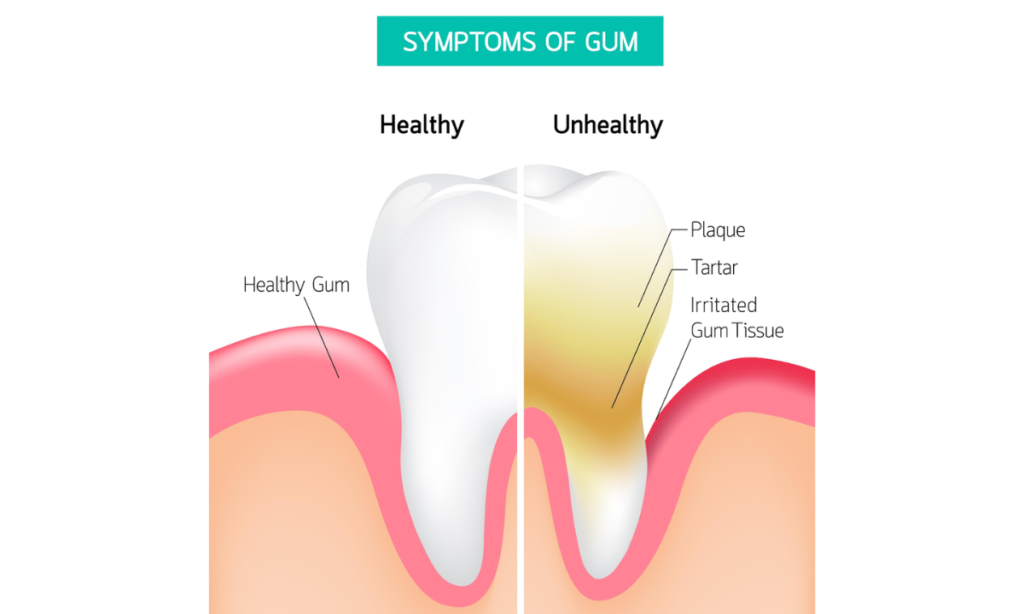
Image Credits: Shutterstock
The goal of professional intervention is to reset your oral environment. By removing the tartar, we remove the rough surfaces where new plaque easily attaches.
This allows your gum tissue to heal and reattach firmly to the tooth, stopping the progression of periodontal disease in its tracks.
How do Dentists Remove Plaque and Tartar?
When you visit us for a professional cleaning, the process is far more sophisticated than just scraping.
Modern plaque removal by dental protocols involves high-precision instruments designed to reach deep under the gumline where bacteria thrive. At DDC Smiles, we utilize the Dental Operating Microscope and specialized scaling equipment to ensure that every microscopic trace of tartar is eliminated without causing discomfort to the patient.
The procedure is technically known as scaling and polishing. According to the Cleveland Clinic, the goal is to leave the tooth surfaces perfectly smooth, as bacteria find it much harder to attach to a polished surface than a rough, mineralized one.
Flowchart: The 4-Step Professional Cleaning Protocol
i. Step 1 (Ultrasonic Scaling): We use a specialized ultrasonic scaler that vibrates at high frequencies.
These vibrations, combined with a cooling water mist, effectively shatter the bond between the stone-hard tartar and your tooth enamel.
ii. Step 2 (Manual Detailing): After the heavy deposits are removed, our specialists use hand instruments called curettes to fine-tune the cleaning.
This is essential for removing small fragments from tight spaces between the teeth.
iii. Step 3 (Prophylaxis Polishing): Once the tartar is gone, we use a motorised rubber cup and a specialized gritty paste.
This step removes external stains and smooths out the enamel surface.
iv. Step 4 (Fluoride Application): Finally, a concentrated fluoride treatment is often applied to remineralize the enamel and provide a protective shield against the acids produced by new plaque.
This clinical deep clean does more than just brighten your smile. By removing the bacterial load from the periodontal pockets, we significantly reduce the burden on your immune system and allow inflamed gums to return to a healthy, pink state.
The Systemic Risk: Beyond the Mouth
The consequences of neglecting plaque removal from teeth extend far beyond a few cavities. Modern medical research has established a definitive “Oral-Systemic Link,” proving that the health of your mouth is a mirror for the health of your body.
When plaque and tartar are allowed to build up, they trigger a state of chronic inflammation known as periodontitis. According to the Centers for Disease Control and Prevention (CDC), nearly half of adults over 30 have some form of periodontal disease.
This condition does not stay localized: it allows aggressive oral bacteria to enter your bloodstream through bleeding gums.
Once these bacteria enter the circulation, they can contribute to a variety of serious health issues. Inflammation caused by oral bacteria can lead to the narrowing of arteries and an increased risk of stroke.
For patients with existing conditions like diabetes, the relationship is even more dangerous: gum disease can make it significantly harder to control blood sugar levels, creating a destructive medical cycle.
The Connection Between Oral Biofilm and Systemic Health
1. Cardiovascular Disease: Bacteria from dental plaque can attach to fatty deposits in the blood vessels of the heart. This can contribute to the formation of clots and increase the risk of heart attacks.
2. Diabetes Management: Chronic gum inflammation impairs the body’s ability to utilize insulin. Effectively treating gum disease has been shown to help stabilize blood glucose levels in diabetic patients.
3. Respiratory Infections: Inhaling bacteria from infected teeth and gums can lead to pulmonary issues, including pneumonia, particularly in elderly or immunocompromised individuals.
4. Pregnancy Complications: Severe periodontal disease has been clinically linked to premature births and low birth weight, as the body’s inflammatory response can affect fetal development.
By prioritizing regular professional cleanings at DDC Smiles, you are not just protecting your teeth.
You are actively reducing the inflammatory burden on your entire body and lowering your risk for chronic diseases that could impact your long-term quality of life.
Why Choose DDC Smiles?
The effectiveness of plaque removal from teeth depends on the ability to see what is hidden from the naked eye. At DDC Smiles, we operate as a full-scale Dental Hospital rather than a basic clinic.
This distinction is critical for your care. As a premier Dental Hospital in Koramangala and HSR Layout, we have equipped our facilities with advanced diagnostic tools that go beyond standard check-ups.
We use high-definition intraoral cameras and the Dental Operating Microscope to show patients exactly where biofilm is accumulating in real-time. This visual evidence helps our patients understand their oral health risks and the necessity of clinical intervention.
Our approach to hygiene is rooted in hospital-grade safety. When you visit our Dental Clinic in Koramangala and our Dental Clinic in HSR Layout, you are protected by a rigorous 6-step sterilisation protocol and Class B Autoclaves.
This ensures that every tool used for your scaling and polishing is biologically sterile. By combining this level of safety with the expertise of our MDS specialists, we provide a cleaning experience that is thorough, pain-free, and clinically superior.
Table: Standard Clinic vs. DDC Smiles Professional Cleaning
| Feature | Standard Dental Clinic | DDC Smiles Dental Hospital |
| Diagnostic View | Basic visual inspection with a mirror. | Use of Dental Operating Microscopes and 3D Intraoral Scanners. |
| Cleaning Precision | Standard hand scaling or basic ultrasonic tools. | Advanced Piezoelectric ultrasonic scaling for maximum comfort and precision. |
| Sterilization Level | Standard cleaning protocols. | Strict 6-step hospital-grade sterilization with Class B Autoclaves. |
| Specialist Access | General dentists perform most procedures. | Specialized MDS Periodontists available for advanced gum treatments. |
By choosing a facility that integrates diagnostics with treatment, you ensure that no pocket of bacteria is left behind. This specialized focus is why DDC Smiles is trusted by the Bangalore community for maintaining long-term oral and systemic health.
Conclusion
Dental plaque is a relentless biological force. Because it begins to mineralize into tartar within just 24 to 72 hours, even the most disciplined home routine will eventually require a professional reset.
Neglecting this buildup does not just lead to yellowed teeth: it invites chronic inflammation that can impact your heart, your blood sugar, and your overall longevity. Undergoing a professional dental plaque treatment every six months is not an optional cosmetic choice. It is a mandatory preventive measure to stop the progression of gum disease before it reaches the bone.
Do not wait for a toothache or bleeding gums to take action. High-quality preventive care is the most affordable and effective way to ensure you keep your natural teeth for a lifetime.
Visit DDC Smiles to experience a level of clinical precision that protects your smile and your systemic health. Schedule your appointment at our HSR Layout or Koramangala branch today to give your oral health the expert attention it deserves.
Reference:
1. https://pmc.ncbi.nlm.nih.gov/articles/PMC6883753/
