



Most people ignore a slight toothache until they cannot chew their daily meals comfortably.
Finding a reliable Dentist in HSR Layout and Koramangala usually happens during a midnight emergency.
Patients desperately rush into a dental hospital in HSR Layout and Koramangala, clutching a swollen jaw.
They demand immediate relief from severe shooting pain. Waiting for this level of agony is a massive clinical mistake. Pain is a terrible indicator of your actual oral health.
If your tooth throbs constantly, the bacterial infection has already breached the deep internal nerve.
Scheduling a regular dental checkup completely changes this stressful dynamic.
Dental decay operates entirely in silence during the early stages.
A cavity takes several months to dissolve your hard outer enamel. You feel absolutely nothing while this microscopic destruction occurs.
The human body does not send a warning signal until the damage reaches the sensitive dentin layer.
The only way to spot this silent structural loss is through a professional clinical examination before the pain ever starts.
The Reality of Oral Hygiene
Perfect brushing at home is a complete biological myth.
Patients religiously follow their morning and night routines, but still develop painful cavities.
Even the most expensive electric toothbrush cannot physically reach the microscopic crevices between tightly packed molars.
Excellent daily Oral hygiene only removes the soft, uncalcified bacterial layer resting on the smooth enamel surfaces.
The environment inside your mouth operates like a rapid chemical factory. Saliva constantly coats your teeth.
Every time you eat a local sweet or drink sugary chai, the bacteria immediately start feeding.
The Biological Timeline: From Soft Plaque to Solid Calculus
1. Phase 1: Acid Attack (0 to 20 Minutes): Oral bacteria consume leftover carbohydrates and immediately excrete highly corrosive lactic acid directly onto your enamel.
2. Phase 2: Plaque Formation (2 to 12 Hours): The acid mixes with naturally occurring salivary proteins to create a sticky, invisible biofilm called plaque. You can easily brush this soft layer away.
3. Phase 3: Calcification (48 to 72 Hours): If plaque remains hidden between your teeth, it actively absorbs calcium and phosphate directly from your saliva. It transforms into rock-hard calculus, also known as tartar.
Once this sticky film hardens into solid calculus, your nylon toothbrush bristles become completely useless.
You cannot scrub away actual rock.
The bacteria are now permanently sealed against your gums inside a calcified fortress.
Only a dentist equipped with high-frequency ultrasonic steel scalers can physically shatter this hardened barrier safely.
Relying solely on your toothbrush guarantees you are leaving this destructive bacterial rock behind.
Catching Gum Disease Early
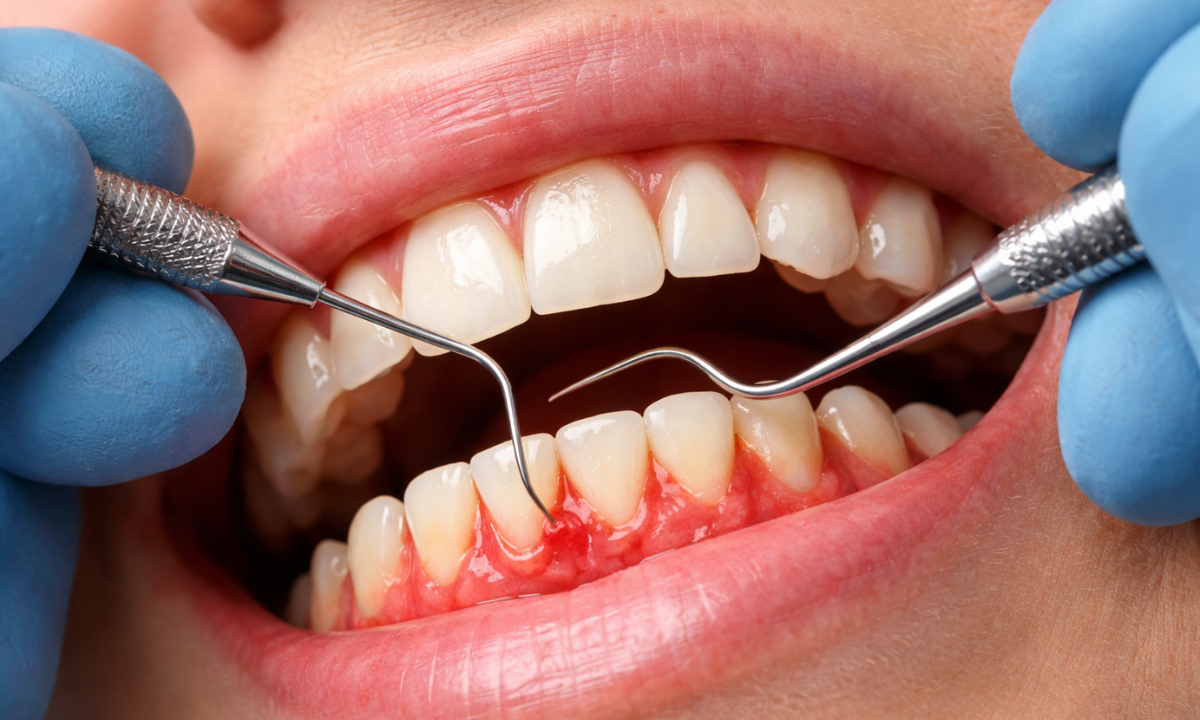
Calculus does not just sit harmlessly on your teeth. It actively destroys the supporting structures underneath.
The rough, porous surface of the hardened tartar acts as a perfect breeding ground for aggressive anaerobic bacteria.
These specific pathogens release potent toxins directly into your soft gingival tissue. Your immune system responds with massive localized inflammation.
Dentists clinically diagnose this chronic inflammatory response as Gum disease.
Patients frequently notice a metallic taste or spot pink spit in the sink after brushing. They usually ignore this glaring biological red flag. Healthy tissue never bleeds from normal daily friction.
The bleeding proves the gums are swollen, highly fragile, and actively detaching from the underlying tooth root.
Doctors do not just look for cavities during a routine visit. They actively measure your invisible bone loss.
The dentist uses a specialized, millimeter-marked titanium instrument called a periodontal probe.
They gently slide this tiny measuring stick directly into the dark space between your tooth and the surrounding gum line.
a. 1 to 3 Millimeters: Indicates a perfectly healthy, tight biological seal protecting the underlying bone.
b. 4 Millimeters: Signals the active beginning of periodontal destruction and early tissue detachment.
c. 5 Millimeters or Deeper: Confirms severe, irreversible jawbone loss requiring immediate surgical intervention.
If the trapped bacteria erode the jawbone completely, the perfectly healthy tooth simply falls out.
Routine clinical probing allows the dentist to physically map these hidden periodontal pockets. We can halt the active destruction months before your teeth ever become loose.
The Anatomy of a Dental Checkup
Fear of the dental chair keeps many patients away.
They imagine immediate drills and painful needles waiting for them. A professional dental checkup is entirely diagnostic, not surgical.
The doctor wants to map your mouth completely.
They are not looking to immediately cut into your enamel. Understanding the exact clinical workflow removes this unnecessary anxiety.
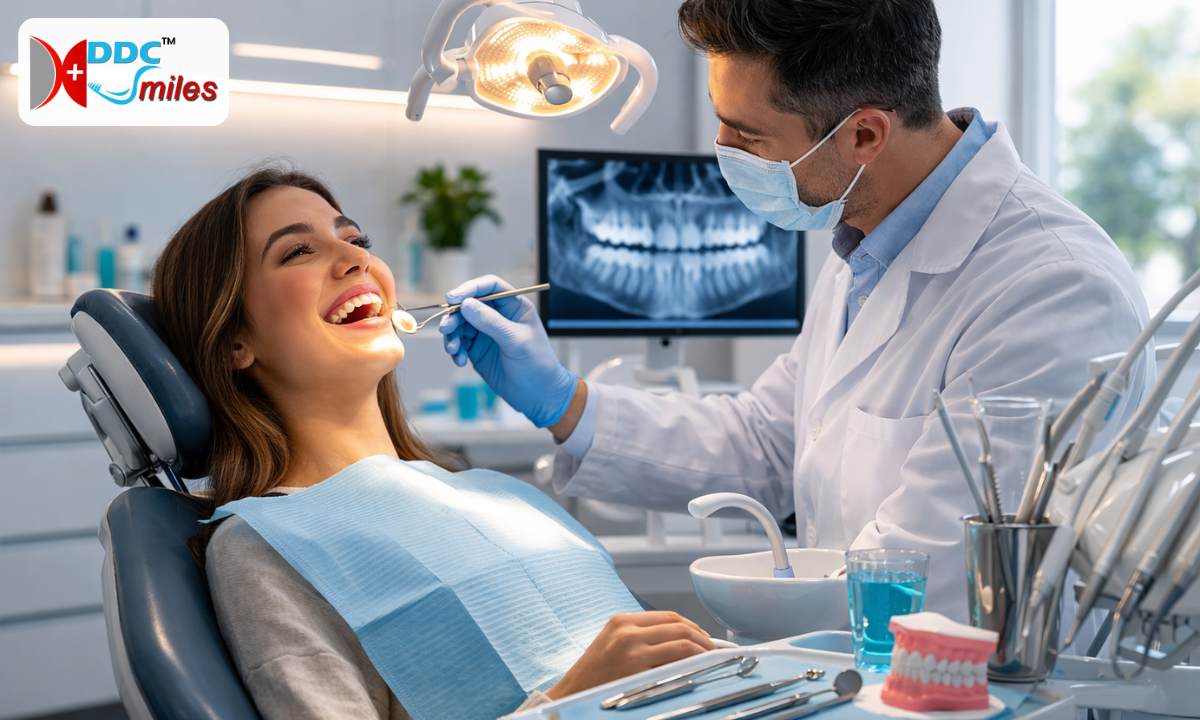
The standard appointment follows a highly structured, step-by-step protocol to evaluate every hard and soft tissue surface.
Table: The Step-By-Step Clinical Diagnostic Workflow
| Clinical Protocol | Primary Instrument Used | What The Doctor Looks For |
| Visual and Tactile Exam | Stainless steel mouth mirror and sharp dental explorer. | Checks for visible soft decay, fractured fillings, and oral cancer lesions on the tongue and inner cheeks. |
| Digital Radiography | Low-radiation digital X-ray sensors. | Reveals hidden decay between tight molars, impacted wisdom teeth, and microscopic bone loss under the gums. |
| Ultrasonic Scaling | High-frequency vibrating steel scaler with a water-cooled tip. | Physically shatters and flushes away the rock-hard calculus hiding beneath the gingival margin. |
| Mechanical Polishing | Rotary handpiece with coarse prophylaxis paste. | Removes superficial tea and coffee stains while smoothing the enamel surface to prevent new bacterial plaque attachment. |
Completing these precise diagnostic steps takes less than forty-five minutes in the chair.
You walk out with a complete, scientific blueprint of your oral health. The dentist easily spots a microscopic fissure in your molar enamel during this routine visit.
We fix that tiny crack with a simple, painless filling before it violently fractures the entire tooth on a hard piece of food.
The Financial Upside of Preventive Dental Treatments
Dental care is not inherently expensive.
Neglect is financially devastating. Waiting for extreme pain forces the dentist to perform complex biological salvage operations.
Opting for routine Preventive dental treatments acts as a high-yield financial investment for your family.
Let us look at the raw clinical reality. A microscopic cavity requires a simple, painless composite resin filling. The entire procedure takes twenty minutes. The structural integrity of your natural tooth remains completely intact. Ignoring that same microscopic cavity for two years allows the bacteria to actively infiltrate the deep pulpal chamber.
The internal nerve dies completely. The aggressive infection spreads straight down into the surrounding jawbone to create a highly painful, pus-filled abscess.
The required clinical fix instantly escalates. The dentist must now perform a multi-visit root canal treatment. They have to physically extract the necrotic nerve tissue, chemically disinfect the hollow root canals, and cement a custom ceramic crown over the fragile remains.
If the tooth shatters completely under biting pressure, you require surgical extraction and a costly titanium implant.
Table: The True Cost of Dental Neglect
| Clinical Scenario | Early Preventive Action | Late-Stage Emergency Fix | The Biological and Financial Impact |
| Enamel Demineralization | Fluoride varnish application or a simple composite filling. | Complex root canal therapy followed by full ceramic crown placement. | Transforms a fast, painless, low-cost procedure into a multi-session, highly expensive surgical intervention. |
| Plaque Accumulation | Professional ultrasonic scaling and polishing every six months. | Flap surgery, artificial bone grafting, and splinting of highly mobile teeth. | Prevents severe, irreversible jawbone loss and the massive financial burden of replacing multiple extracted teeth. |
You hold the absolute power to stop this destructive cycle early.
Spending a small fraction of that emergency surgical cost on a routine six-month checkup protects your wallet just as effectively as your enamel.
Why Choose DDC Smiles: Your Proactive Partner
Trusting a clinic requires absolute confidence in its diagnostic accuracy. DDC Smiles operates as your proactive health partner in Bangalore. We do not just react to your pain. We actively hunt for microscopic structural failures before they ever escalate into painful emergencies.
Our specialists rely entirely on clinical data rather than visual guesswork. We equip our examination rooms with the best diagnostic technology available.
1. Advanced Digital Radiography: We actively deploy low-radiation digital sensors.
This specific technology protects your body from unnecessary exposure while instantly revealing hidden interproximal decay between your molars.
2. Pain-Free Ultrasonic Scaling: Traditional metal scraping terrifies many patients. We utilize modern water-cooled ultrasonic tips.
These high-frequency instruments shatter hardened calculus gently without scratching the underlying root cementum.
3. Comprehensive Soft Tissue Screening: Every routine visit includes a strict clinical evaluation of your tongue, palate, and inner cheeks.
We actively scan for early precancerous lesions that remain completely invisible to you at home.
Selecting our clinical team ensures you receive a highly accurate, scientifically backed oral assessment. We secure your dental foundation completely.
You leave the clinic with a clear, honest understanding of your exact biological baseline.
Conclusion
Your natural teeth represent a finite biological resource. Human enamel never grows back. The underlying jawbone never naturally regenerates once aggressive periodontal bacteria destroy it.
Waiting for a massive toothache guarantees highly invasive surgical interventions and immense financial stress. You completely lose the opportunity for simple, painless preventive care the second the internal nerve dies.
Take absolute control of your clinical timeline today. Stop reacting to severe dental emergencies in the middle of the night. Brushing at home simply cannot remove the calcified bacterial rock hiding beneath your gum line.
Book your comprehensive six-month checkup at DDC Smiles immediately. Let our specialists clear away the hidden infections and lock in a lifetime of healthy, pain-free chewing.
