


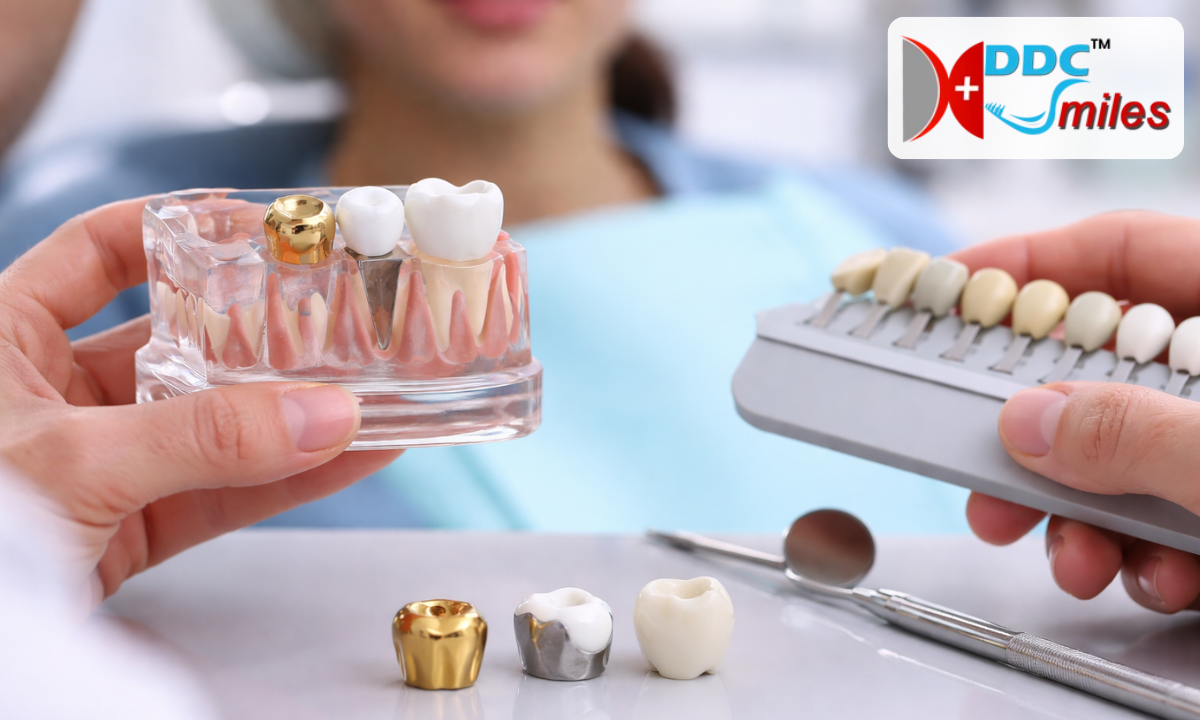
Undergoing a successful root canal is a massive relief for any patient suffering from severe tooth pain. However, clearing the infection is only half of the medical process.
To truly save your smile and restore its structural integrity, securing top-tier Dental Crowns in Koramangala and HSR Layout is an absolute clinical necessity. At DDC Smiles, we emphasize that a cap for the tooth after a root canal is what permanently protects your investment in your oral health.
Many patients feel exhausted after the initial procedure and may question if this final step is truly mandatory. The biological reality is that a tooth without its internal nerve and blood supply becomes structurally compromised. Without a protective shield, the brittle enamel is highly susceptible to cracking under normal biting pressure.
The final crown is not just a cosmetic enhancement: it is a structural reinforcement designed to absorb the heavy forces of chewing and prevent a catastrophic fracture.
In this guide, we will explore exactly why this step is critical and how to select the best material for your specific dental needs.
Why a Cap After RCT is Mandatory
To understand the necessity of a dental crown, we must look at what happens inside the tooth during endodontic therapy. When you undergo a root canal treatment, the dentist removes the infected pulp from the center of the tooth.
This pulp contains the nerves and the blood vessels that keep the tooth vital and hydrated. Once this living tissue is removed and the canals are sealed, the biological nature of the tooth permanently changes.
It is essentially a hollowed structure that no longer receives moisture or nutrients from your bloodstream.
The Structural Vulnerabilities of a Treated Tooth
1. Loss of Hydration: Without a blood supply, the dentin inside the tooth dries out over time, turning the once resilient tooth into a highly brittle structure.
2. Architectural Weakness: Accessing the infected nerve requires drilling a hole through the center of the chewing surface, which significantly reduces the overall structural integrity of the enamel walls.
3. Loss of Sensation: Because the nerve is gone, you can no longer feel how hard you are biting down. This lack of a pain feedback loop makes it incredibly easy to accidentally overload the tooth with excessive chewing force.
Because of these profound biological changes, placing a cap after RCT is the only way to hold the remaining tooth structure together.
The crown acts like a physical helmet, wrapping entirely around the fragile enamel and distributing the heavy forces of chewing evenly. If a patient skips this vital step, they run a massive risk of splitting the brittle tooth completely down the middle.
When a vertical root fracture occurs, the tooth cannot be saved and must be extracted, making the initial root canal effort entirely wasted.
Types of Dental Crowns
Once the structural need for a crown is established, the next critical step is selecting the right material. Modern dentistry offers several types of dental crowns, each engineered for specific functional and aesthetic purposes.
The choice depends heavily on the location of the treated tooth in your mouth. For instance, a molar at the back of the jaw requires immense biting strength to crush food, while an incisor at the front demands a flawless, natural appearance.
At DDC Smiles, we utilize advanced materials that provide both exceptional durability and superior aesthetic beauty without forcing you to compromise on either.
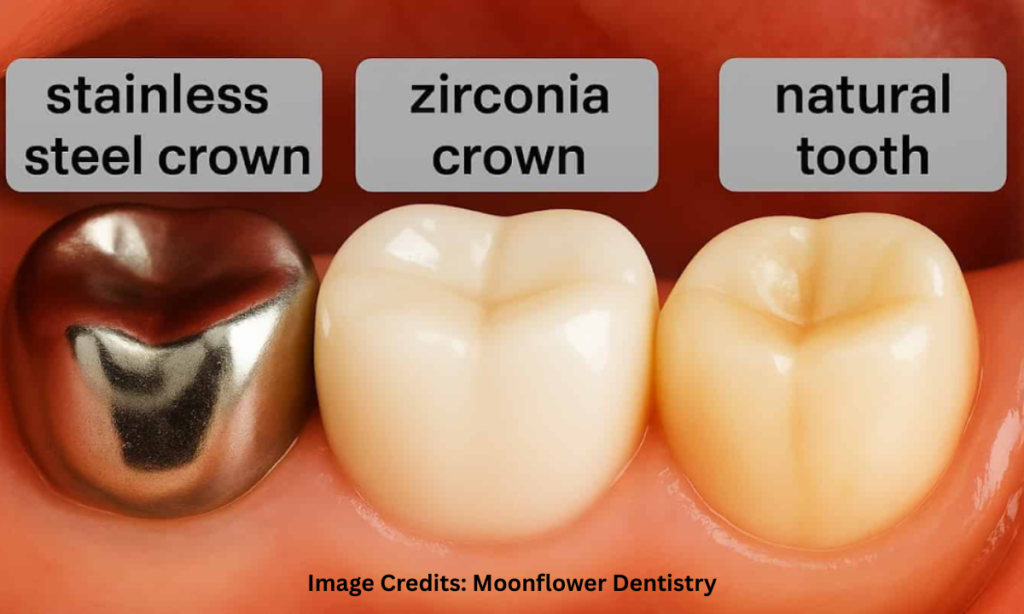
Table: Comparison of Modern Dental Crown Materials
| Material Type | Primary Advantage | Best Suited For |
| Zirconia | Incredible physical strength and high resistance to chipping or cracking. | Heavy-biting back molars and patients who grind their teeth. |
| E-max (All-Ceramic) | Outstanding translucency that perfectly mimics natural tooth enamel. | Highly visible front teeth where aesthetics are the top priority. |
| Porcelain-Fused-to-Metal (PFM) | A reliable balance of a strong metal core and a tooth-colored ceramic exterior. | Bridges or structural restorations where high durability is needed on a budget. |
Choosing the correct material is a collaborative clinical decision between you and your specialist. While traditional PFM crowns have a long history of reliable success, the metal base can sometimes create a dark grey line at the gum margin over time.
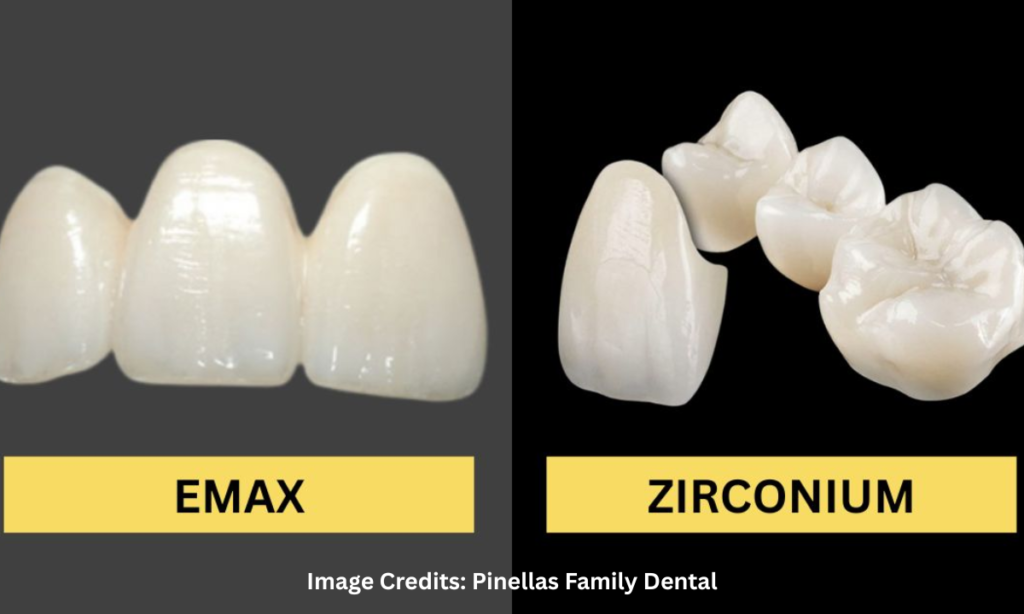
In contrast, highly advanced options like Zirconia and E-max eliminate this aesthetic issue.
These modern ceramics are milled using precision digital technology, ensuring a seamless, watertight fit that perfectly mimics the light-reflecting properties of your natural enamel.
Custom Fitting Your Crown
The process of receiving a dental crown is highly precise and usually requires two separate visits to the clinic after your root canal is completed.
The goal is to create a restoration that fits perfectly over the prepared tooth, sealing out any future bacteria while perfectly matching the bite of your opposing teeth.
The 4-Step Crown Fitting Protocol
1. Tooth Preparation: The dentist carefully shapes the outer layer of the treated tooth, removing a small amount of enamel to create room for the crown material to sit flush with your gumline.
2. Digital Impressions: A high-resolution 3D wand scans the prepared tooth and the surrounding bite. This digital blueprint is sent to a specialized dental laboratory to mill your custom crown.
3. Temporary Crown Placement: While your permanent crown is being crafted, a temporary acrylic cap is placed over the prepared tooth to protect it from sensitivity and prevent any shifting.
4. Final Cementation: During your second visit, the temporary cap is removed, and the permanent crown is carefully bonded to the tooth using a high-strength dental cement, permanently sealing the structure.
Once the permanent crown is cemented and the bite is adjusted, the tooth is fully restored to its original strength.
You can immediately return to your normal chewing habits with confidence, knowing the fragile root canal-treated tooth is completely shielded from the daily wear and tear of your mouth.
Cost for Crown After Root Canal in Bangalore
After completing endodontic therapy, many patients are understandably concerned about the additional cost for a crown after a root canal in Bangalore. It is completely normal to view this as an extra expense, but clinically, it is the most crucial investment you make in saving your tooth.
The price of a dental crown varies widely depending on several specific factors, but it is always significantly cheaper than the biological alternative.
If an unprotected root canal-treated tooth fractures and needs to be extracted, the cost of replacing it with a titanium dental implant and a new crown is exponentially higher than capping the original tooth today.
Factors Influencing the Price of Your Dental Crown
1. Material Selection: High-end ceramics like E-max and Zirconia are more expensive to manufacture than traditional Porcelain-Fused-to-Metal (PFM) crowns due to their superior aesthetics and biocompatibility.
2. Manufacturing Technology: Crowns fabricated using highly precise 3D digital scanners and CAD/CAM milling machines carry a different price point than those made using traditional, manual putty impressions.
3. Warranty and Lifespan: Premium crowns often come with extensive warranties against chipping or breaking, providing long-term financial security that budget materials cannot offer.
4. Clinical Expertise: Having your crown designed and fitted by a specialized prosthodontist ensures a perfect marginal seal, preventing future decay and protecting your initial investment.
By understanding these variables, you can make an informed decision that balances your budget with your biological needs. At DDC Smiles, we maintain complete transparency regarding our pricing structure, ensuring you know exactly what you are paying for before the final cementation process begins.
Why Choose DDC Smiles? Precision and Durability
When it comes to securing the long-term success of your root canal, the physical quality of your crown is just as important as the clinical skill of the doctor who places it. At DDC Smiles, operating as a fully equipped Dental Hospital in HSR Layout and Koramangala, we refuse to compromise on the restorative materials or the diagnostic technology used to rebuild your smile.
We understand that a poorly fitting crown can trap plaque and lead to a secondary bacterial infection. This is exactly why we rely on advanced digital dentistry to guarantee an exact, watertight fit.
The DDC Smiles Restorative Advantage
1. Digital Impressions: We use high-resolution 3D intraoral scanners to capture the exact microscopic dimensions of your prepared tooth, eliminating the need for uncomfortable, gag-inducing putty.
2. Precision Milling: Our crowns are fabricated using computer-aided design and manufacturing (CAD/CAM) technology, ensuring a perfect marginal seal that actively prevents future decay.
3. Specialized Expertise: Our clinical team includes experienced prosthodontists who specialize in dental biomechanics, guaranteeing that your new crown perfectly aligns with your natural bite to prevent jaw pain.
4. Hospital-Grade Safety: Every single procedure is backed by our rigorous sterilization protocols, providing an absolutely sterile clinical environment for your final cementation process.
By choosing a dedicated dental clinic with these advanced restorative capabilities, you ensure that your final cap is not just cosmetically beautiful but structurally built to withstand the heavy forces of daily chewing.
Conclusion
A root canal is an incredible endodontic procedure that successfully saves your biological tooth root from a painful extraction.
However, leaving that treated tooth without a permanent cap is a massive clinical risk that almost always ends in a catastrophic vertical root fracture. The cost for a crown after a root canal is not an optional luxury or a cosmetic upgrade; it is the final, mandatory step in your medical treatment plan. It provides the essential physical strength needed to chew your food confidently and the protective seal required to keep harmful bacteria out of the hollowed canals forever.
Do not wait for your brittle, dehydrated tooth to crack under the pressure of your next meal. Secure your financial and biological investment in your oral health by completing your endodontic treatment immediately.
Contact DDC Smiles at our dental hospital to schedule your custom crown fitting today, and give your natural tooth the permanent, high-strength protection it absolutely deserves.
