

Achieving a brilliant white smile often comes with an immediate, sharp cost.
Patients frequently rush into a dental clinic in HSR Layout and Koramangala, panicking over sudden oral pain. They expect cosmetic perfection.
They do not expect acute dentinal hypersensitivity.
Seeking immediate professional evaluation at a trusted dental hospital in HSR Layout and Koramangala is the safest clinical response.
You need a fast, accurate diagnosis. The primary question every cosmetic patient asks is exactly how to get rid of sensitive teeth following a chemical bleaching session.
Cosmetic bleaching relies on highly concentrated hydrogen peroxide or carbamide peroxide gels. These specific chemical agents must penetrate the rigid enamel matrix to work. They actively oxidize the chromogenic molecules trapped deep inside the underlying dentin.
This required chemical reaction inevitably leaves the microscopic dentinal tubules completely open to the oral environment. Exposed tubules allow rapid fluid movement directly toward the internal dental pulp.
This microscopic fluid shift triggers the underlying nerve endings instantly. The resulting pain is sharp, sudden, and highly localized. It usually flares up the second you inhale cold air or consume hot liquids.
Understanding this specific biological mechanism is the mandatory first step to resolving the acute post-whitening discomfort.
Why Do You Have Sensitive Teeth After Whitening?
Patients often ask exactly why sensitive teeth after whitening occur so suddenly.
The answer lies directly in the chemical bleaching process itself.
Your teeth are not solid blocks of calcium; they contain thousands of microscopic channels called dentinal tubules.
These tubules run from the outer enamel layer straight down to the dental pulp.
The internal pulp houses all the vital nerve endings.
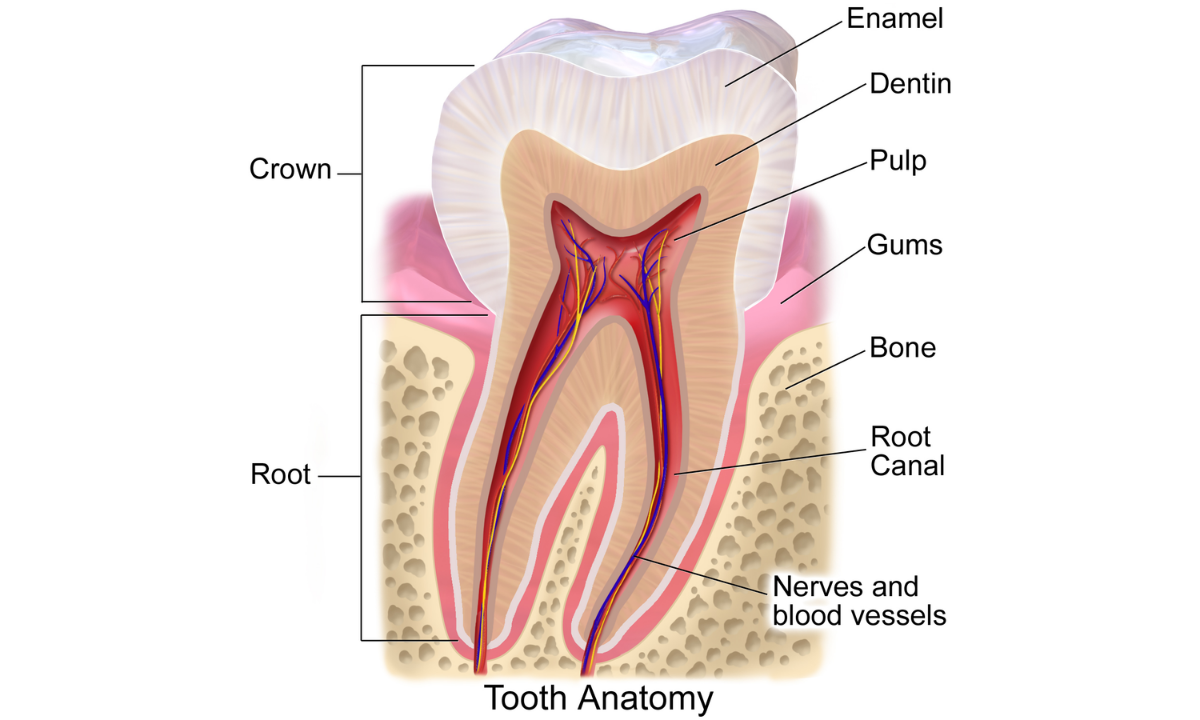
Image Source: Wikipedia
Professional whitening agents use active concentrations of hydrogen peroxide or carbamide peroxide. These chemicals must bypass the hard enamel to reach the deep stains trapped inside the dentin.
The peroxide gel temporarily dissolves the protective salivary pellicle layer coating your teeth. It physically forces the microscopic tubules wide open. This required chemical penetration causes acute dehydration within the tooth structure.
The fluid resting inside the open tubules starts to move rapidly in response to external temperature changes. This sudden fluid shift physically stimulates the nerve endings in the pulp.
The irritated nerves fire a sharp, shocking pain signal directly to the brain. This acute hypersensitivity is a direct biological reaction to chemical oxidation. The pain is intense but strictly temporary. The internal tooth structure naturally rehydrates using your own saliva. The microscopic tubules physically seal themselves back up over 24 to 48 hours following the bleaching session.
Remedy for Immediate Relief
Patients in acute pain need immediate clinical protocols.
Waiting out the 48-hour healing window is often unbearable. Finding an effective, sensitive teeth remedy after whitening starts at home.
You must actively help your enamel rehydrate and chemically block the open tubules. The immediate goal is to calm the irritated dental pulp.
Dentists strongly recommend specific at-home interventions to manage this acute post-bleaching phase.
Table: At-Home Clinical Protocols for Acute Sensitivity
| Clinical Action | Active Mechanism | Expected Result |
| Apply Potassium Nitrate Paste | Physically diffuses through the enamel to block the nerve synapses deep inside the pulp. | Numbs the sharp pain signals rapidly, often within 30 minutes of topical application. |
| Adopt a “White Diet” | Eliminates highly acidic and hot or cold foods like citrus, hot coffee, and ice cream. | Prevents severe thermal shocks and chemical erosion of the vulnerable, porous enamel layer. |
| Use a Soft-Bristled Brush | Reduces aggressive physical friction against the freshly compromised tooth surface. | Prevents mechanical wear and avoids irritating the surrounding swollen gingival tissue. |
Applying a specialized desensitizing paste directly onto the painful tooth and leaving it there for ten minutes works exceptionally well. This localized topical application forces the active potassium nitrate directly into the open dentinal tubules.
It chemically blocks the nerve transmission until your saliva naturally remineralizes the surface. Avoiding acidic drinks prevents further chemical demineralization during this critical healing window.
Professional Solutions
Pain lasting the past 48 hours requires immediate action. At-home potassium nitrate pastes eventually fail against severe dentinal fluid shifts.
Patients desperately seeking a definitive, sensitive teeth cure must return to the dentist for professional intervention.
We deploy high-concentration chemical agents completely unavailable over the counter. These clinical treatments physically seal the microscopic pathways rapidly.
Dentists rely on three primary modalities to block the exposed nerve endings directly in the clinic.
1. High-Concentration Fluoride Varnish: The doctor paints a sticky, resin-based fluoride directly onto the porous enamel surface.
This hyper-mineralized coating rapidly hardens upon contact with natural saliva. It immediately plugs the open dentinal tubules to halt microscopic fluid movement.
2. Desensitizing Bonding Agents: Severe hypersensitivity requires liquid composite resins. We apply this clear liquid directly over the exposed dentin or visible micro-cracks.
A specialized ultraviolet curing light hardens the plastic layer instantly. This forms an artificial, impenetrable enamel shield over the naked nerve endings.
3. Dental Laser Therapy: Advanced clinics operate precise diode lasers to physically alter the internal tooth structure.
The targeted light energy safely coagulates the biological proteins resting inside the dentinal fluid. This microscopic coagulation stops the internal fluid from shifting toward the pulp entirely.
Applying these clinical barriers stops the sharp pain instantly. Your dentist will carefully evaluate the exact depth of your enamel porosity to select the correct sealing modality.
You absolutely do not have to endure weeks of severe thermal shocks while waiting for natural salivary remineralization to occur.
Prevention of Sensitive Teeth
Pre-existing oral pain complicates cosmetic bleaching significantly.
Patients constantly ask about managing sensitive teeth and whitening simultaneously. It requires strict clinical oversight.
You cannot simply apply generic peroxide gel over compromised enamel.
Doing so guarantees severe nerve inflammation.
A thorough pre-whitening screening is a mandatory clinical step.
The dentist actively hunts for existing structural defects before approving the cosmetic procedure. Micro-cracks act as direct chemical highways to the underlying pulp.
Exposed tooth roots from gingival recession lack protective enamel completely.
Applying bleaching agents to these specific vulnerable areas causes excruciating, immediate pain.
To perform sensitive teeth whitening safely, dental professionals deploy highly modified clinical protocols.
1. Custom Bleaching Trays: The clinic fabricates precise vacuum-formed plastic trays directly from your dental impressions.
This exact physical fit prevents the caustic gel from leaking onto the highly sensitive root surfaces or surrounding gums.
2. Lower Peroxide Concentrations: We utilize a 10% carbamide peroxide formulation instead of aggressive 35% hydrogen peroxide solutions.
The chemical oxidation occurs very slowly overnight rather than rapidly in a single hour.
3. Pre-Treatment Desensitization: Patients brush with a prescription-grade potassium nitrate paste for two full weeks before starting the cosmetic procedure.
This proactively loads the nerve synapses with chemical blockers.
Combining these strategic clinical modifications makes cosmetic bleaching completely safe for highly sensitive patients.
Your dentist actively controls the exact chemical dosage to prevent the dentinal fluid from shifting violently.
You achieve the desired cosmetic brightness without suffering through days of severe thermal shocks.
Choosing DDC Smiles: Your Restorative Partner
Pain is a strict messenger.
Ignoring acute dentinal hypersensitivity easily leads to chronic nerve inflammation.
You need absolute clinical precision when chemically altering your natural enamel structure.
This is exactly why patients completely trust the dental specialists at DDC Smiles. We do not operate as a generic cosmetic bleaching salon. We function as a dedicated, medically supervised restorative facility.
Our specialists prioritize your foundational oral health over an artificially fast cosmetic result.
1. Comprehensive Diagnostics: The doctor physically examines every single tooth for microscopic fractures, failing fillings, and exposed root surfaces before ever applying an oxidizing chemical.
2. Customized Chemical Protocols: We strictly control the exact peroxide concentration based directly on your baseline enamel density and your personal history of oral pain.
3. Immediate Desensitization Access: The clinic keeps high-concentration fluoride varnishes and advanced diode lasers ready to instantly halt any unexpected pulpal inflammation during the session.
Choosing DDC Smiles guarantees your cosmetic investment never compromises your structural oral health.
We protect your vital nerve endings first. Achieving a brilliant, lasting white shade naturally follows this safe medical protocol.
Conclusion
Achieving a brilliant smile should never require agonizing days of thermal shocks.
Post-whitening hypersensitivity is a highly predictable, entirely temporary chemical reaction. The peroxide physically opens your microscopic dentinal tubules.
The resulting internal fluid shift directly irritates your vital dental nerve.
You hold the power to stop this acute pain rapidly. Switch to a potassium nitrate paste immediately at home.
Avoid aggressively hot or cold foods during the critical 48-hour healing window. If the sharp jolts persist past two days, seek immediate professional intervention. Our clinical team stands ready to physically seal your exposed enamel and restore your comfort entirely.
Schedule your comprehensive cosmetic consultation at DDC Smiles today to brighten your teeth safely under strict medical supervision.
