

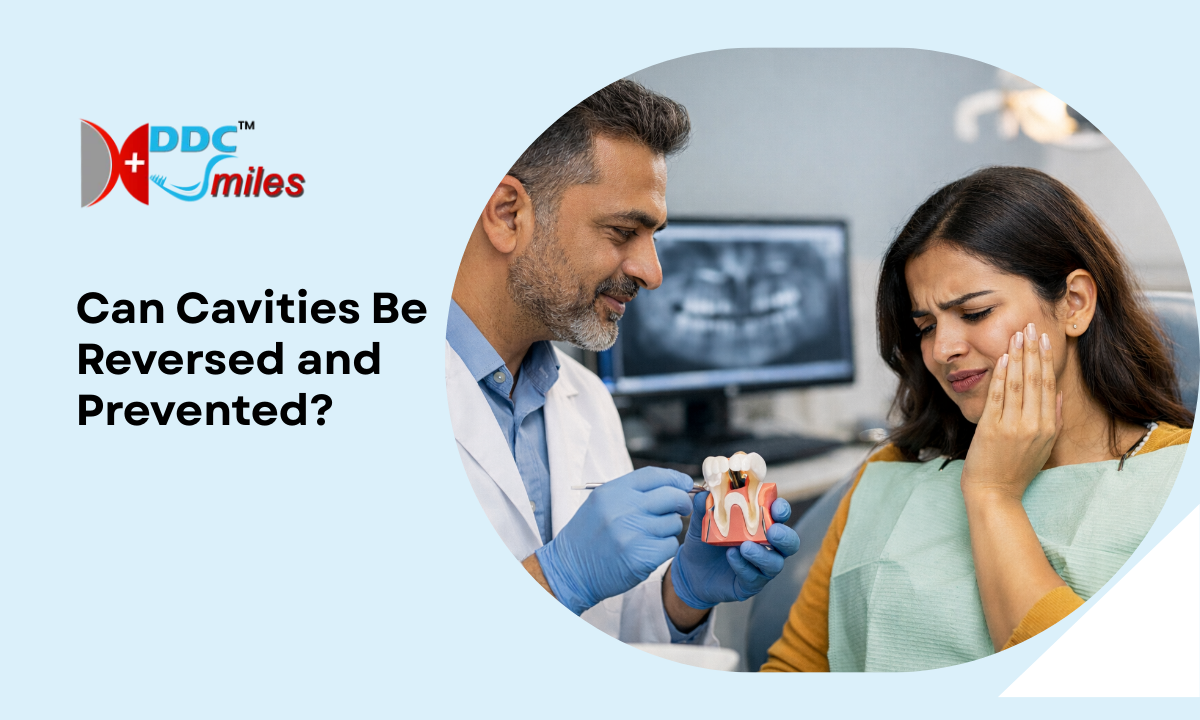
When a patient feels a sudden twinge of pain after eating something sweet, their first thought is often a hopeful question: Can a cavity be reversed? The scientific reality depends entirely on timing. If caught in the microscopic early stages, tooth enamel can actually repair itself.
However, once a physical hole has formed, natural healing is biologically impossible. This is when seeking professional dental treatment for teeth fillings in Koramangala & HSR Layout becomes an urgent medical necessity.
When you visit a specialized Dental Hospital in Koramangala and HSR Layout, immediate intervention stops the decay from reaching the sensitive nerve.
To understand your treatment options, you must know exactly where your tooth stands in the decay process, to protect your smile from recurring infections and costly future procedures. We will discuss in detail regarding this, and how to restore the teeth infected by cavity in the guide.
What is a cavity and why does a cavity occur?
Understanding why cavities occur requires examining the microscopic ecosystem in your mouth. Every time you consume carbohydrates or sugary foods, you are not just feeding yourself: you are feeding the bacteria that live in your dental plaque.
According to the National Institute of Dental and Craniofacial Research (NIDCR), specific bacteria, such as Streptococcus mutans, consume these sugars and produce highly destructive acids as byproducts. These acids immediately attack the hard, outer layer of your tooth, known as the enamel.
The Biological Cycle of Tooth Decay
i. Step 1 (The Sugar Intake): Sugary or starchy foods remain on the teeth, especially in the deep grooves of the molars or along the gumline.
ii. Step 2 (The Acid Production): Plaque bacteria metabolize these leftover food particles and rapidly excrete lactic acid.
iii. Step 3 (The Demineralization): The enamel is weakened and appears as a chalky white spot. This stage is fully reversible through clinical fluoride application and improved oral hygiene. The acid lowers the pH in your mouth, causing the calcium and phosphate minerals in your enamel to dissolve and wash away.
iv. Step 4 (The Structural Collapse): The enamel structure has collapsed, creating a physical hole. This stage is completely irreversible and requires immediate mechanical removal of the decayed tissue by a professional. If the acid attacks are frequent and outpace the body’s natural repair process, the weakened enamel finally caves in, creating a permanent hole or cavity.
Your mouth is in a constant state of push and pull between losing minerals and regaining them. Saliva acts as your natural defense mechanism, washing away food particles and neutralizing bacterial acids.
Furthermore, saliva carries vital calcium and phosphate back to the teeth to rebuild the enamel. However, when the frequency of sugar intake exceeds your saliva’s ability to repair the damage, a physical cavity forms.
Can Cavity Be Reversed?
The defining factor in determining whether the cavity can be reversed is whether the decay has broken through the enamel surface.
According to the American Dental Association (ADA), the very earliest stage of tooth decay is actually a condition called demineralization. This occurs when acids dissolve the minerals in the enamel but have not yet caused the physical Structure to collapse.
Visually, this appears as a chalky white spot on the tooth surface. At this critical juncture, the process is fully reversible through a biological repair mechanism known as remineralization. By flooding the weakened area with calcium, phosphate, and fluoride, the enamel can literally rebuild itself, erasing the white spot and halting the decay.
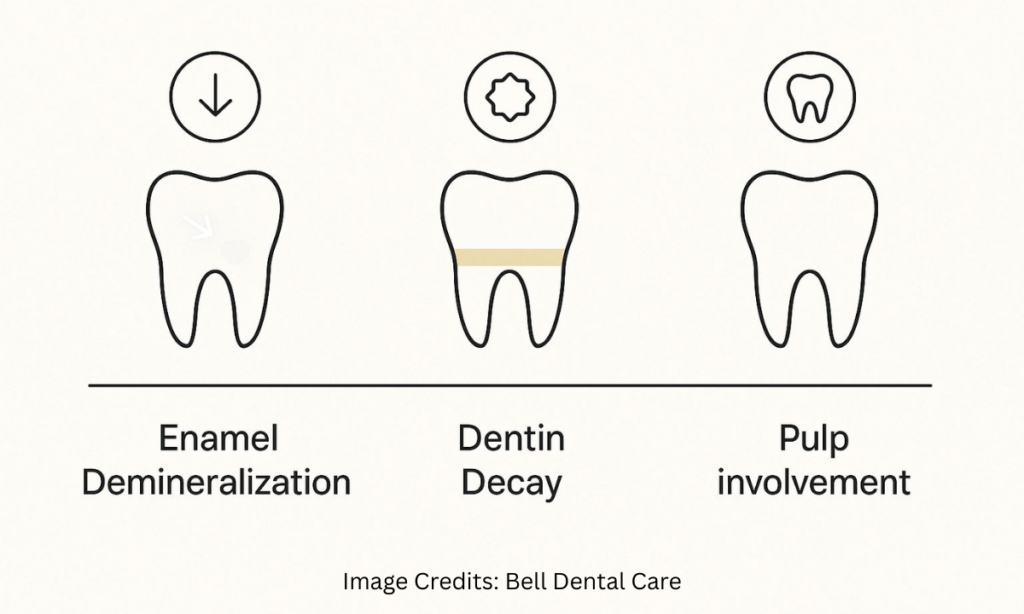
However, once the acid attacks continue unchecked, the weakened enamel structure inevitably caves in. This creates a permanent, physical hole in the tooth, technically known as cavitation. At this stage, the damage is biologically irreversible.
No amount of fluoride, brushing, or dietary change can regrow the lost tooth structure. The only possible solution is clinical intervention by a dentist to physically remove the decayed tissue and restore the tooth with a filling.
Table: Reversible Demineralization vs Irreversible Cavitation
| Feature | Early Demineralization (Reversible) | Established Cavitation (Irreversible) |
| Physical Structure | The enamel surface is intact but chemically weakened. | A physical hole or “cavity” has formed in the enamel. |
| Visual Appearance | Appears as a chalky, opaque white spot on the tooth. | Appears as a brown, black, or grey hole or shadow. |
| Symptoms | Usually asymptomatic; no pain or sensitivity. | Often causes sensitivity to hot, cold, or sweets. |
| Biological Fix | Can be “healed” naturally via remineralization. | Cannot be healed naturally; requires a restoration. |
| Clinical Treatment | Professional fluoride varnish and hygiene counseling. | Mechanical removal of decay and placement of a filling. |
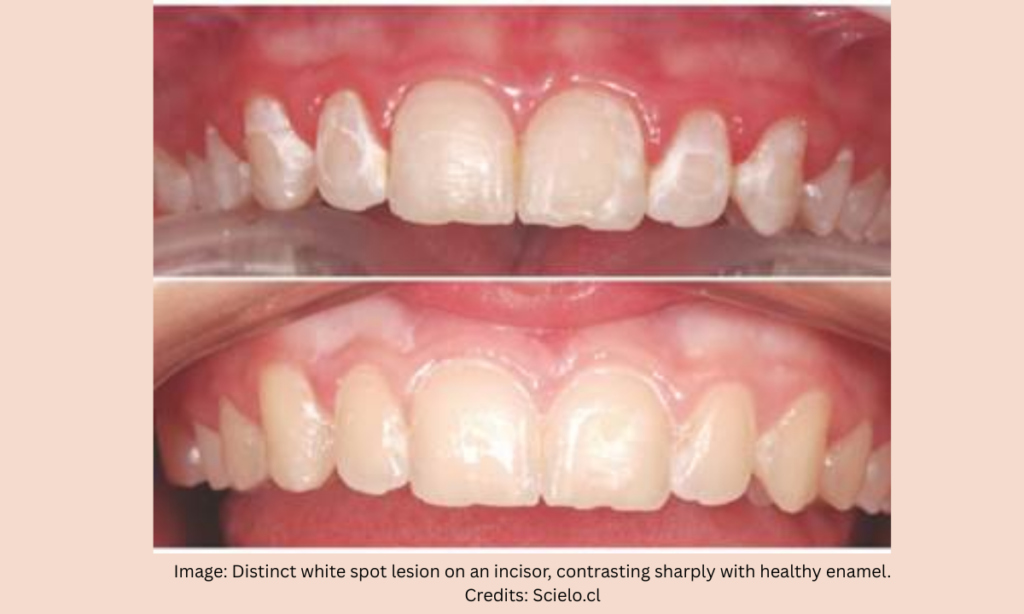
To maximize the chances of reversing early decay, DDC Smiles utilizes advanced diagnostic tools like digital intraoral cameras to detect these white spots during routine check-ups.
Catching decay in this reversible window saves the patient from needing a filling and protects the natural integrity of the tooth. By prioritizing preventive care and early detection, we can often stop cavities before they truly begin, shifting the focus from repair to biological reinforcement.
How is the cavity removed?
When remineralization is no longer possible and a physical hole exists, the decayed tissue must be physically extracted. Many patients fear this step, but modern clinical protocols have made the process of how the cavity is removed entirely painless and highly efficient.
The primary goal of this intervention is to halt the spread of bacteria and create a clean, sterile foundation for the restorative material.
Leaving even a microscopic trace of infected enamel or dentin will allow the decay to continue spreading underneath the new filling, leading to a much more painful infection later.
The Step-by-Step Cavity Extraction Protocol
i. Step 1 (Local Anesthesia): The dentist applies a topical numbing gel followed by a local anesthetic injection. This ensures the tooth and surrounding nerves are completely numb, eliminating any pain during the procedure.
ii. Step 2 (Isolation): The affected tooth is isolated, often using a rubber dam or specialized cotton rolls. This prevents saliva from contaminating the sterile workspace and protects the rest of the mouth from debris.
iii. Step 3 (Excavation): Using a specialized high-speed handpiece or a dental laser, the dentist carefully cuts away the diseased, soft enamel and dentin until only healthy, hard tooth structure remains.
iv. Step 4 (Preparation and Sanitization): Once the infected tissue is gone, the remaining cavity walls are specifically shaped to hold the filling material securely. The area is then thoroughly disinfected to kill any residual bacteria.
By following this precise protocol, the tooth is structurally stabilized and biologically cleansed.
This meticulous preparation is what guarantees the longevity of the final restoration. Once the tooth is completely free of active decay, it is ready to be rebuilt using advanced dental materials.
Restoring the Tooth: Treatment of Cavity
Once the infected tissue is completely cleared, the space must be sealed to restore the tooth’s structural integrity and prevent future bacterial invasion.
The modern treatment of cavity focuses not just on sealing the hole, but on mimicking the natural biomechanics and appearance of the original tooth. Historically, dentists relied on metal alloys to fill these spaces, but today, advanced materials allow for virtually invisible restorations.
Table: Composite Resin Fillings vs. Traditional Amalgam
| Feature | Composite Resin (Tooth-Colored) | Traditional Amalgam (Silver/Metal) |
| Aesthetics | Custom color-matched to blend perfectly with your natural enamel. | Highly visible dark silver or black appearance in the mouth. |
| Bonding Mechanism | Micromechanically bonds directly to the tooth structure, adding internal strength. | Rests mechanically in the cavity; does not bond to the tooth structure. |
| Tooth Preparation | Requires minimal removal of healthy tooth structure to place successfully. | Requires cutting away extra healthy enamel to create an undercut to hold the metal. |
| Clinical Application | The standard of care for visible teeth and modern molar restorations. | Increasingly phased out in modern clinics due to aesthetic and structural concerns. |
At DDC Smiles, we prioritize biomimetic dentistry. This means we utilize high-quality composite resins that behave just like natural enamel. Because these materials bond directly to the microscopic pores of your tooth, they prevent the microscopic leakage that often occurs with older metal fillings.
This advanced approach ensures that your restored tooth remains strong, functional, and cosmetically flawless for years to come without the need for aggressive drilling.
How Much Does a Cavity Filling Cost in Bangalore
When patients ask how much cavity filling costs in Bangalore, the answer depends entirely on the severity and location of the decay. At DDC Smiles, we believe in transparent pricing and educating our patients on the value of early intervention.
The cost of a simple, early-stage filling is significantly lower than the price of a complex root canal or a dental implant, which becomes necessary if the tooth is ultimately lost to infection.
Factors Influencing the Cost of a Dental Filling
1. Size of the Cavity: A small surface filling requires less composite material and clinical time than a massive restoration covering multiple sides of a molar.
2. Location of the Tooth: Hard-to-reach back teeth often require more specialized tools, isolation techniques, and time compared to easily accessible front teeth.
3. Type of Material: Advanced, highly durable tooth-colored composite resins are priced differently than traditional, older materials due to their superior aesthetics and bonding capabilities.
4. Clinical Expertise: Treatment by a specialized MDS endodontist or restorative dentist ensures higher precision, better marginal seal, and greater longevity for the filling.
Addressing a cavity early at our clinics is both a financial and a biological investment.
Waiting for the pain to start guarantees a more complex, invasive, and costly procedure down the line. By treating the decay when it is small, you preserve your natural tooth structure and keep your medical expenses to an absolute minimum.
You can visit DDC Smiles at your own convenience and get a quote first-hand before you make up your mind to get the treatment.
Conclusion and How to Stop and Avoid Recurrence
The most effective way to manage tooth decay is to prevent the bacterial acid attacks from causing permanent damage in the first place.
Once your tooth is clinically restored, maintaining its health requires a strategic home care routine and regular professional monitoring.
Understanding how to stop and avoid recurrence protects both your natural teeth and your new composite fillings from future bacterial invasion.
Your Cavity-Free Daily Routine
1. Fluoride Therapy: Brush twice daily with a fluoridated toothpaste to actively remineralize weak enamel spots every morning and night.
2. Interdental Cleaning: Floss or use interdental brushes daily to remove the hidden, sticky plaque between teeth, where the majority of cavities begin.
3. Consistent Hydration: Drink plenty of water throughout the day, especially after meals, to naturally wash away food debris and stimulate protective saliva production.
4. Limit Sugar Frequency: Avoid constant sipping of sugary drinks or snacking on sticky carbohydrates, as this keeps your mouth in a prolonged, dangerous state of high acidity.
By combining this diligent daily home care with biannual clinical check-ups at DDC Smiles, you can ensure your smile remains structurally sound and pain-free.
Do not wait for a visible hole or a sudden toothache to take action against decay. Book your preventive consultation and professional cleaning at our dental hospital today to safeguard your oral health.
